Peace Homes Aluva

Simplify Building Your Dream Home

Archives 2009

Urban Forest

If you are tired of looking at rigid building designs, this post is surely going to blow you away!

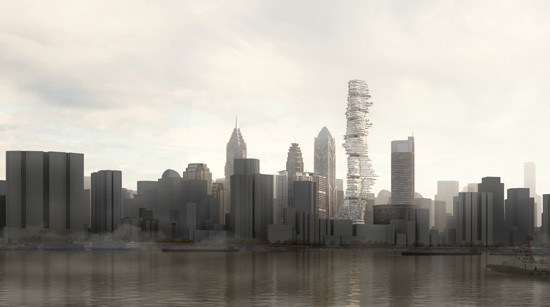
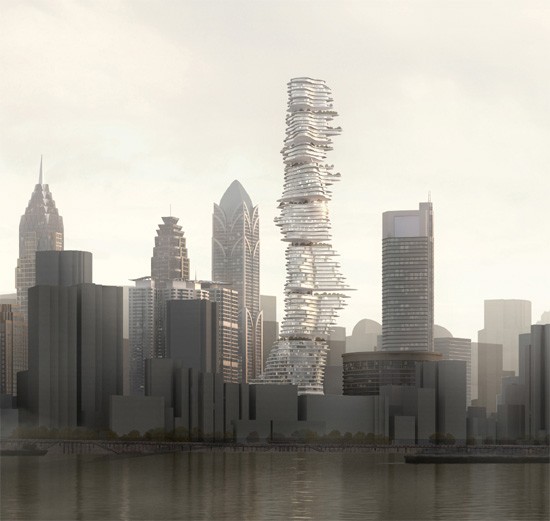
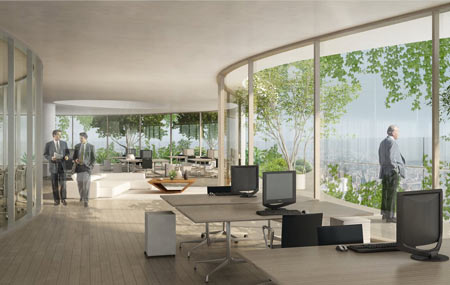
Designing is an art and one rarely envisions such path breaking ideas. This building, modeled by MAD architects will be located in Chonquing, China. Connected by a core cylindrical structure, each floor has been placed a little off the centre, giving the building a unique feel. Abstract floors with full length glass windows make the building look surreal and the balcony gardens only add to its beauty.

The floors are designed to create an illusion of each floating upon another. The model is such that it brings together nature and the urban metropolis thereby creating a masterpiece that would please all!

Take a look.

urban forest - from far away

urban forest - image

urban forest - in the day

urban forest building

urban forest building amongst others

urban forest - similarities

urban forest - building magnificance

urban forest - images from the floors

urban forest - partially

urban forest - inside

urban forest- levels of the building

urban forest- partial view

These were the two proposals for the building before the design above was finalized.

urban forest proposal 1

urban forest proposal 2

[Via] & [Via]

The Benefits of Islamic Finance Instruments for Russian Businesses

The Benefits of Islamic Finance Instruments for Russian Businesses

Pepelyaev, Goltsblat and Partners
http://www.themoscowtimes.com/photos/large/2009_12/2009_12_14/mc6.jpg

Rustam Vakhitov 
Senior manager of international taxation group 
Pepelyaev, Goltsblat and Partners

Islamic finance is gaining more business interest worldwide as well as in Russia. Why has this way of doing business gained so much popularity over the recent years?

The reason is that a significant number of Islamic investors have recognized that there is an opportunity of doing business in accordance with their religious standards and have encouraged the financial institutions that handle their funds to offer Shariah-compliant solutions. As Shariah is not a written law, but rather a flexible guidance based on a number of principles, creating such solutions was not that difficult.

What benefits can Islamic finance bring to Russian businesses? One of the most obvious benefits is to attract investment into Russia. There are a few Islamic finance instruments that are particularly useful for this purpose. These are financing of trading operations (murabaha), partnership (musharaka) and leasing (ijara). The latter could be done in the form of securitized leasing (sukuk-al-ijara).

Despite a widespread misconception, Islamic finance does not require specific laws and is not limited to the Muslim community. Except for several predictable prohibitions (trade in arms, alcohol, pornography, gambling etc), Islamic finance solutions could basically be used anywhere by anyone.

In fact, many conventional transactions may qualify as Shariah-compliant. Such examples include lease contracts, equity contributions into a joint venture and deferred payment sales.

Let us now take a closer look at the types of contracts briefly discussed above from the perspective of the existing Russian tax and legal environment.

In a murabaha contract a financial intermediary buys particular goods at spot price and sells them to a customer at a higher price on credit. There is nothing in Russian law preventing such transactions. The only limitation is the prohibition of trading activities for banks, which itself is subject to many limitations, e.g. permission to trade in securities and precious metals. In addition, the law No. 281 of Dec. 25, 2009, lifts the limitation further and permits banks to enter into forward or option contracts wherein the object of the contract is the delivery of goods, although that is on the condition that such contracts would not involve the physical delivery of such goods.

It appears that this amendment extends the involvement of banks in trade contracts and may support interpretations allowing Russian banks to be involved in murabaha transactions.

From the tax perspective, the difference from conventional loans is that in order to buy an item worth 100,000 rubles (VAT inclusive), a customer would take a loan of 100,000. Provided that interest rate is 10% annually, he would pay 10,000 rubles interest which is VAT free. In murabaha transactions the markup to the original price representing premium for deferred payment would be subject to VAT, i.e. the total price for the customer would be 111,800 rubles in a murabaha transaction compared to 110,000 rubles in the case of a conventional loan.

Therefore, somewhat disadvantageous treatment of murabaha is limited to specific cases of sale of goods on credit to retail consumer and might be remedied by clarification from the Ministry of Finance. This relative disadvantage is not based on the fact that the murabaha is Islamic finance transaction, but on the fact that sale on credit is treated differently from sale with the use of loan facility.

Ijara or lease contract would not involve any particular difficulties in structuring in both domestic and cross-border scenarios. In the case of lease payments to a nonresident without a permanent establishment in Russia, payment may be subject to withholding tax at the rate of 20%. However, under many Russian tax treaties, including the tax treaty with the Netherlands, such income would be exempt from tax in Russia.

In the case of a combination of sukuk and ijara, i.e. in classical sukuk structure, establishing a special purpose vehicle in the Netherlands or Luxembourg, which would lease out assets in Russia, possibly operating via a Russian branch, would help to create an efficient and transparent structure in full compliance with the Russian legislation.

These are just few examples of opportunities of successful implementation of classical Islamic finance instruments in Russia. Such instruments could be used for retail sector, project financing and other things relevant to the Russian market. Despite widespread negative perception, many Islamic finance instruments can be successfully implemented in Russia under the current tax and legal laws and regulations.


Islamic Finance in Russia: Issues and Solutions

Islamic Finance in Russia: Issues and Solutions

Norton Rose LLP

Farmida Bi 
Partner, International Securities Team Norton Rose LLP

Islamic finance is the fastest growing market in ethical finance with an annual average growth rate of between 10 percent and 20 percent. Current global Islamic finance assets stand at $800 billion and are predicted by some to rise to $4 trillion by 2015. The credit crunch has provided Islamic finance with a unique opportunity to assert its values of ethically based financing, which could help to shape the global financial industry as a whole.

Islamic finance distinguishes itself from conventional finance in its compliance with the principles of Islamic commercial jurisprudence. Islamic finance techniques seek to promote ethical and socially responsible investment while providing an alternative to interest-based finance. The main tenets of Islamic commercial jurisprudence prohibit interest payments on monetary loans or securities, speculation, uncertainty in certain contractual terms and engaging in anti-social business activities. Some of the main Islamic financing techniques include murabaha (cost-plus financing), sukuk (Islamic bonds), ijara (based on the leasing of an asset), istisna’a (production/construction financing) and musharaka (equity investment).

The recent defaults in the Islamic finance industry have shown that the Gulf has been affected by the same liquidity issues as the West, with central banks actively intervening to encourage interbank lending. However, there are significant differences in the views about long-term prospects expressed by bankers in different states in the Gulf, as well as between bankers situated in Western banks, conventional local banks and Islamic banks, with the latter being the most optimistic, especially if they are based in countries with rich energy resources. The general view among all bankers is that they will monitor market performance in the first two quarters of next year.

Aziza Atta 
Associate, Islamic Finance Team 
Norton Rose LLP

As European economies come to terms with the effects of the economic crisis, Islamic finance is attracting greater attention because of the ethical and socially conscious principles that underpin the industry. A number of countries in Europe, such as the United Kingdom, France and Italy are ensuring that their legal systems create a level playing field for Shariah-compliant structures. In Asia, Singapore, Indonesia and Hong Kong are vying to be the hub for Islamic finance, despite Malaysia’s traditional dominance. There is also increased interest from China, Turkey and India. Meanwhile, the entire financial system in Iran is Shariah-compliant. These are all significant trading partners for Russia.

There is a growing interest in Russia (as well as elsewhere in the CIS) among banking and corporate borrowers as well as potential arrangers in the diversification of sources of financing through access to the Islamic financial markets. However, Islamic finance is very new to Russia and marrying the principles of Islamic finance with the legislative framework in Russia is going to be an iterative process. The London and Moscow offices of Norton Rose LLP have recently been involved in structuring a Russian murabaha trade financing as well as a Russian sukuk. During this process, we identified a number of corporate, commercial and tax issues that should be noted by any parties seeking to engage in similar transactions in the Russian market.

We were able to work within the limits of the existing Russian legislative framework in order to find solutions to the challenges that we faced, but it would be helpful if Russia, like the U.K. and France, for example, considered making certain changes to the existing tax and commercial laws to remove some of the current barriers to Islamic finance in order to create a level playing field with transactions that are structured conventionally.

In the current economic climate, Islamic finance is a real alternative for financiers who face a lack of liquidity in the debt capital markets and are looking for alternative ways of raising finance.


India, China will economically surpass U.S., U.K. in 2048

By Andrew Nusca | Nov 25, 2009 | 7 Comments

In a speech at TEDIndia, statistician Hans Rosling predicted the exact date that India and China’s economies will catch up with the U.S. and the U.K.

Background about Rosling: He’s a doctor and professor of global health at Sweden’s Karolinska Institute who previously identified a new paralytic disease induced by hunger in rural Africa. His current work focuses on dispelling common myths about the so-called “developing world.”

A few quoted takeaways from Rosling’s presentation:

“Asia will regain its dominant position as the leading part of the world, as it used to be, over thousands of years…I will [predict] that by trying to predict precisely at what year the average income per person in India, in China, will reach that of the West. And I don’t mean the whole economy, because to grow an economy of India to the size of U.K., that’s a piece of cake, with one billion people. But I want to see when will the average pay, the money for each person, per month, in India and China, when will that have reached that of U.K. and the United States?”

“People interested in growth are turning their eyes towards Asia.”

“Inequalities in China and India I consider really the big obstacle because to bring the entire population into growth and prosperity is what will create a domestic market, what will avoid social instability, and which will make use of the entire capacity of the population. So, social investments in health, education and infrastructure, and electricity is really what is needed in India and China.”

“What I’m really worried about is war. Will the former rich countries really accept a completely changed world economy, and a shift of power away from where it has been the last 50 to 100 to 150 years, back to Asia? And will Asia be able to handle that new position of being in charge of being the most mighty, and the governors of the world? So, always avoid war, because that always pushes human beings backward. Now if these inequalities, climate and war can be avoided, get ready for a world in equity. Because this is what seems to be happening.”

Rosling’s date on which India and China will economically catch up to the U.S.? July 27, 2048.

Listen to his justifications and see his statistical slides in the full video.

The Cyber Sea

December 8, 2009 | 1 comments

World’s First Internet Undersea Science Station Boots Up [Slide Show]

NEPTUNE Canada, the world’s first regional cabled undersea network, promises to usher in a new era of ocean sciences when it goes online December 8.

By Anne Casselman   


OAS_AD(“x81”);

wally-benthic-crawler

BENTHIC CRAWLER: Meet Wally the Benthic Crawler, the world’s first Internet-operated deep-sea crawler (here astride a gas hydrate outcrop in Barkley Canyon). Wally was designed by ocean scientists at Jacobs University Bremen in Germany to measure conditions such as temperature, salinity, methane content and sediment characteristics at seafloor depth.
Photo taken by ROPOS[[http://ropos.com]], which is operated by the Canadian Scientific Submersible Facility.

aArticleImages = new Array; aArticleImages[0] = new Object; aArticleImages[0].title = “BENTHIC CRAWLER:”; aArticleImages[0].caption = “Meet Wally the Benthic Crawler, the world’s first Internet-operated deep-sea crawler (here astride a gas hydrate outcrop in Barkley Canyon). Wally was designed by ocean scientists at Jacobs University Bremen in Germany to measure conditions such as temperature, salinity, methane content and sediment characteristics at seafloor depth.”; aArticleImages[0].credit = “Photo taken by ROPOS[[http://ropos.com]], which is operated by the Canadian Scientific Submersible Facility.”; aArticleImages[0].url = “”; aArticleImages[0].alt = “wally-benthic-crawler”; aArticleImages[0].src = “/media/inline/first-undersea-science-station_1.jpg”; aArticleImages[0].thisImageNumber = “1”;

.atools_holder {border:#e4e0dd 1px solid; width:78px; background-color:#e4e0dd; color:#999; text-align:center; margin:0 0 5px 5px;} .atools_holder {text-align:-moz-center} .atools {width:98%; padding:3px 1px 0 0} .atools {text-align:-moz-center} .atools img {margin-bottom:5px; display:block;} .badge {padding: 2px; background-color:#fff; width:54px;margin-bottom:3px; left: 50%;} #atools_sponsor {width:88px;} #atools_sponsor span {font-size:8px !important; color:#999; font-family:Verdana, Arial, Helvetica, sans-serif !important; text-align:center} var newURL = “”; newURL = location.href.replace(/&[e|s]c=[A-Za-z0-9_]{2,15}/,”); //strip ec or sc codes newURL = newURL.replace(/&page=[0-9]{1,2}/,”); //strip pagination from articles newURL = newURL.replace(/&SID=mail/,”); //strip SID from mailarticle feature var newTitle = document.title; //alert(newURL) digg_url = newURL;

e-mail print comment

stumble_url = newURL;

Thanks to a new, wired undersea observatory, when it comes to exploring the deep blue sea, there will be no more of this tethered buoy business or taking ships out to upload data from brief time snapshots taken by instruments. The NEPTUNE network set to go online Tuesday will stream data from hundreds of undersea instruments and sensors direct from the Pacific Ocean floor to the Internet 24/7, year-round.

The network is expected to produce 50 terabytes of data annually, all of which will inform scientists about everything from earthquake dynamics to the effects of climate change on the water column, and from deep-sea ecosystems to salmon migration.

“It’s revolutionary in that it brings two new components into the ocean environment, which are power and high-bandwidth Internet,” says Project Director Chris Barnes, from the project’s offices at the University of Victoria in British Columbia. “We’re really on the verge of wiring the oceans.”

After the Hubble Space Telescope was lofted into orbit, astronomers gained their clearest view of space yet, one freed from the murky atmosphere. “That has transformed how astronomers do their science in the same way that we believe the cabled networks will be changing the way ocean scientists do their science,” Barnes explains.

“We happen to have on our coast here just a wealth of processes that characterize many many parts of the world’s oceans,” Barnes says. NEPTUNE has several larger scientific themes. Its sensors will monitor earthquake dynamics in greater detail, including tsunamis and crustal processes. (Recently NEPTUNE’s deep-sea instrument array detected a tsunami generated from the magnitude 8.0 Samoan earthquake on September 29.)

NEPTUNE will also study the extensive gas hydrate deposits that lie along the continental margin. No one knows yet whether these gas hydrates represent either a potential energy source or a source of greenhouse gas emissions that could exacerbate global warming, Barnes says. “There’s a real need to understand those processes.”

NEPTUNE’s network will also examine the effect of deep-sea fishing on benthic communities. Humans fish down to about 1,200 meters but the tendency has been to keep fishing deeper and deeper, Barnes says. “We know so little about how life exists down there.”

The “fire hose of information,” as Barnes calls it, will be tailored for public and academic consumption, and its initiation marks the culmination of an $8-million, eight-year undertaking.

Slide Show: The Cyber Sea: World’s First Internet Undersea Science Station Boots Up

Interiors of the Air Force 1

Interiors of the Air Force 1

Dec 8th 2009,  
tweetmeme_url = ‘http://www.home-designing.com/2009/12/interiors-of-the-air-force-1’; tweetmeme_source = ‘homedesigning’;

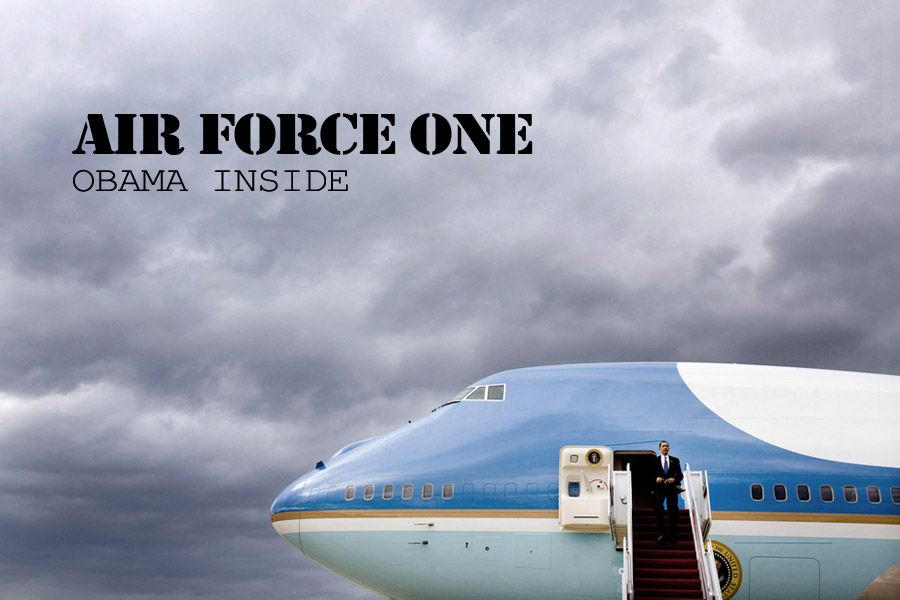
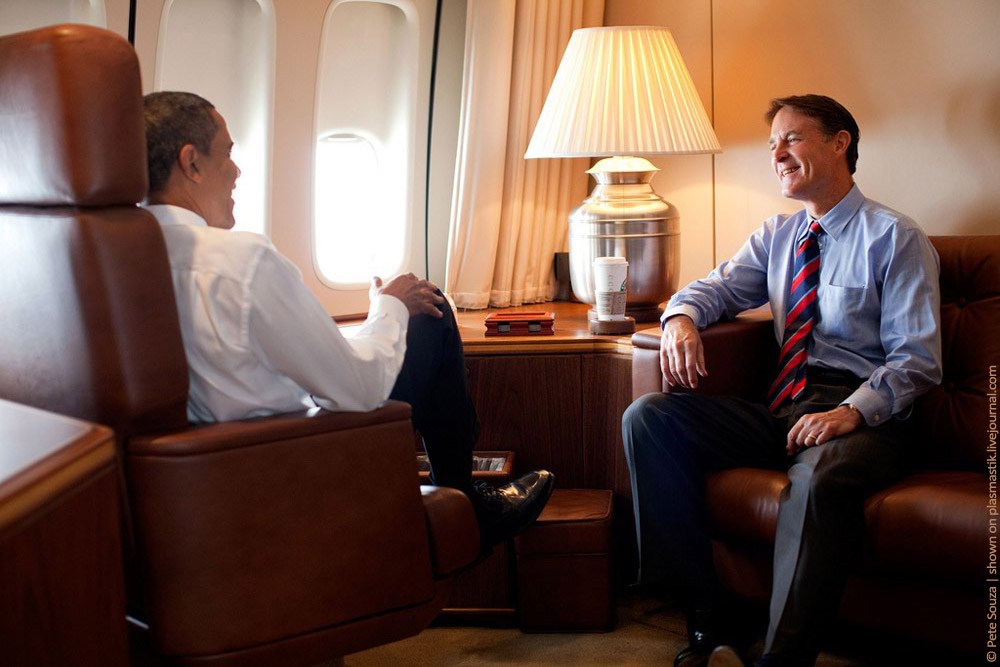
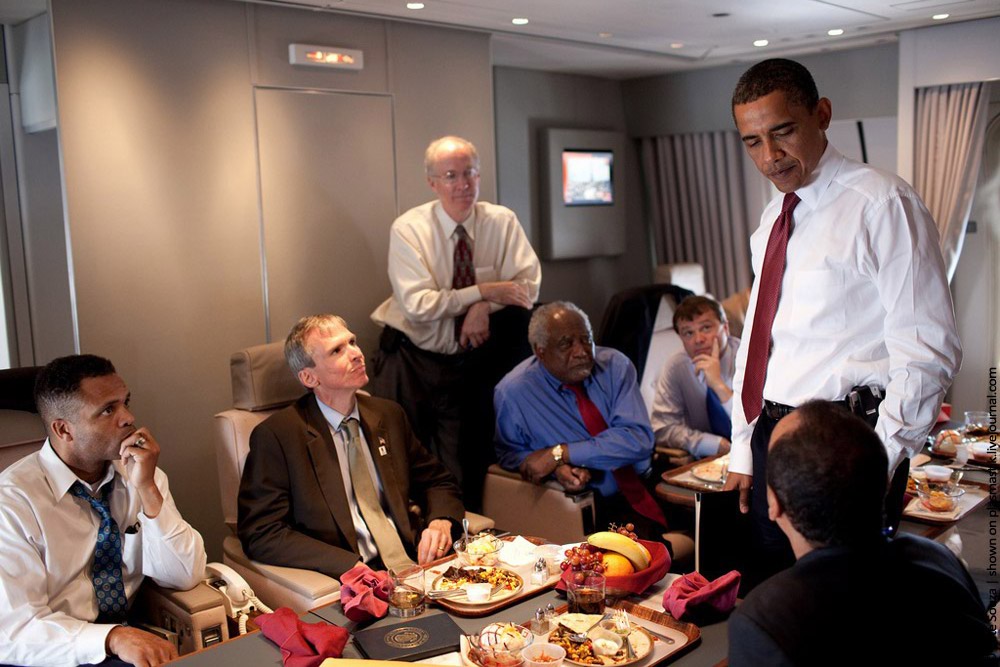
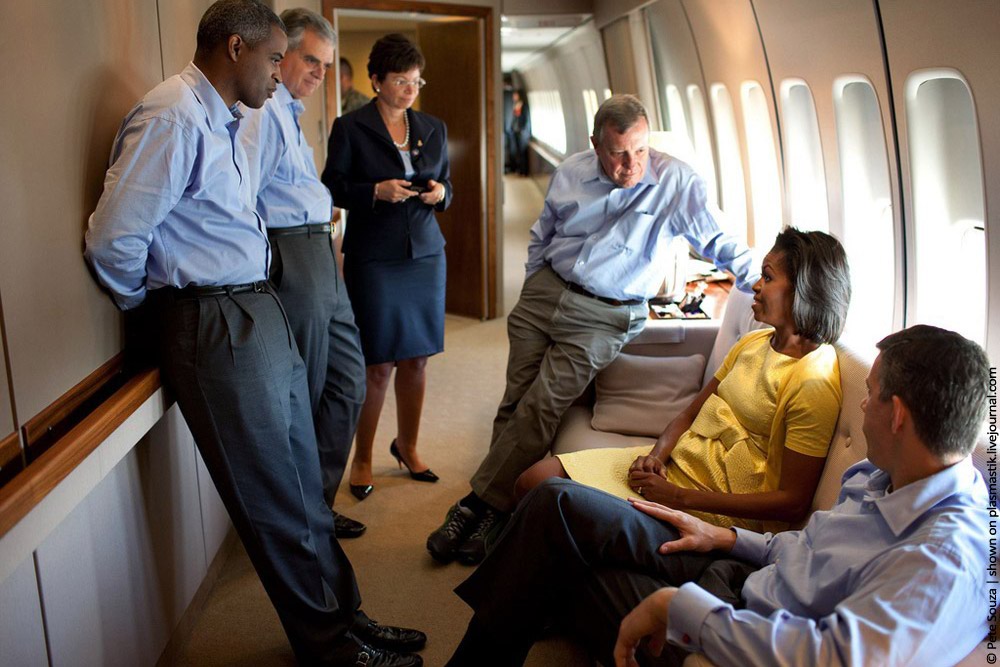
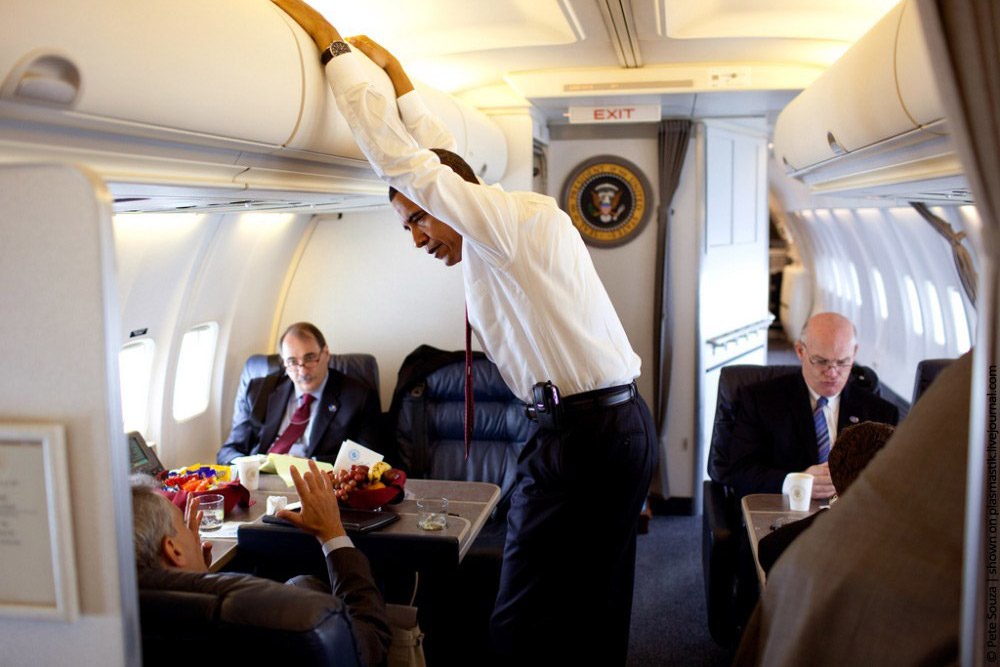
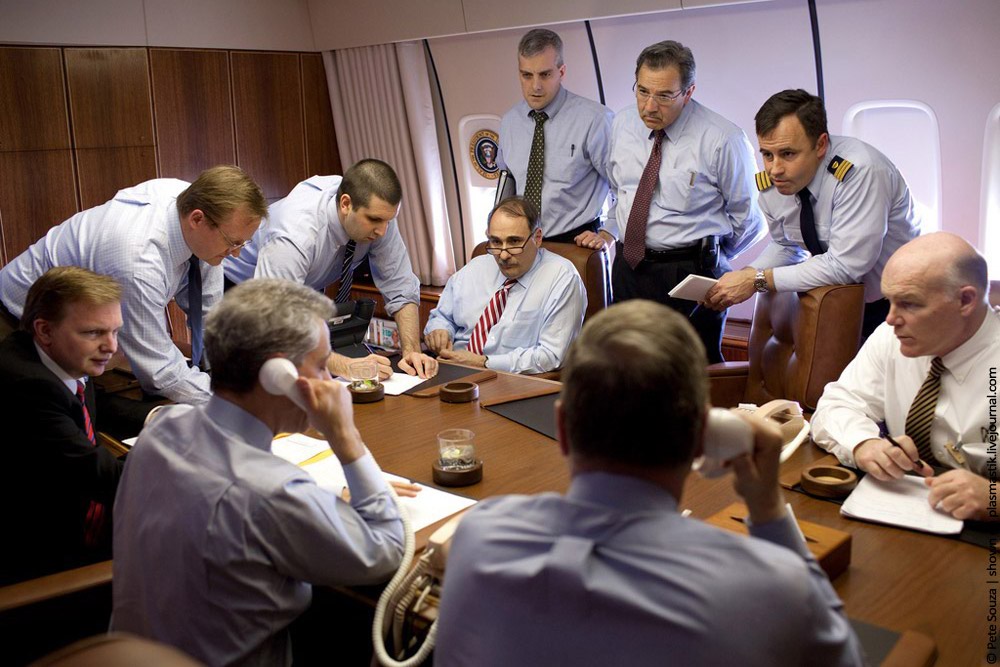
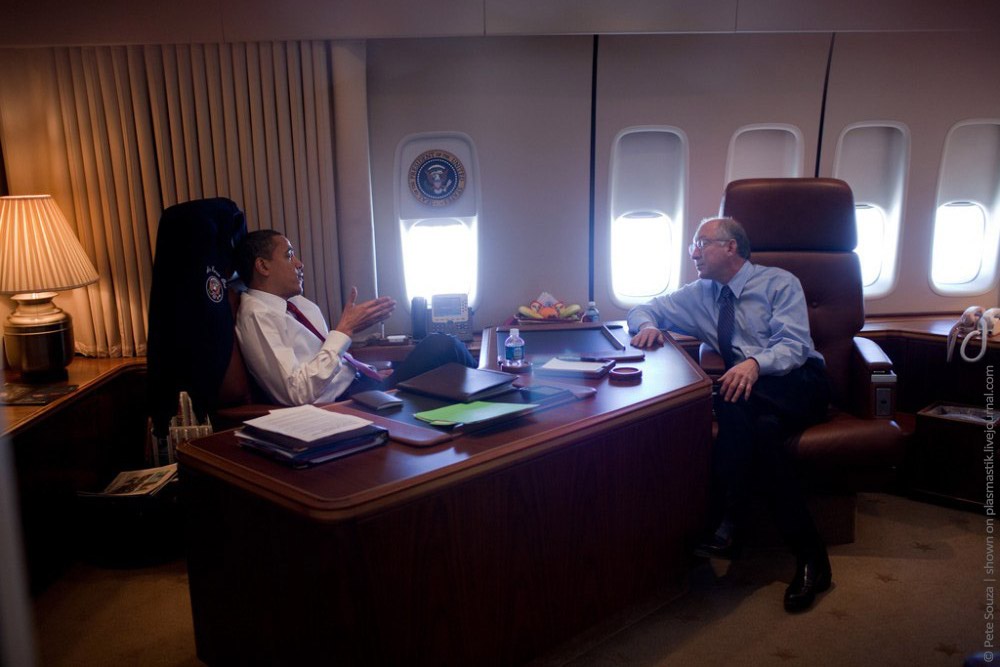
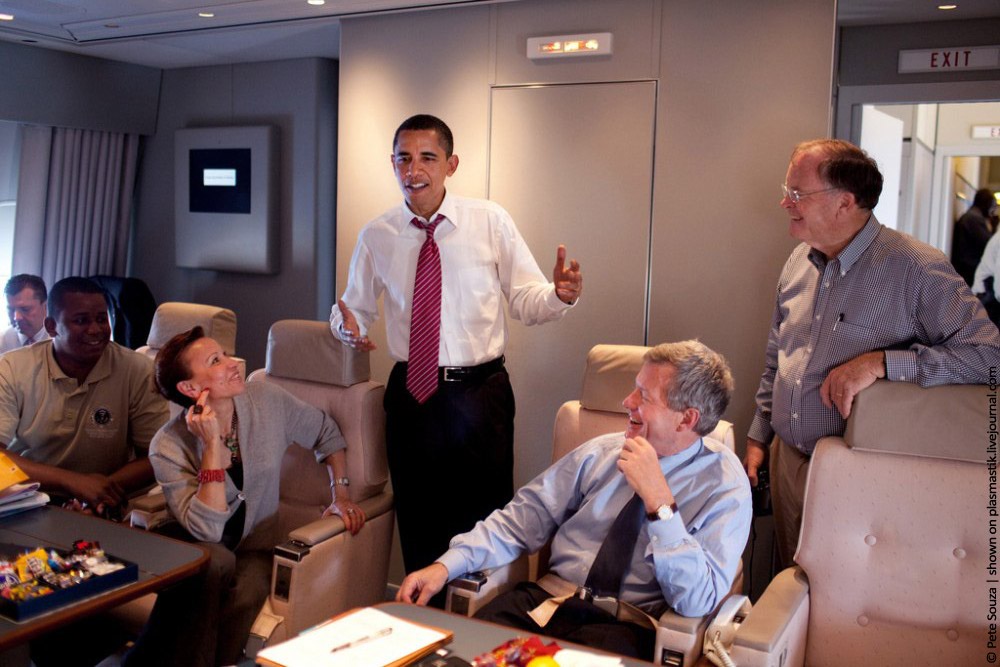
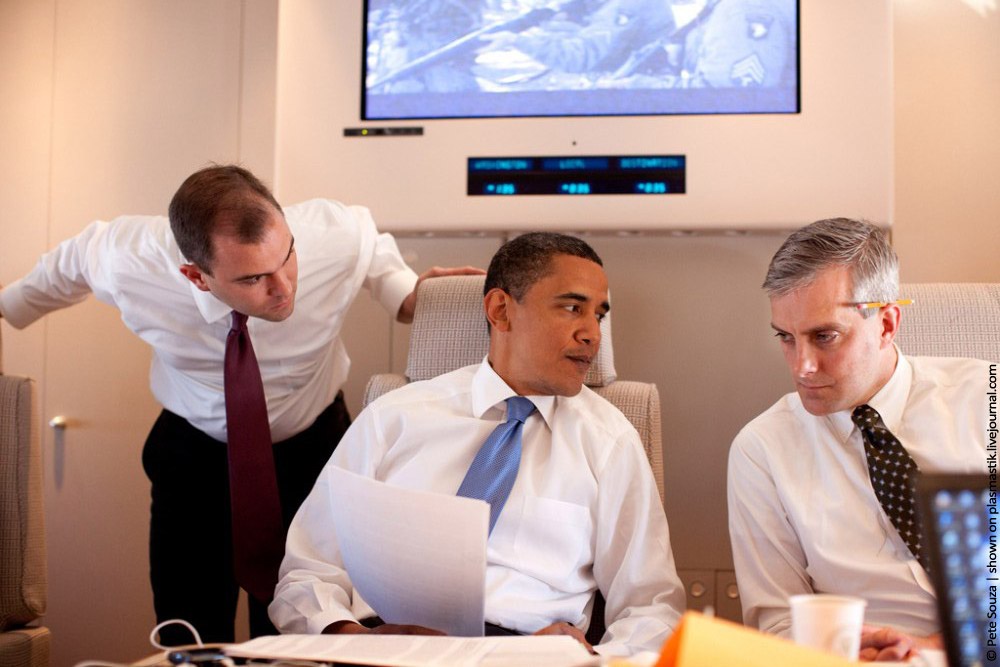
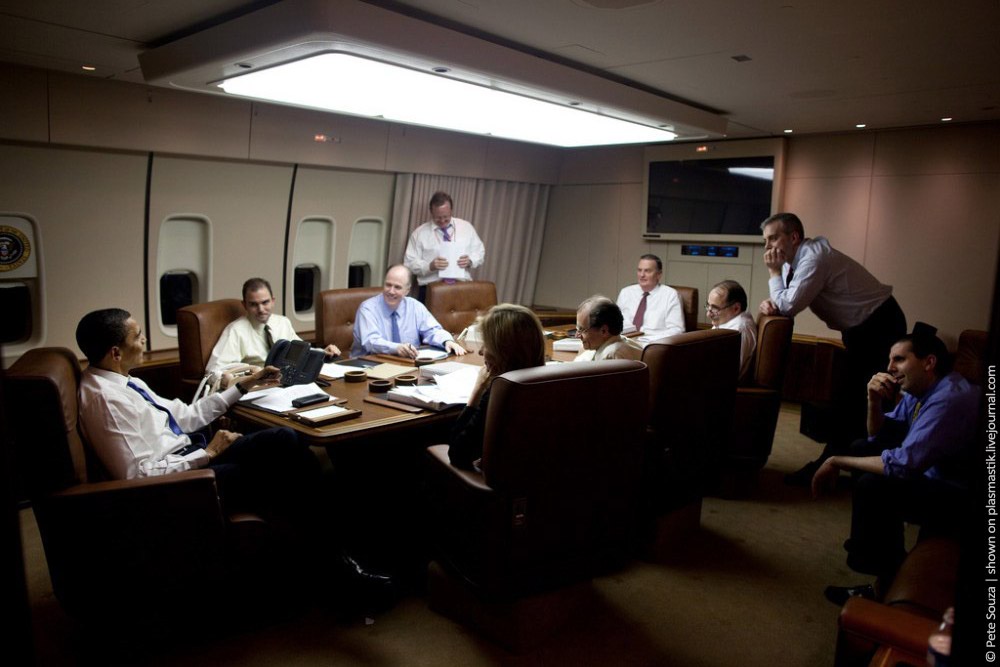
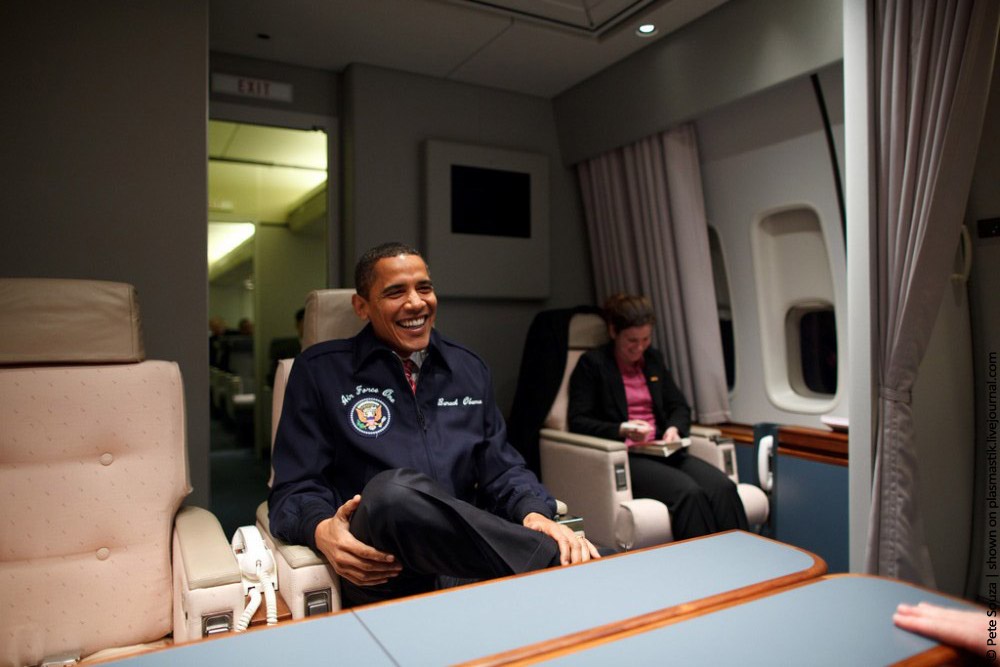
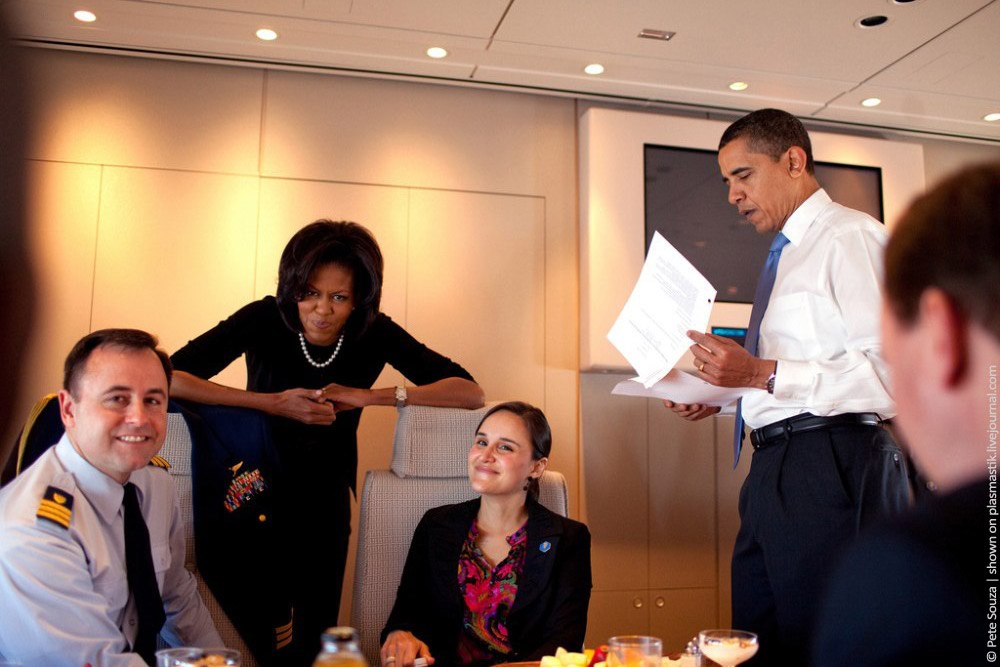
Air Force 1 has always brought with it a certain degree of curiosity and amazement for the laymen. Unless you are a member of the inner circle of the President of the United States, chances are that you would be unable to visit the air-borne office. However, Pete Souza, who is the Chief White House photographer for Barack Obama, has managed to click and display a few of the pictures with the president of the United States of America and his team inside, which is what this post is about.

A post on the Russian Air Force 1 will be released. Covered with gold, the Russian office is a treat for the eyes.

air force one

Air Force 1 interiors

Meeting in Air Force 1

Michelle in Air Force 1

Obama in Air Force 1

at the desk - air force 1

airforce-1-interiors

Air force 1 workspace

Enjoying the view outside

On the plane

Interiors

Board room Air Force 1

in the plane

Michelle and Barack

We run a steady stream of cool posts like this at Home Designing and if you like to be notified when we have more such inspiring posts

‘s life – CNN.com

Storeowner: A little compassion changed would-be robber’s life – CNN.com

New York (CNN) — Six months ago, a Long Island convenience store owner turned a would-be robbery into an act of compassion. On Wednesday, the shoplifter made amends with a $50 bill and a thank you letter for saving him from a life of crime.

The story began in May 2009, when Mohammad Sohail of Shirley, New York, was closing his Shirley Express convenience store one night. Security camera footage from that evening shows a man wielding a baseball bat barging into the store and demanding money.

Sohail had a rifle ready and quickly aimed it directly in the robber’s face, forcing the man to drop the bat and lay on the ground. Unbeknownst to the man, Sohail never loads his gun.

According to Sohail, the man immediately started to plead with him, tearfully saying, “I’m sorry, I have no food. I have no money. My whole family is hungry. Don’t call the police. Don’t shoot me.”

“When I see him starting crying [those] things, I really feel bad for him,” said Sohail. “I say, oh man, this is something different.”

Sohail made the man pledge never to rob anybody ever again, then gave the man $40 and a loaf bread. Sohail, who is from Pakistan, said the man then wanted to be a Muslim like him, so he recited an Islamic oath and gave the would-be robber the name Nawaz Sharif Zardari.

Sohail went to get some milk, but when he returned the man had fled with the money and food.
Video: Robber returns a favor
RELATED TOPICS

* Robbery
* Suffolk County Police Department
* Islam

Both Mohammad Sohail and Suffolk County Police have no idea who the man is. After the May incident, Sohail explained that he will “absolutely not” be pressing charges, though police are still investigating the case.

Over the past six months, Sohail’s story of sympathy and kindness has inspired many across the country.

The Shirley Express store has received numerous letters of admiration.

“No person has ever moved my spirit the way you did. From your biggest admirer,” one letter says. “Great men are capable of great acts. You are a great American,” another reads.

He has also received several checks with such messages for “a couple hundred dollars” in total, says Sohail. He has made a point to give this money “to the people” by offering free bagels, rolls and coffee in his store every night after 9 o’clock.

But the envelope that arrived on Wednesday came as a surprise. Postmarked November 11 without a return address, it enclosed a $50 bill and a note apparently from the would-be robber.

The typed letter begins, “You change My Life (sic),” and goes on to say that the man is sorry for his actions six months ago.

“At the time I had No money No food on my table No Job, and nothing for my family. I know that it was wrong, but I had know (sic) choice. I needed to feed My family. When You had That gun to my head I was 100% that I was going to die,” reads the letter.

The letter says Sohail’s acts inspired him to become a “True Muslim” and that his life has changed dramatically.

“I’m very happy that somebody got to change his life,” Sohail said. “If he is a maybe criminal, maybe is not anymore. So now he is a good person in this community and I’m very glad for that. He’s staying out of trouble, he’s not in a jail, he’s taking care of his family.”

”?

The posters encouraging people to vote for the ban, showed a niqab-wearing Muslim woman [EPA]

The images were clearly intended to get out the vote, and judging by the 57 per cent “yes” vote to ban the construction of minarets in Switzerland on Sunday, they worked all too well.

They included the depiction of minarets piercing through the Swiss flag; minarets on top of the flag, with a menacing, niqab-wearing Muslim woman in the foreground.

One could be forgiven for imagining that the Muslims were at the gates of Vienna, or even Lucerne, threatening to overrun Christian Europe. And of course, for the proponents of the ban, that is precisely the situation Europe faces today.

For centuries, the peoples of Europe have defined their continental identity against the threat of Islam. So much so that it is hard to imagine a European identity that does not have Islam as its foil.

There are, of course, good historical reasons for this.

From the eighth century Europe was in fact surrounded by Muslims to the East and South, who ruled much of the Eastern continent for the next millennium.

Of course, except in the wildest dreams of jihadists, Europe will not be taken down by Muslim swords today. But for right-wing fear mongers, the contemporary Muslim threat is just as nefarious, only the weapon is different.

The ultimate ‘other’

That Muslim woman in the now infamous poster is not just the ultimate ‘other’ – totally impenetrable to the Western gaze in a social space where topless women are de rigeur on billboards, magazines, TV commercials and the beach – but, the niqab or burka-wearing Muslim woman is believed to stand for all Muslim women, who, it is assumed, possess little or no control over their own bodies.

And because of this, she is as dangerous as the H1N1 virus currently scaring people across the continent. Underneath her niqab lies a human bomb – not a suicide vest, but a baby; lots of babies, if you believe the hype.

All these Muslims babies threaten to transform the fundamental identity of Europe as a “Western,” “modern,” “secular-yet-Christian” space – the very antithesis of what most Europeans imagine Muslims to be.

In some sense, of course, the return of a robust Muslim presence in Europe would be a return to history, to a time when a good share of Europe was Muslim. But that is a history few Europeans hearken to. In fact, Europe’s first post-Cold War conflict, in the Balkans, was driven in good measure by just this fear.

Beneath the fear, however, lies that undeniable reality that the combination in Europe of very low indigenous (meaning white and Christian) birth rates and increasing immigration of Muslims with higher birth rates means that the percentage of Muslims will continue to grow.

They will not, however, become a majority in Europe under any conceivable scenario in the coming decades.

In fact, the actual demographic trends show a decline in birth rates by Muslim women as they become settled into Europe, which corresponds to the declining birth rates across the Muslim world (many of whose governments have initiated aggressive family planning programmes).

Indeed, as Muslim women live in Europe, learn the languages, get educated and join the workforce, they become more “European” – or more accurately, like women globally, who, if they have the resources and freedom to control their reproduction, choose to have smaller families.

Of course, if they are marginalised and, along with their male counterparts, not given sufficient chance to become a functioning part of their new societies, this process will happen more slowly, if at all, creating a self-fulfilling cycle of recrimination and disintegration.

From Europe to ‘Eurabia’?

Either way, it is clear that Europe is going to become more Muslim in the coming decades. The question is whether in the process it will become more Islamic – that is, publicly religious and impacted by Muslim religious symbols and practices – and which version of Islam will define the emerging European Islam.

Will it be a “Euro-Islam” that respects core liberal values of tolerance, openness and respect for the rule of law, or a “Ghetto Islam” that produces subcultures that are largely isolated and hostile to the European self-image (one which, it must be remembered, largely excludes Muslims in the first place)?
 
The fear mongers behind the rising tide of Islamophobia in Europe argue that the continent is on the way to becoming “Eurabia” – that is, taken over by a Muslim tide and losing its core Europeanness in the process.

It is hard to know how many Europeans buy into this argument. But, while it is rarely a good idea to generalise, the majority would likely prefer Muslims to assimilate into their host societies, to shed the outward appearances of difference, and not integrate – a process that inevitably changes the host culture as well, as it takes on elements of the newer arrival and, inevitably, loses some of its traditions in the process.

Picture-postcard Europe

It is not surprising that in Switzerland the focus would be on minarets.

More than most countries, Switzerland defines itself by its visual aesthetic. It is the picture postcard of Europe, with nothing out of place, the quintessential European destination.

Never mind that Swiss Muslims are among the least conservative in Europe and that the call to prayer is already banned in Switzerland; the presence of more minarets would call out to the Swiss, saying: “We are here and we’re not going anywhere. And we’re not just going to assimilate to your culture. We intend to keep core parts of ours as well.”

There are just four minarets in Switzerland
at present [EPA]

Thus the referendum slogans calling for a halt to the “Islamisation of Switzerland”. The minaret, as a highly visible sign of Islam’s presence, becomes a “spearhead” of that Islamisation, “the symbol of political-societal power claim of Islam” as the website of the Swiss People’s Party (SVP), the party behind the vote, describes it.

Never mind that most of the claims by the minaret ban’s backers about Islam and the demographic threat are inaccurate. Islam, in their view, cannot exist without asserting unique claims to social and ultimately political power, which is why it is an existential threat by its very presence.

Muslims cannot just be; they have to convert others, and the voice of the muezzin “proclaiming down from the minaret” is the most powerful manifestation of th
is. Or so the backers of the minaret ban imagine.

Even Eveline Widmer-Schlumpf, Switzerland’s justice minister, admitted that the result “reflects fears among the population of Islamic fundamentalist tendencies,” as if one cannot be Islamic without being fundamentalist.

This is the underlying problem in the debate over minarets, hijabs, or yet more troubling, attempts by European Muslims to establish separate courts and laws aligned with their interpretation of sharia to cover personal status issues.

At best, it says Muslims are willing to integrate, not assimilate into European society.
 
Comparisons to anti-Semitism
 
In the aftermath of Sunday’s vote, many commentators, Muslims and non-Muslims alike, are comparing Islamophobia in Europe today to the anti-Semitism that plagued the continent in the first half of the 20th century.

While understandable, such comparisons miss the fundamental difference between the position of Jews in Europe then and Muslims in Europe today.

Jews had lived in Europe for centuries and, despite anti-Jewish sentiments among huge swaths of Europe’s population, were very much a part of their societies’ cultures, economies, and increasingly politics.

Indeed, in Germany it was precisely the increasing full participation of Jews in so many parts of national life that made them such an existential threat.

They were Europe’s most intimate ‘other’, inside the very fabric of European identity and increasingly, impossible to tell from “real” Europeans.

As such they became a lethal virus that, in the Nazi logic, had to be eradicated to restore the purity of the race.

The situation for Muslims today is very different.

Muslims are still relatively new to most European societies; at most a couple of generations old. As one Fox news report put it after a riot in Muslim neighbourhoods of the Swedish town of Malmö, they are “outsiders who are already inside” European societies.
 
What is worrying is that as a new generation of European Muslims come of age and move deeper inside European culture, economies and politics, the fears and prejudices against them will surely grow, especially if, as in Germany of the 1930s, the economic situation continues to deteriorate.

Mass violence against Muslims comparable to that visited against Jews is unimaginable. But as Muslims become, welcomed or not, part of the European fabric, the prejudices against them could begin to take on some of the form of the anti-Semitism that plagued pre-war Europe.

The larger picture
 
Ultimately, the vote to ban minarets, like other anti-Islamic legislation, is a symptom of a larger problem within contemporary European societies.

It is not just that Europeans are increasingly inhospitable to Muslims and other immigrants. These sentiments reflect the fraying of the social fabric of Europe more broadly, particularly of countries that have had strong recent traditions of social solidarity and welfare.

The larger implications have not been touched on in most of the commentary and reporting in the multi-lingual Swiss media, or the European press more broadly.

Instead, papers such as the German language Neue Zürcher Zeitung, described the vote as a revolt of “the people over the elites” and emphasised the need for rulers to “listen to the people” (a terminology which, in German at least, has alarming historical connotations).

The French language Le Temps questioned: “How can you dialogue when you’re crushed by the weight of stereotypes?”

The answer is that people are increasingly scared that their social safety nets are fraying and that life is inexorably going to become harder. And they want quick solutions, not long and complicated dialogues.

And herein lies the real problem underlying the vote. It is not merely about Islam. It is also about the solidification of neo-liberalism economically and conservatism politically across the continent, and ultimately, about globalisation more broadly.

Those in favour of the ban argued minarets represented the Islamification of Europe [AFP]

Together, the political, economic and social dynamics are creating a situation in which governments are less able to deliver the high level of services that post-war Europeans have gotten used to, at the moment that ideologically, people are increasingly unwilling to look out for their fellow citizens’ welfare as they did previously – when, of course, they also happened to look, speak and act much more like them.

Sweden, where I’m currently living, has long had one of Europe’s most generous welfare states, which is coming under severe strain just as the Muslim population is growing rapidly.

But as a priest who works with immigrants pointed out to me, the unwillingness of Swedes in the wealthy town of Vellinge (to cite one example), to allow a home for child war refugees from Muslim countries in their town owes not merely to a fear or loathing against Muslims.

In the “new” and increasingly inegalitarian Sweden, the emerging wealthy class living comfortably in low tax areas like Vellinge are equally unwilling to pay high taxes to support their fellow Swedes.
 
Of course, it is much easier to blame it on the Muslims and to continue to push them away even as they find their way inside Europe.

But if history is any guide, Europeans will start out blaming the ‘inside other’ for their problems, but it will not be too long before their anger, and violence, turns on each other.

Mark LeVine is currently visiting professor at the Centre for Middle Eastern Studies at Lund University, Sweden. His most recent books include Impossible Peace: Israel/Palestine Since 1989 (Zed Books, 2009) and Reapproaching Borders: New Perspectives on the Study of Israel-Palestine (Rowman Littlefield, 2008).