Peace Homes Aluva

Simplify Building Your Dream Home

Muslim students at JNU being targeted by ABVP activists

Muslim students at JNU being targeted by ABVP activists

By Mumtaz Alam Falahi, TwoCircles.net

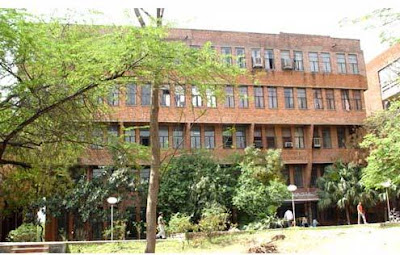
New Delhi: In a setback to the secular culture and history of the prestigious Jawaharlal Nehru University in New Delhi, the right wing Hindutva groups, it seems, have strengthened themselves in the campus, and they are announcing it by their actions: in the last six months ABVP activists have carried out three attacks on Muslim students in the campus. The administration did take action but in a way that only emboldened the attackers.

The recent attack was on April 17 on a Ph.D. student. “I was outside the Lohit Hostel. Five students came up on bikes and started beating me without any provocation,” says Idrees Kanth. They were from the same group of people who had beaten up some other students in the past also, says he who lives at Lohit Hostel.

On March 17 this year another student Masihullah, from the same hostel, was brutally beaten in full public view by the Hindutva activists. “Five students from the same hostel beat up Masihullah in the mess room. The warden remained mute spectator as he was threatened by the attackers,” says Abhilash, a Ph.D. student living at the hostel for four years.

“They are not misguided youths, they are guided RSS activists,” says Abhilash adding that one of the attackers is son of a Rajasthan Congress leader.

In Ramazan last year, another student Iqbal Zia was also beaten by the same group. Apparently there is no such reason like personal enmity or student politics. Behind the attacks there is simply a communal agenda of the extremist group. In all incidents they have singled out Muslim students. By attacking and frightening Muslim students they may be seeking communal polarization in the campus.

Stanlee, a Ph.D. student who is living at Lohit Hostel for four years, says the attackers are hardcore ABVP activists. “Tension has prevailed Lohit since the beginning. Since it was opened for students four years ago, there have been a number of incidents, and in most cases ABVP activists have been involved,” says Stanlee. “There is no student politics behind the incidents. There is simply communal thinking behind the attacks,” he says. All victims so far are Muslims. There are about 300 students in the Lohit Hostel, of them Muslims are between 20-25.

In Masihullah’s case action was taken against seven attackers. Three were declared out of bounds and four were transferred to different hostel. A fine of Rs 3000 was also slapped on them. But notice about the action was not pasted on notice board anywhere in the campus. And some time later the punishment was revoked.

The administration has taken the cases as a normal law and order issue. They have not acted against them seriously, says Abhilash.

“In my case they have not taken any action. They say the accused are last year students. We cannot take hard action against them. This will affect their career,” says Idrees. “The problem is not just these incidents. Problem is rather deeper. The administration is fast turning anti-minority,” says he.

No difference between congress and BJP

Their are no difference in between congress and BJP. Tese two are the different side of the same coin.

Jailed Houston Imam Zoubir Bouchikhi Speaks from Private Immigration Prison

Jailed Houston Imam Zoubir Bouchikhi Speaks from Private Immigration Prison

var so = new SWFObject(‘/images/player.swf’,’flash_player’,’448′,’356′,’9.0.115′); so.addParam(“allowfullscreen”,”true”); so.addVariable(“file”,”/chapter_list/3418/4″); so.addVariable(“playlist”,”none”); so.addVariable(“skin”,”/images/noskip.swf”); so.addParam(“wmode”, “transparent”); so.addVariable(“autostart”,”false”); so.addVariable(“bufferlength”,”4″); so.addVariable(“quality”,”high”); so.addVariable(“item”,0); so.addVariable(“repeat”,”list”); so.addVariable(“streamer”,”lighttpd”); so.addVariable(“image”, “/images/dntv.jpeg”); so.write(‘swfplayer’); function dn_interceptor(p, h, c) { this.player = p; this.has_pre_roll = h; this.pre_roll_campaign = c; this.current_item = -1; this.donate_tripped = false; this.state = ‘IDLE’; p.addModelListener(“TIME”, “interceptor.time_listener”); p.addModelListener(“STATE”, “interceptor.complete_listener”); p.addControllerListener(“ITEM”, “interceptor.item_listener”); } dn_interceptor.prototype.item_listener = function(obj) { this.current_item = obj.index; } dn_interceptor.prototype.time_listener = function(obj) { this.trip_donate_link(); } dn_interceptor.prototype.complete_listener = function(obj) { this.stop_if_first_item_complete(obj.newstate); } dn_interceptor.prototype.stop_if_first_item_complete = function(state) { // prevent the player looping back to 1st story when viewing the whole show var is_pre_roll_item = this.has_pre_roll && this.current_item == 0; if (!is_pre_roll_item && state == “COMPLETED”) { setTimeout(function() { interceptor.player.sendEvent(“STOP”); }, 100); } } dn_interceptor.prototype.trip_donate_link = function() { // update the donate button to reflect campaign // if they watch the pre-roll if (this.has_pre_roll && this.current_item == 0 && !this.donate_tripped) { var db = document.getElementById(‘donate_link’); if (db) { db.href = ‘/donate/’ + this.pre_roll_campaign; this.donate_tripped = false; } } } var interceptor; function playerReady(obj) { interceptor = new dn_interceptor(document.getElementById(obj[‘id’]), false, ‘ye08-preroll’); }; Zoubairwebok

We look at the case of Sheikh Zoubir Bouchikhi, who has been held without bail at a private immigration prison in Houston for the past four months. Bouchikhi, a native of Algeria, has lived in the United States for the past eleven years and has four children, three of them American-born citizens. In 2007, he received notice that the US Citizenship and Immigration Services had denied his application for permanent residency status. He was arrested by immigration authorities in December 2008. He has been held without bail ever since. He speaks from immigration jail in his first national broadcast interview. [includes rush transcript]

Sheikh Zoubir Bouchikhi, speaking from immigration prison.

Rush Transcript

This transcript is available free of charge. However, donations help us provide closed captioning for the deaf and hard of hearing on our TV broadcast. Thank you for your generous contribution.

AMY GOODMAN: We’re here in Austin, Texas, as we end today’s show by looking at the case of Sheikh Zoubir Bouchikhi, who has been held without bail at a private immigration prison in Houston for the past four months.

Imam Zoubir, as he’s known, is a native of Algeria, has lived in the United States for the past eleven years. He has four children, three of them American-born citizens. He first came to the United States in 1998 on a student visa. He earned a master’s degree in Islamic Studies, then moved to Houston, where he applied for a religious worker visa and was hired in 2001 by the Islamic Society of Greater Houston, or ISGH, a coalition of mosques and schools . Since then, he has served as the spiritual leader of the Abu Bakr Siddqui in southeast Houston.

In 2003, Imam Zoubir applied for permanent residency status as a religious minister. He also applied for his wife and the couple’s oldest child, who was born outside the country. In 2007, the family received a notice that the US Citizenship and Immigration Services had denied their application. They appealed, but the appeal was rejected in November of 2008. A month later, immigration officials arrested him at his home and led him away in handcuffs in front of his wife and children. He has been held without bail ever since. The case has angered many in the local Houston community, who are rallying to support him with letter-writing campaigns, petitions and websites.

A few days ago, I had a chance to interview Imam Zoubir. He called in from the private immigration prison run by the Corrections Corporation of America, where he is being held. This is his first national broadcast interview. I began by asking him to explain why he’s being held.

    SHEIKH ZOUBIR BOUCHIKHI: I am here because the ICE is charging me with arriving alien. And I am denied bond, because I am under that category, called “arriving alien,” although I have been here in the United States legally for eleven years.

    AMY GOODMAN: Can you describe how you were arrested? Did you have any warning? What are the reasons that they are giving you now? And have you had a hearing since you were jailed?

    SHEIKH ZOUBIR BOUCHIKHI: Yes. The way I was detained, ICE officers came to my home around 6:30 in the morning, and they were waiting for me, because they knew I was at the mosque leading the morning prayer. And they detained me in front of my children, while coming back to the house, and my wife kindly requested them that “Let his children please give him a hug before you take him.” And my hands were handcuffed behind my back, and still they refused even a hug to their father.

    I have—I met—I had the chance to be in front of Judge Benton, who belongs to the immigration circle, but they completely refused to give me a bond or to let me go on my recognizance. And this is where I am.

    AMY GOODMAN: Can you talk about your own family? How old are your children?

    SHEIKH ZOUBIR BOUCHIKHI: OK. My oldest son is twelve years old, and his younger brother is ten years old. I have another daughter who is eight years old and another daughter who is almost two years old.

    AMY GOODMAN: Are you able to see them?

    SHEIKH ZOUBIR BOUCHIKHI: Yes, I am able, but behind the—between—I cannot see them directly; there is glass between me and them.

    AMY GOODMAN: Can you talk about your work in the mosque of Houston?

    SHEIKH ZOUBIR BOUCHIKHI: Sure. I am an imam here in Houston, Texas. I lead a congregation of almost 700 people in my mosque, which is called the Masjid Abu Bakr in the southeast of Houston. I belong to an organization called the Islamic Society of Greater Houston, which is my employer.

    And I do teach my community several things, such as, for example, I counsel them, I perform marriages, I perform funerals, funerals and burials, I teach the children values and ethics. I’m very deeply involved in interfaith dialogue and comparative studies. I work with Christian churches, synagogues. I work with the Interfaith Ministries here in Houston. We do provide food for the hungry, such as Meals on Wheels.

    And I’m deeply involved in many other activities, such as speaking against injustice, speaking against the war in Iraq. And I think that these are some of my problems, how I’m perceived by the authori
    ties.

    AMY GOODMAN: What do you mean?

    SHEIKH ZOUBIR BOUCHIKHI: I do think that they are just punishing me for helping people and speaking against injustice.

    AMY GOODMAN: I’m looking at a Houston Chronicle piece of March 6th, and it is quoting an attorney for the Islamic Society of Greater Houston, saying that “In 2007, the family received a notice that USCIS revoked the [Islamic Society of Greater Houston]’s petition and denied Bouchikhi’s request for permanent residency.” Your request.

    “According to Cowan, the government said ISGH,” the Islamic Society of Greater Houston, “had failed to prove Bouchikhi had been continuously employed for the two years prior to filing of its petition and had not demonstrated its ability to pay Bouchikhi’s salary.

    “The government also questioned why ISGH had not proved Bouchikhi was an imam by submitting a formal certificate of ordination.”

    Can you respond to those points?

    SHEIKH ZOUBIR BOUCHIKHI: Yes. I’m glad you brought that, Ms. Goodman. Actually, every issue mentioned by the USCIS in its letter of notice of intent to revoke on January the 16th, 2007, and I have received this letter three-and-a-half years after my approval of the I-360. Three-and-a-half years. It has been fully addressed. Everything mentioned in that letter has been fully addressed by my attorney and by my employer, and all documents requested were made available on February the 15th, 2007. So, we were like perplexed by this statement and this allegation that we didn’t have enough documents. Still, we went and gave them everything, everything they asked.

    The concerns raised by the USCIS have changed at each stage. Each stage, the USCIS sent us a letter. Each time, there is what we call a change of arguments. So we knew that they were not really trying to help me, because each time we answered their letters, they come up with something new.

    AMY GOODMAN: That issue of a certificate of ordination?

    SHEIKH ZOUBIR BOUCHIKHI: Mm-hmm. Oh, yeah. We, in Islam, we don’t have an ordination, unlike maybe Catholicism or other faiths, where a religious leader is given something by a higher authority. In Islam, we go by the amount of knowledge that the person has in this field of Islamic studies. So, having two master’s degrees in Islamic studies, I am fully qualified to be an imam. And we have given them everything.

    AMY GOODMAN: Are you acting as an imam in the detention center? Are you leading prayers?

    SHEIKH ZOUBIR BOUCHIKHI: Yes, yes, yes. I’m leading the prayer. I’m counseling the inmates. I’m even talking to non-Muslims, helping them with their problems. And we are being discriminated against even here inside the CCA.

    AMY GOODMAN: How?

    SHEIKH ZOUBIR BOUCHIKHI: OK. For example, there was a huge problem about the kufi that I use, which is a head cover. Forty-nine days after my detention, there was no problem. After forty-nine days, they raised this problem, and they told me that “You need to take it off. You have no right to walk in the hallways with it.” And I told them, even in Guantanamo the detainees have the right to wear their headscarf if they want, their head covers if they want. And I didn’t keep quiet. I took it to the higher authorities here, and they finally accepted that I use it with a pass.

    AMY GOODMAN: So you’re in a prison, in a detention center that is run by a private corporation, by the—

    SHEIKH ZOUBIR BOUCHIKHI: Private corporation, yes.

    AMY GOODMAN: —Corrections Corporation of America. What are the conditions in the jail?

    SHEIKH ZOUBIR BOUCHIKHI: Well, we had encountered so many difficulties. For example, Ms. Amy, they do not allow more than thirty-four detainees to perform their obligatory prayers Friday, although we have over fifty detainees here who are Muslims. And although the Constitution of the United States gives every right to any group to perform their religious duties, they don’t want to give us more than thirty-four, under the pretext of capacity. And when we told them, “OK, give us a bigger place or space,” they are not really helping.

    AMY GOODMAN: Have you had a hearing since you’ve been jailed—

    SHEIKH ZOUBIR BOUCHIKHI: Yes.

    AMY GOODMAN: —on December 17th? Was this on April 13th?

    SHEIKH ZOUBIR BOUCHIKHI: It was December the 17th.

    AMY GOODMAN: You were jailed on December 17th. When was your hearing?

    SHEIKH ZOUBIR BOUCHIKHI: My hearing was April the 13th.

    AMY GOODMAN: And what happened?

    SHEIKH ZOUBIR BOUCHIKHI: I went in front of Judge Benton, and he heard the arguments of my attorney, as well as the DA, and he said that he would give his final verdict on May the 14th.

    AMY GOODMAN: And what are they weighing right now? Are you facing deportation at this point?

    SHEIKH ZOUBIR BOUCHIKHI: I don’t know what honestly goes in his mind.

    AMY GOODMAN: Your children are American citizens?

    SHEIKH ZOUBIR BOUCHIKHI: Yes, they are. Three of my children are US citizens. They were born here in Houston, Texas.

    AMY GOODMAN: In 2003, the Islamic Society of Greater Houston filed a petition on your behalf for permanent residency as a religious minister?

    SHEIKH ZOUBIR BOUCHIKHI: Mm-hmm.

    AMY GOODMAN: That was what? Six years ago. What happened?

    SHEIKH ZOUBIR BOUCHIKHI: Yeah. Since 2003, October 2003, I have been waiting for my green card, and suddenly, in January 2007, I received a letter of intent to revoke. When we answered completely and fully that the allegations or the documents that they needed, a month later, they gave me a letter of revocation. When I appealed, again the arguments changed. We appealed to the AAO in Washington. They seemed to agree with every answer we gave, yet they went with the Texas Service Center’s decision, and they dismissed my appeal. It was November the 5th, 2008.

    AMY GOODMAN: So, what is the next step? The final decision?

    SHEIKH ZOUBIR BOUCHIKHI: Yeah, the final decision, we are waiting for the judge, Judge Benton, to give his decision, and we will see if it’s in our favor, and thanks God; if it is not, then thanks God again, but we’re going to appeal it to the BIA.

    AMY GOODMAN: The Bureau—

    SHEIKH ZOUBIR BOUCHIKHI: BIA.

    AMY GOODMAN: —of Immigration Affairs.

    SHEIKH ZOUBIR BOUCHIKHI: Immigration Appeals, yes.

    AMY GOODMAN: Of Bureau of Immigration Appeals.

    SHEIKH ZOUBIR BOUCHIKHI: The Board of Immigration Appeals in Virginia.

    AMY GOODMAN: What has been the response outside the jail, where you are in the Greater Houston community?

    SHEIKH ZOUBIR BOUCHIKHI: Well, I thank—I take this opportunity to thank each and every man, woman, young children, everybody, Muslim, non-Muslims, who stood up by me and by my family, knowing that this is an injustice done to a human being, to a family. They are punishing me and punishing my family, punishing my community, just for who I am. So I thank them. It was tremendous support. They came to the court. And they were not allowed, unfortunately, to enter the courtroom.

    AMY GOODMAN: Why?

    SHEIKH ZOUBIR BOUCHIKHI: I don’t know. I don’t know. They said only ten people can come, and then later on they changed their mind.

    AMY GOODMAN: I was reading the Houston Chronicle piece about your youngest daughter, your wife not wanting to bring her to the jail to see you. Have you s
    een her?

    SHEIKH ZOUBIR BOUCHIKHI: Yes, I did. Finally, I told her that things are going to go along, just bring her. And when she came in, it was heartbreaking. She was like trying to kiss me through the glass.

    AMY GOODMAN: What are your final thoughts in this interview? What would you like people to understand in this country about your situation?

    SHEIKH ZOUBIR BOUCHIKHI: I just want them to know that I am really surprised that this is happening in the Obama administration time, although it started in the Bush administration. Every problem that I’m facing and my family and my community are facing started in the Bush administration, but it is continuing. And we really wanted change, and we were hoping for change, but I don’t see it. I don’t see it.

    And they are denying me—by the way, they gave me a bond after ninety days. DHS gave me a bond, and they did not honor it until today. They gave me the bond on March the 17th. And just like that, they did not, when a friend of mine, a dear friend of mine, went to pay the bond, which was $20,000—I mean, they are bonding out criminals. I have no criminal history whatsoever. I have never committed even a misdemeanor in my life. And they did not even honor what they have given me.

    AMY GOODMAN: They revoked the bond when it was—

    SHEIKH ZOUBIR BOUCHIKHI: No, they didn’t even—they didn’t even send me a letter or anything to say that it’s revoked. Just verbally, they said, “We are not going to give it to you.”

    AMY GOODMAN: When you say they are punishing you for who you are, what do you mean?

    SHEIKH ZOUBIR BOUCHIKHI: I mean, I strongly believe that I am targeted because of my political views, especially I was against the war in Iraq, against bombing innocent civilians in Lebanon in 2006, and for my clear stance that I am pro-democracy and values that this country was founded on. And they don’t want for somebody who is free-minded and outspoken.

    AMY GOODMAN: Well, I want to thank you very much for being with us. And finally, your message to your own children—when they come to see you, do they ask you why you’re behind glass, why you’re in jail?

    SHEIKH ZOUBIR BOUCHIKHI: Yes, yes. Like my third child, Bushra, who is eight years old, she keeps telling me, “Why, Daddy? Why are you here? Why don’t you come home?” And I say, “It’s not yet time, my daughter.” She said she thinks I am actually—for three months, she thought I was in a conference, because she’s used that I travel for conferences. And she said, “This time, you took long time.” Then, when her mother brought her to the detention center, she was crying, and she told me, “Why are you staying here? This is not your place.” I said, “I know, my daughter. But I’m coming very soon.”

    And they decorated the home, by the way, on the 18th of March. They decorated the home. They bought balloons. They bought a sign, “Welcome, Daddy.” And their father didn’t come, just because DHS didn’t honor its bond.

AMY GOODMAN: Sheikh Zoubir Bouchikhi, speaking to us from the private detention facility he has been detained at for the last four months in Houston.

“Islam Changed My Game Plan”

“Islam Changed My Game Plan”

By  Farah A. Chowdhury IOL Correspondent

Image

“He never allows anything to stand in his way to help a client. He goes the extra mile,” says Garment’s boss.

NEW YORK — The book on Mustafa Garment’s office desk has the title “Changin’ your Game Plan.”

For the African American, who broke his criminal life cycle through embracing Islam, the book relates like no other.

“I can identify with changing the game plan, changing the way you think, because that’s pretty much my story,” Garment, now a forensic coordinator at the Brooklyn Mental Health Court, told IslamOnline.net.

Soft-spoken, bushy bearded Garment, 64, is nothing of the man he used to be some 20 years ago.

Working at the Mental Health Court, an affiliate of the New York State Supreme Court, he helps jail inmates get treatment for mental illnesses and drug addiction.

No one can help better than Garment, who spent his early life struggling with homelessness and drug and alcohol addiction.

Growing up in poverty-stricken Harlem, he had a childhood full of sufferings.

“I remember being so hungry. I remember feeling weak from hunger.”

His first experience with drugs and alcohol, which became part of his “lifestyle” for 30 years, was at the age of 13.

Garment says that part of being accepted among his peers involved a routine of smoking marijuana and drinking wine.

“I would meet my mother in the bar,” he says of his former self.

He dropped out of the High School in the beginning of the tenth grade.

But it was when introduced to crack, a smokeable form of cocaine that Garment’s addiction-based lifestyle came to a climax.

He began to resort to stealing and even selling drugs at one point to feed his addiction. 

“When you’re addicted to crack, the first thought that comes to mind is how to get more.”

He grew up into a bitter and angry man jailed for more than 30 times for crimes ranging from drug dealing to robbery.

Turning Point

Amid his drug problems and incarceration, Garment, raised a Baptist, first contact with Islam was in 1972.

Then 27-year-old, he converted and married a Muslim woman.

But Garment admits that his conversion was only nominal, and it did not keep him off his criminal lifestyle.

“I wasn’t thinking about changing my game plan,” he says.

“I had the same mindset. So I pretty much got the same thing I always got. I didn’t change.”

As his life continued to be identified by addiction and incarceration, his Muslim wife eventually asked for divorce.

It was finally in 1998, after nearly 40 years of living on the streets, surviving on soup kitchens and stealing and using drugs that Garment decided to open a new chapter with himself.

He started attending Narcotics Anonymous meetings and sought assistance through The Bridge, an organization that helps the homeless and those with substance abuse problems.

It was there that Garment met Amin, his Muslim mentor who guided him into becoming a real Muslim while on the path to recovery.

Amin, a former heroin addict and AIDS patient, introduced Garment to Millati Islami – a drug recovery program based on Islamic principles. 

“We would talk about getting close to Allah, talk about praying,” Garment remembers.

Lucille Jackson, who used to run The Bridge, describes Garment’s re-discovery of Islam as a turning point for him.

“He took advantage in a positive way of what was around him. He made use of knowledge very well.”

Helping Others

Jackson was so impressed that she decided to give Garment a job in her organization while he was still in treatment.

When she became Project Director of the Brooklyn Mental Health Court, she wanted to hire him as a forensic coordinator.

But because of Garment’s criminal record, she needed to obtain a special permission from the state’s Supreme Court to hire him. She did.

Garment work involves linking inmates with services they need to find treatment for mental illnesses and substance abuse problems or to help them with unemployment and homelessness.

Though he is not required to sh
are his own experiences with clients, he does speak about it if he believes it will help someone, especially young people who live his own tragedy as a youth.

“I see that their lives are being interrupted. I take them on as my own children. I tell them ‘Get an education. Don’t do this to yourself.’”

Jackson describes Garment’s work as “fabulous.”

“He is an incredible human being,” she told IOL.

“He never allows anything to stand in his way to help a client. He goes the extra mile.”

Today a happily married father and grandfather, Garment thanks God every day for discovering Islam during the hardest days of his life.

Besides his job, he has finished General Educational Development (GED). He is also excelling in Arabic classes he recently undertook to fully understand the Noble Qur’an.

Garment plans to get a degree in Islamic Studies some day.

“When we were young, we used to blame everything on the white man,” he recalls.

“But I’m a Muslim today. My condition is by my own hands [and] by the will of Allah.”

Zakia Jafri welcomes SC order on Narendra Modi and others

Zakia Jafri welcomes SC order on Narendra Modi and others | TwoCircles.net

Zakia Jafri welcomes SC order on Narendra Modi and others
Submitted by admin3 on 29 April 2009 – 7:12pm.

* Crime/Terrorism
* India News
* Indian Muslim

By TwoCircles.net Correspondent

Ahmedabad: Welcoming the Supreme court order on Monday directing the special Investigation Team(SIT) headed by former CBI director R K Raghavan to investigate the roles of Chief Minister Narendra Modi and seven of his ministers, including VHP international general secretary Pravin Togadia as also senior bureaucrats and police officers, into the communal riots in the state from February 27,2002, to Mary 31, 2002, wife of slain ex-Congress MP Ehsan Jafri and human rights activist termed it a tremendous relief towards fight for justice in Gujarat.

The SC orders came on a petition filed by Zakia. According to the order, SIT has to submit its report to the apex court within a period of three months. The SIT recently completed investigations in 10 most heinous riot cases of 2002 and submitted its report to the Supreme Court. It was because of SIT investigation that Maya Kodnani, a minister in Modi’s cabint and a senior VHP functionary Jaideep Patel were arrested and both are colling their haeels in jail.

Reacting to the order, she said: “I have immense faith in Allah and I am hopeful that those who conspired, planned and executed the riots in which my husband Ehsan Jafri and more than two thousand others were killed in Gujarat, will get justice’’.

Zakia, who shifted to Surat after her husbands killing un Gulberg Society in Ahmedabad on Febvruary 28, 2002, is living with her elder son Tanvir Jafri, a senior executive with Larsen and Toubro.

Commenting on it, noted human rights activist J S Dandukwala said that the apex court orders was a tremendous relief to all victims of 2002 riots.

“We have always viewed Narendra Modi as a principal culprit of the killings of over 2000 people’’, he said, adding that `sadly, Modi used his political clout and administrative power to cover up his 2002 footprints’’.

“Horribly, many top industrialists and even Muslim bureaucrasts like retired additional director general of police A I Saiyed and several maulanas have endorsed Modi in spite of his Hitler-like records’’, commented Bandukwala, himself a victim of 2002 riots as he was the first to be targeted when the anti-Muslim riots began following torching of Sabarmati Express train at Godhra on February 27, 2002, in which 59 passeners, all Hindus, were killed.

Senior advocate and JSM representative Mukul sinha said that he had long ago demanded before Nanavati Commission probing the godhra and post-Godhra riots to summon Modi and his ministers to quiz them for their omission and commission during the riots.

However, he expressed happiness over SC ordering probe int the roles of political bigwigs into the riots who had gone scot-free.

Zakia had for the first time sent a detailed letter on June 8, 2006, to the then DGP A K Bhargava, demanding registration of FIR against 63 persons including chief minister Narendra Modi under Section 154 of CRPC. However, her plea was not entertained.

On May 1, 2007, Zakia and Mumbai-based Teesta Setalvad of Citizens for Justice and Peace(CJP) filed a petition in the Gujarat High Court, praying it to direct the police to register FIR against Modi, his cabinet ministers, administrative and police officials, including the then director general of police K Chakravarti and handing over the case to CBI for investigation.

However, the Gujarat High Court rejected the petition on November 2, 2007, asking the petitioners to approach the magisterial court in this regard.

After that Zakia and CJP filed a petition in the Supreme Court seeking apex court’s direction for an FIR to be filed against Modi and 62 others, and for an investigation into their alleged role in 2002 anti-Muslim riots.

Zakia’s petition in the Supreme Court raised several questions. An excerpt of these questions is given here.

1. Why were there no minutes of the meeting with chief minister held with senior officers for a review of the situation arising out of Godhra training burning incident?

2. There are some state intelligence reports of a Vishwa Hindu Parishad(World Hindu Council) held at 4 p.m. at Ahmedabad on February 27, 2002. Who attended this meting? Were any elected members of the Gujarat legislature , and the state cabinet present?

3. Why were the bodies of the victims of Godhra train carnage brought to Ahmedabad, and why were they paraded in streets?

4. Did senior police officials or DGP report to Chief Minister or higher officers in writing about the likely repercussions of parading the bodies?

5. Why was no preventive action taken when a bandh call had already been given by VHP?

6. Why was not Army called out immediately and why was there delay in deployment of Army when it reached Ahmedabad?

7. Why was there a delay in declaration of curfew in Ahmedabad?

8. Despite rules for this, why was there no arrangement for videography of the violence by mobs in all districts of the state?

9. Why were there more casualties of Muslims in police firing during riots?

10. Why was the response to distress calls from prominent Muslims like ehsan Jafri, delayed?

11. Why was there no monitoring of the instructions of senior officials, including chief secretary, officials of the home department and the DGP?

12. Why was there no action against officials who failed to register FIRs and why was there no adequate response to the complaints of riot victims?

13. Why was no action taken against supervisory officers, from district superintendents of police to the level of police commissioners and DGP, who violated the Gujarat Police Manual by not properly supervising investigations of serious riot-related crimes and thereby committing culpable omission and grave misconduct?

14. Why was no action taken on the supervisory officers who had done the misconduct of negligent supervision of Bilkis banu and Best Bakery mass massacre cases, whose trials had been transferred by Supreme Court to Maharashtra?

15. Why has there been no further investigation on the depositions of IPS officer Rahul sharma before Nanavati Commission, to reveal the location of BJP leaders and senior officers of police during the riots?

16. Many calls were made to Modi,his cabinet ministers, the then Ahmedabad police commissioner P C Pandey and the then DGP K Chakravarti during the riots. Their phone records must be examined to unearth the facts.

Following is the list of the accused against whom Supreme Court has ordered investigation.

1. Narendra Modi, the then and present chief minister. Charges: Alleged to be architect of criminal conspiracy; unleash unlawful and illegal practices during mass carnage and then protecting the accused having played direct and indirect role and abeeted the commission of the crime.

2. Ashok Bhatt, the then minister of health and now state assembly speaker. Charges: Accused of using political influence to prevent the administration from carrying out their constitutional duty to prevent violence and protect the citizens life.

3. Indravijaysinh Jadeja, the then minister of urban development and now roads and Building Minister. Charges: Accused of using political influence to prevent the administration from carrying out their constitutional duty to prevent violence and protect the citizens life.

4. Prabhatsinh Chauhan, the then tourism and civil aviation minister. Sat in Ahmedabad police control room at the instance of Modi and allegedly
carried out conspiracy and other crimes.

5. Gordhan Zadaphia, the then Minister of state for home. Charges: Conspiracy and instructions to DGP and police officials to allow Hindus to give vent to their anger on Muslims. Allegations of communal bias as alleged by the then Bhavnagar SP Rahul Sharma.

6. Ranjitsinh Naharsinh Chavda, the then MLA. Charges: Accused of using political influence to prevent the administration from carrying out their constitutional duty to prevent violence and protect the citizens life.

7. Kaushik Jamnadas Patel, the then MLA and now minister: Charges: Accused of using political influence to prevent the administration from carrying out their constitutional duty to prevent violence and protect the citizens life.

8. C D Patel, the then MLA and now a minister. Charges: Accused of using political influence to prevent the administration from carrying out their constitutional duty to prevent violence and protect the citizens life.

9. Niteenbhai Ratibhai Patel, the then MLA. Charges: Accused of using political influence to prevent the administration from carrying out their constitutional duty to prevent violence and protect the citizens life.

10. Amitbhai Anilchandra Shah, presently home minister. Charges: Accused of using political influence to prevent the administration from carrying out their constitutional duty to prevent violence and protect the citizens life.

11. Anil Tribhovandas Patel, now MLA and Minister for Industries. Charges: Accused of using political influence to prevent the administration from carrying out their constitutional duty to prevent violence and protect the citizens life.

12. Narayan Lalludas Patel, the then transport minister and now MLA. Charges: Accused of using political influence to prevent the administration from carrying out their constitutional duty to prevent violence and protect the citizens life.

13. Kalubhai Hirabhai Maliwad, the then and present MLA. Charges: Accused of using political influence to prevent the administration from carrying out their constitutional duty to prevent violence and protect the citizens life.

14. Dilip Manibhai Patel, the then and present MLA from Anand. Charges: Accused of using political influence to prevent the administration from carrying out their constitutional duty to prevent violence and protect the citizens life.

15. Madhu Srivastava, the then and present MLA from WAghodia. Charges: Accused of using political influence to prevent the administration from carrying out their constitutional duty to prevent violence and protect the citizens life.

16. Dr. Maya Kodnani, the then and present MLA . Charges: Accused of using political influence to prevent the administration from carrying out their constitutional duty to prevent violence and protect the citizens life.

17. Nalin Kantilal Bhatt, the BJP general secretary and now Bahujan samaj party leader in Vadodara. Charges: the author of the affidavit of the BJP before the Nanavati-shah Commission.

18. Rajendrasinh Rana, the then BJP spokesperson and the then BJP lok sabha MP from Bhavnagar. Charges: He called the `bandh’ the day after the Godhra train burning incident on February 27, 2002.

19. Dr.Kaushikbhai Jamnashanker Mehta, joint secretary, VHP, Gujarat.

20. Dr. Praveen Togadia, International general secretary, VHP. He is the author, verbal and written, of several incendiary speeches that have reportedly breached criminal law by inciting violence against the religious minorities.

21. Dr. Jaideep Patel, the then VHP Gujarat secretary. Charges: Accompanied the road procession of victims of Godhra train carnage from Godhra to Ahmedabad and allegedly instigated crowds to violence against Muslim residents of Naroda Gam.

22. Babu Bajrangi, VHP/Bajrang Dal leader. Charges: accused in Naroda Patiya mass massacre and also responsible for publicly intimidating victim survivors and eyewitnesses outside Nanavatyi commission office in August 2004.

23. Prof. Keshavram Kashiram Shastri(now dead), the then chairman of Gujarat VHP and editor of Vishwa Hindu Samachar. Charges: In an interview to Rediff.com, he detailed how VHP had targeted the Muslims and their properties by using electoral rolls.

24. Babubhai Rajput, BJP worker. Charges: Involved in criminal conspiracy and violence.

25. K. Chakravarti, the then DGP. Charges: Conspiracy with chief minister Narendra Modi and participating in the meeting chaired by Modi asking officials to let Hindus vent out their anger, failure to take action against the accused, subverting the criminal justice system, dereliction of his supervisory responsibility and professional commitment by not enforcing the Gujarat police manual regulations.

26. A K Bhargava, former DGP. Charges: alleged to have participated in a meeting where illegal instructions were issued by Modi. Not filed any affidavit before Nanavati commission , negligence in supervision of riot related cases.

27. Subba Rao, former chief secretary. Charges: alleged to have participated in a meeting where illegal instructions were issued by Modi. Not filed any affidavit before Nanavati Commision.

28. Ashok Narayan, former home secretary. Charges: alleged to have participated in a meeting where illegal instructions were issued by Modi. Not filed any affidavit before Nanavati Commision.

29. P C Pande, the then Ahmedabad police commissioner. Charges: Giving false information, delay in requisition and deployment of army, delayed the imposition of curfew in Ahmedabad city. Responsible for utter collapse of law and order in Ahmedabad city, the worst affected during 2002 riots.

30. K Srinivasan, former ZAhmedabad district collector. Charges: Responsible for lack of adequate relief operations and hence part of dictated criminal conspiracy. Not filed affidavit before Zanavati commission.

31. Dr. P K Mishra, the then principal secretary to chief minister. Charges: alleged to have participated in a meeting where illegal instructions were issued by Modi. Not filed any affidavit before Nanavati Commision.

32. Kuldeep Sharma, the then IGP, Ahmedabad police range. Charges: failed to protect Muslims in Kheda district under his range. Not filed affidavit before Nanavati commission about what went wrong in 2002 violating the Commission of Inquiry Act.

33. M K Tandon, the then Additional Commissioner of Police, Ahmedabad(now retired). Charges. Negligence of duty in protecting people in Gulberg Society, Naroda Gam and Naroda Patiya under his jurisdiction. Not filed affidavit before Nanavati commission about what went wrong in 2002 violating the Commission of Inquiry Act.

34. K Nityanand, the then home secretary. Charges: alleged to have participated in a meeting where illegal instructions were issued by Modi. Not filed any affidavit before Nanavati Commision.

35. Rakesh Asthana, the then Vadodara Range Inspector General of Police. Charges. Failed to protect the life and property of citizens in his range in Godhra and other areas.

Not filed affidavit before Nanavati commission about what went wrong in 2002 violating the Commission of Inquiry Act.

36. A K sharma, the then Superintendent of Police. Charges: Conducive situations not created for rehabilitation of victims, compromising with perpetrators of violence, inaction facilitating riots. Not filed affidavit before Nanavati commission about what went wrong in 2002 violating the Commission of Inquiry Act.

37. G C Murmu, the then secretary, Law and Order. Charges. alleged to have participated in a meeting where illegal instructions were issued by Modi. Not filed any affidavit before Nanavati Commision.

38. Shivanand Jha, the then secretary, home. Charges: Allegations of criminal conspiracy.

39. D H Brahmbhatt, the then collector, Panchmahals district. Charges: Collector of Panchamahals where mass graves
were discovered in December 2005 and a vital accused to understand the allegations of continuing subversion of the law and order machinery in the state.

40. Deepak Swaroop, the then IGP, Vadodara Range. Charges. Failed to take adequate action resulting in large scale violence in Dahod and Panchmahals district, conducive situations not created for rehabilitation of victims, compromising with perpetrators of violence. Not filed any affidavit before Nanavati Commision. Responsible for further subversion of eviudence during the Best Bakery retrial as commented upon in the judgement of judge Abhay Thipsay.

41. Sudhir sinha, former Vaddoara police commissioner. Charges: Played an unholy role for facilitating a few major witnesses of the Best Bakery case turning hostile.

42. K. Kumarswamy, the then additional Vadodara police commissioner. Charges: Played an unholy role for facilitating a few major witnesses of the Best Bakery case turning hostile.

43. B S Jebaliya, the DSP, Anand. Charges: did not supervise the investigators of riot cases against pro-BJP accused, compromised with perpetrators of violence, connived with the accused and the political class.

44. D G Vanzara, senior IPS official. Charges: responsible for many encounter killings.

45. Rahul Sharma, IPS officer and former DSP, BHavnagar. Prevented violence in Bhavnagar, witness to subversion of justice process by a connivance between the accused and influential politicians.

46. Raju Bhargava, senior IPS official and the then DSP, Panchmahals. Charges: Making false statements, conducive situations not created for rehabilitation of victims, compromising with perpetrators of violence, inaction facilitating riots.

47. Anju Sharma, then then Bharuch collector. Charges. Did not do proper relief work, was allegedly involved in criminal conspiracy.

48. D D Tuteja, the then Vadodara police commissioner and now retired. Charges: Allegedly made false statements, conducive situations not created for rehabilitation of victims, compromising with perpetrators of violence, inaction facilitating riots.

49. Bhagesh Jha, the then Vadodara district collector. Charges: Giving false information, forcing closing down of relief camps in first week of August 2002 to project a false image of normalcy.

50. Nitiraj solanki, the then DSP, Sabarkantha district. Charges: Making false statements, conducive situations not created for rehabilitation of victims, compromising with perpetrators of violence, inaction facilitating riots.

51. Amrutlal Patel, the then District coleector, Mahesana district. Charges:Giving false information, not taking action against print media publishing communally provocative reports, forcing closing down of relief camps in first week of August 2002 to project a false image of normalcy.

52. Upendra Patel. , DSP, Rajkot district. Charges: Making false statements, conducive situations not created for rehabilitation of victims, compromising with perpetrators of violence, inaction facilitating riots.

53. P N Patel, the then district collector, rajkot. Charges: Giving false information, not taking action against print media publishing communally provocative reports, forcing closing down of relief camps in first week of August 2002 to project a false image of normalcy.

54. V M Pargi, the then Deputy commissioner of Police, Ahmedabad. Charges: Questionable role in Best Bakery case for manufacturing evidence.

55. K G Erda, the then police inspector at Meghaninagar police station. Charges: Dereliction of duty when massacre was taking place in gulberg Society from 7.30 a.m. to 5.30 p.m. on February 28, 2002.

56. Kerman Khurshed Mysorewala, the the Naroda Police Inspector. Charges. Dereliction of duty when mass carnage took place in Naroda Patiy and Naroda Gam from 9 a.m. on February 298 to 2 a.m. on March 1, 2002.

57. M T Rana, the then Assistant Police Commissioner, Ahmedabad city. Charges: Allegedly dereliction of duty and involved in subvwersion of justice and tampering of evidence.

58. Tarun Barot, former Crime Branch inspector. Charges: ): Involved in many encounter killings in Ahmedabad city. Involved in many controversial mass carnage investigations subverting process of justice and tampering of evidence.

59. Narendra Amin, Dy SP. Charges: involved in encounter killings.

60. G C Raiger, the then additional director general of police(intelligence), now retired. Charges: attended Chief Minister Narendra Modi’s meetings and privy to information between February 27, 2002 and April 9, 2002 but did not file affidavit before Nanavati commission.

61. K R Kaushik, senior IPS officer and the then ADGP(crime), now retired. Charges: Attended meetings chaired by Modi and other senior officials but did not file affidavit before Nanavati commission.

62. Amitabh Pathak, the then Range IGP, Gandhinagar. Charges: Making false statements, compromising with perpetrators of violence, inaction facilitating riots. conducive situations not created for rehabilitation of victims.

63. Satish Verma, the then Kutch Range IGP. Charges: connived with the accused and political class, compromised with the perpetrators of violence.


‘s Comments On The War On Terrorism

A World Leader’s Comments On The War On Terrorism

(We have decided to include these two articles from The Star newspaper in Malaysia as part of Islamic World’s position on the “war on terrorism” because they come from an influential world leader, Datuk Seri Dr. Mahathir Mohamed, Prime Minister of Malaysia, and they are very much in line with what we have been saying, and what we consider to be a reasonable and representative position from the Muslim perspective. These quotes are from a conference on terrorism organised by the Institute for Strategic and International Studies.) .

Target the Roots of Terror

By SA’ODAH ELIAS

KUALA LUMPUR: The best solution to the global terrorist problem is to remove the causes of terrorism, thus making the activity no longer tenable, Datuk Seri Dr. Mahathir Mohamed said yesterday. The Prime Minister said once the causes were removed, terrorists would lose their power base as support for their actions would be much reduced, if not cease altogether. “This is the best approach because the process of identifying and hunting the terrorists will be very difficult and will take a long time. But we may not want to remove these causes because we do not like to give the impression that the terrorists have succeeded, but such an attitude will not help. The terrorists must be hunted and brought to justice, but the causes of their committing the acts of terror must also be removed. Even terrorists would not want to sacrifice their lives for nothing,” he said when opening a conference on terrorism organised by the Institute of Strategic and International Studies.

Dr. Mahathir also said, The world must be serious and not be selective in the fight against terrorists, as the cost of turning around the world’s economy thrown into recession because of terrorist attacks would be very high. If the whole world, including the Muslim world, was to participate in eliminating terrorism, all terrorists, irrespective of their race or religion, must be targeted and the cause of their anger and disaffection removed. If we have to determine who is a terrorist and who is not then we have to base it on the act and not on the person or the group or the race or the religion. And no one must be spared, whether their cause is right or not. They must include state terrorists as well, including the Israeli government of Ariel Sharon, the man responsible for the massacre of thousands of Palestinians in Shabra and Shatila and is still the man behind the systematic killing of the Palestinians today”.

Determining who were terrorists was important because people who some described as terrorists were regarded as noble freedom fighters by others. More confusing still, he said, there were many ambivalences in the definition of terrorist as some who were condemned as terrorists one day might be considered respectable leaders another day. “The Jewish Hagana, Irgun and Stern Gang were at one time regarded and hunted as terrorists, but later became respected leaders of Israel. Jomo Kenyatta and Robert Mugabe were considered terrorists and were condemned by the British but later became the acknowledged leaders of independent states. The Irish Republican Army is a terrorist organisation in the eyes of the British but is regarded as freedom fighters worthy of financial support by the Americans. With such differing views at different times, it is difficult to get the whole world to join in the fight against terrorism and if some countries provide shelter and protection for the terrorists because in their eyes these are not terrorists, it would be impossible to eliminate terrorism,” Dr Mahathir said.

Dr. Mahathir also said Muslims could not be faulted if they were under the impression that the current act against terror by the United States and its allies in Afghanistan was beginning to look more like a war against Muslims, especially with their talk of meting out the same punishment on Iraq. This impression, he said, could only be eliminated if similar actions were taken against those who terrorised the Muslims, like in Palestine, the Bosnians, Chechens and the people of Kosovo.

Dr. Mahathir reiterated that attacking Afghanistan was not going to result in the capture of the terrorists believed to be involved in the Sept 11 attack in New York and Washington, but instead might likely anger a lot of Muslims. “Their governments may not, though some are likely to be angered by the wanton acts against a brother Muslim country, but certainly from the vast number of Muslims. There would be quite a few who would join the ranks of terrorists to avenge what they see as gross injustice and cruelty. “So the bombing of Afghanistan, far from progressing the war to eliminate terrorists, would actually result in the spawning of more terrorists, saddling the world with the problem forever,” he said.

Dr Mahathir said Malaysia was familiar with terrorism and the war against terrorists, having to face the problem for 42 years between 1948 and 1990, but in the end the terrorists were defeated by the government campaign to win the hearts and minds of the people so as to cut off their civilian support. “We studied the causes of their disaffection and that of their supporters and we took remedial actions. Our decision to accord citizenship rights to over a million non-Malays then was not a victory for the struggle of the terrorists, but was a means to win the loyalty of the disaffected people and to get them to co-operate in the war against the terrorists,” he said.

Speaking to reporters later, Dr Mahathir said he had already written to President George W. Bush urging the United States to halt the bombing in Afghanistan and expressing the hope that the war in that country would end soon. “I am talking of a stop to the bombing because of the damage it can do to the innocent civilians. The use of ground forces is better because the damage is more contained,” he added.

Palestinian Issue the Cause of Muslim Anger

KUALA LUMPUR: Prime Minister Datuk Seri Dr. Mahathir said yesterday that Israel is a terrorist state and that the issue of Palestine is the principle cause of anger and frustration among Muslims, some of whom had resorted to terrorism. To resolve the issue, he said, the first step must be to accord recognition to Palestine as a state and for the United Nations peacekeeping force to forcibly separate the two. However, he said that while the Palestinians were willing to have the UN peacekeeping force, the Israelis objected to it and the world pandered to the wishes of the Israelis, resulting in more killings and terrorism. “It all started because the Israelis came and occupied lands which are not theirs by right. Their only claim is based on a 2,000-year-old history, and if that is the basis of their claim, then even Malaysia can make similar claims on some countries,” he said after opening a conference on terrorism.

In his opening speech, he said there was a great deal of anger in the Muslim world over this issue which the West could never understand. Because the Muslim world was weak and unable to be of any help to the Palestinians, he said, they viewed the unwillingness of the West to stop the Israelis as a sign that the West was anti-Palestine, anti-Arab and anti-Muslim. He said while most Muslims would only feel anger, there were some among the one billion Muslims whose anger could not be contained, and had resorted to terror tactics. “It is reasonable to believe if there is no Palestinian issue, if the Palestinians are not being oppressed and children killed, the anger of the Arabs and Muslims would not be there or would be much less. Certainly there would not be those who would be willing to kill themselves in the horrible manner as in the attack of Sept 11,” he added.

He said in Palestine civilians including children were being shot and killed every day and in retaliation the Palestinians killed Israelis. “Eve
ryday Palestinians face the possibility of being killed. Can it be said that they do not live in terror of being the next victim? The Israelis too are in that position but they have superior firepower and obviously they instill more terror in the hearts of the Palestinians,” he said. “In frustration, he said, Palestinians, including children, resorted to throwing stones, but the Israelis retaliated with live bullets and yet the Palestinians were described as terrorists and their peace overtures rejected”.

“We must not glorify these terrorists but we need to understand their minds and their mentality. We need to do this if we want to understand the reason why they did this. If we don’t then we will not be able to remove the causes and reduce the incidence of terrorism,” he said.

Indian Madrasas discussing launch of courses on Islamic economics and finance

Indian Madrasas discussing launch of courses on Islamic economics and finance

By Mumtaz Alam Falahi, TwoCircles.net

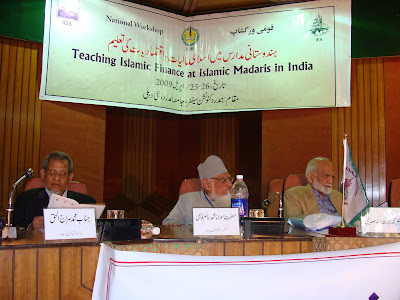
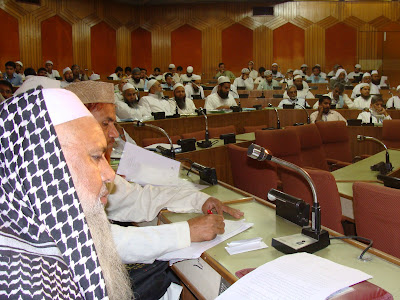
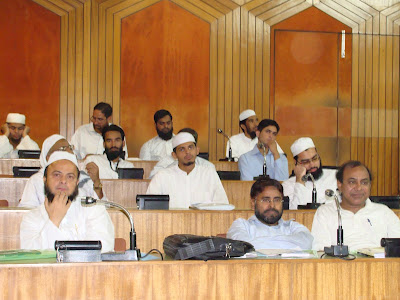
New Delhi: To discuss the possibilities of launching professional courses on Islamic economics, finance and banking at madrasas in India, a two-day national workshop being participated by representatives of all leading madrasas from across the country and Islamic economists from India and abroad began today at Convention Hall of Jamia Hamdard in New Delhi.

The program jointly organized by Institute of Objective Studies (IOS) and Islamic Fiqh Academy (IFA) (India) in collaboration with Islamic Development Bank (IDB) (Jeddah) is aimed at discussing the issue in holistic way with madrasa authorities, said Maulana Ameen Usmani, secretary, Islamic Fiqh Academy.

Talking to TwoCircles.net on the sidelines of the workshop, Usmani said: “Students at Islamic madrasas in India read books of Fiqh written 700-800 years ago. Those books talk of Islamic financial issues. But there is a need to look at those issues in light of today’s requirements and changes.” This program is first such initiative in the country in this regard, he added.

Due to global economic crisis and failure of the prevailing financial system of the world, economists, financial experts and industrialists world over are looking up to Islamic finance and economic system with hope. Islamic economic system has become a topic of discussion in universities, research centers and debates in various western and European countries. But it is a great irony that madrasas are focusing on Fiqh and Hadees. They are not teaching Islamic finance in modern perspective. They are not giving required attention to the Quran which talks about the basics of Islamic economic and financial system.

“It is an irony that Islamic finance is not a topic of discussion at madrasas and among Islamic scholars in India today. Islamic madrasas give little attention to Islamic economic system in the present scenario. They are focusing on Fiqh and Hadees, not even Quran. They debate on whether or not science, maths and computers be made part of madrasa syllabus but they do not discuss Islamic finance,” says veteran journalist A U Asif.

That Islamic finance in modern perspective is not being taught at madrasas is not just India phenomenon was evident from the speech of Dr Ausaf Ahmad, Islamic economist and ex-official of IDB. No big madrasa in any country is giving required focus to Islamic finance and economics, he said.

Speaking on the occasion he said: “Jamia Al Azhar has about 1.2 lakh students, of which 20,000 from foreign countries. They give more attention to traditional Islamic subjects than to Islamic finance. Similar is the situation at Ummul Qura University in Makkah. There too little focus is given to Islamic economics, banking and finance.”

In his speech, Dr Muhammad Manzoor Alam, Chairman, IOS, suggested launching of courses on Islamic economics and finance in various universities and madrasas so that “our madrasa graduates could assess the demands of today and fast changing economic condition.” He said such courses have been launched at Aligarh Muslim University and Jamia Islamia at Shantapuram, Kerala.

In his keynote address on Teaching Islamic finance at Islamic Madrasas in India, renowned Islamic economist Dr Muhammad Najatullah Siddiqi said: “Teaching of Islamic finance in madrasas would be different from other subjects taught there. Unlike other traditional Islamic subjects where all focus is on texts and explanation thereof, Islamic finance and economics will be taught in the perspectives of time and place.” Besides, as Islamic financial system has been operational in several parts of the world for 30-40 years, the madrasa syllabus of Islamic finance will include critical analysis of the operation and its results, Dr Siddiqi, who is also Shah Faisal awardee, said.

“The syllabus should also give information about the texts of Quran and Hadis regarding prohibitions in financial issues like prohibition of interest as well as what was understood from such instructions in the past,” he said and added the syllabus should include development of contemporary Islamic financial system and differences of Ulema over running Islamic banking system.

Other prominent figures who are addressing the workshop include Maulana Khalid Saifullah Rahmani, general secretary, IFA, Maulana Salim Qasmi, director, Darul Uloom Deoband (Wakf) and Muhammad Sirajul Haque, representative of IDB.

Maulana Rabe Hasani Nadvi in his message gave a call for acceleration of efforts for strengthening Islamic economic system in the country. He supported the idea that Islamic finance and economic system should be made part of madrasa syllabus.

The madrasas attending the workshop include Nadwatul Ulema, Darul Uloom Deoband, Darul Uloom Deoband (Wakf), Jamia Nezamia (Hyderabad) and Jamiatul Falah (Azamgarh).

Indian Madrasas discussing launch of courses on Islamic economics and finance

Indian Madrasas discussing launch of courses on Islamic economics and finance

By Mumtaz Alam Falahi, TwoCircles.net

New Delhi: To discuss the possibilities of launching professional courses on Islamic economics, finance and banking at madrasas in India, a two-day national workshop being participated by representatives of all leading madrasas from across the country and Islamic economists from India and abroad began today at Convention Hall of Jamia Hamdard in New Delhi.

The program jointly organized by Institute of Objective Studies (IOS) and Islamic Fiqh Academy (IFA) (India) in collaboration with Islamic Development Bank (IDB) (Jeddah) is aimed at discussing the issue in holistic way with madrasa authorities, said Maulana Ameen Usmani, secretary, Islamic Fiqh Academy.

Talking to TwoCircles.net on the sidelines of the workshop, Usmani said: “Students at Islamic madrasas in India read books of Fiqh written 700-800 years ago. Those books talk of Islamic financial issues. But there is a need to look at those issues in light of today’s requirements and changes.” This program is first such initiative in the country in this regard, he added.

Due to global economic crisis and failure of the prevailing financial system of the world, economists, financial experts and industrialists world over are looking up to Islamic finance and economic system with hope. Islamic economic system has become a topic of discussion in universities, research centers and debates in various western and European countries. But it is a great irony that madrasas are focusing on Fiqh and Hadees. They are not teaching Islamic finance in modern perspective. They are not giving required attention to the Quran which talks about the basics of Islamic economic and financial system.

“It is an irony that Islamic finance is not a topic of discussion at madrasas and among Islamic scholars in India today. Islamic madrasas give little attention to Islamic economic system in the present scenario. They are focusing on Fiqh and Hadees, not even Quran. They debate on whether or not science, maths and computers be made part of madrasa syllabus but they do not discuss Islamic finance,” says veteran journalist A U Asif.

That Islamic finance in modern perspective is not being taught at madrasas is not just India phenomenon was evident from the speech of Dr Ausaf Ahmad, Islamic economist and ex-official of IDB. No big madrasa in any country is giving required focus to Islamic finance and economics, he said.

Speaking on the occasion he said: “Jamia Al Azhar has about 1.2 lakh students, of which 20,000 from foreign countries. They give more attention to traditional Islamic subjects than to Islamic finance. Similar is the situation at Ummul Qura University in Makkah. There too little focus is given to Islamic economics, banking and finance.”

In his speech, Dr Muhammad Manzoor Alam, Chairman, IOS, suggested launching of courses on Islamic economics and finance in various universities and madrasas so that “our madrasa graduates could assess the demands of today and fast changing economic condition.” He said such courses have been launched at Aligarh Muslim University and Jamia Islamia at Shantapuram, Kerala.

In his keynote address on Teaching Islamic finance at Islamic Madrasas in India, renowned Islamic economist Dr Muhammad Najatullah Siddiqi said: “Teaching of Islamic finance in madrasas would be different from other subjects taught there. Unlike other traditional Islamic subjects where all focus is on texts and explanation thereof, Islamic finance and economics will be taught in the perspectives of time and place.” Besides, as Islamic financial system has been operational in several parts of the world for 30-40 years, the madrasa syllabus of Islamic finance will include critical analysis of the operation and its results, Dr Siddiqi, who is also Shah Faisal awardee, said.

“The syllabus should also give information about the texts of Quran and Hadis regarding prohibitions in financial issues like prohibition of interest as well as what was understood from such instructions in the past,” he said and added the syllabus should include development of contemporary Islamic financial system and differences of Ulema over running Islamic banking system.

Other prominent figures who are addressing the workshop include Maulana Khalid Saifullah Rahmani, general secretary, IFA, Maulana Salim Qasmi, director, Darul Uloom Deoband (Wakf) and Muhammad Sirajul Haque, representative of IDB.

Maulana Rabe Hasani Nadvi in his message gave a call for acceleration of efforts for strengthening Islamic economic system in the country. He supported the idea that Islamic finance and economic system should be made part of madrasa syllabus.

The madrasas attending the workshop include Nadwatul Ulema, Darul Uloom Deoband, Darul Uloom Deoband (Wakf), Jamia Nezamia (Hyderabad) and Jamiatul Falah (Azamgarh).

Why Suicide Bombing Violates Islam

Kamran Pasha: Why Suicide Bombing Violates Islam

Why Suicide Bombing Violates Islam

The evil of suicide bombings must be defeated by Muslims, as it violates every tenet of Islam. In the past two days alone, at least 150 people were killed in Iraq in a wave of suicide bombings which have torn apart any illusion of security in that tragic country.

As a Muslim, as a human being, I am filled with horror at images of men, women and children torn to shreds by the madness of people who turn themselves into incendiary devices. And I am filled with outrage and fury at the diabolic forces that seek to present this monstrous, murderous, terrorist activity as somehow sanctioned by my faith.

Let me put this in as simple terms as possible. Suicide bombings, indeed all forms of terrorism, are rejected by mainstream Islam, and always have been.

The Holy Qur’an says it in very clear, without any ambiguity:

“Do not kill yourselves, for truly God is merciful. And if any do that in rancor and injustice, soon shall We cast them in the Fire. ” (Surah 4:29-30)

The Qur’an makes it clear that there are rules to human conflict and limits that must be followed:

“And fight in the way of God against those who fight you. But do not transgress the limits. Truly God does not love transgressors.” (Surah 2:190)

As I discuss in my new novel Mother of the Believers, traditional Islamic law established very clear rules of war based on the practice of Prophet Muhammad and his early followers: Do not kill civilians. Do not kill women and children. Do not harm monks or priests of other religions. Do not destroy the environment.

Abu Bakr, the first leader of Islam after Prophet Muhammad, gave these commandments when Muslims were fighting the forces of the Byzantine Empire, which had sought to destroy the new religion and killed the Prophet’s ambassador:

“Stop, O people, that I may give you ten rules to keep by heart: Do not commit treachery, nor depart from the right path. You must not mutilate, neither kill a child or aged man or woman. Do not destroy a palm tree, nor burn it with fire and do not cut any fruitful tree. You must not slay any of the flock or herds or the camels, save for your subsistence. You are likely to pass by people who have devoted their lives to monastic services; leave them to that to which they have devoted their lives. You are likely, likewise, to find people who will present to you meals of many kinds. You may eat; but do no forget to mention the name of God.”

Muslims always took great pride in the fact that they acted honorably, even in war. They looked with contempt upon the warriors of Europe, who slaughtered civilians mercilessly during the Crusades. When the Muslim leader Saladin (Salahuddin Ayoobi) defeated the Christian kingdom of Jerusalem and retook the holy city, he spared its Christian populace and pointedly said: “We will not do to you what you did to us.”

His comment was in reference to the First Crusade, where Christian “holy warriors” massacred tens of thousands of civilians upon taking Jerusalem in 1099. Muslims were slaughtered en masse, the Jews of Jerusalem were locked into its main synagogue and set on fire. And Arab Christians were murdered by their co-religionists for the sin of having dark skin and looking like the enemy. The Gesta Francorum, a Crusader chronicle of their activities, proudly notes that the “the slaughter was so great that our men waded in blood up to their ankles.”

In the town of Ma’arra in Syria, the Crusaders committed the ultimate atrocity — cannibalism. As Crusader chronicler Radulph of Caen wrote: “In Ma’arra, our troops boiled pagan adults in cooking-pots; they impaled children on spits and devoured them grilled.”

To this day, the Crusaders are referred to in the Muslim world as “the cannibals of Ma’arra.”

The Muslims looked at this kind of atrocity committed in the name of God as unworthy of any great religion, and held themselves above such monstrous behavior.

So how is it possible that its modern equivalent, the mass murder of civilians through suicide bombings, should now be done in the name of Islam?

In Dying to Win, Robert Pape, a scholar at the University of Chicago, analyzes the history and motivation of suicide bombers. Many people who read the book will be surprised to learn that suicide bombing was a tactic that was first used regularly by Hindu terrorists known as the Tamil Tigers. One of the most prominent victims of this tactic, Rajiv Gandhi, the Prime Minister of India, was killed on May 21, 1999 by a female suicide bomber from the Tamil Tigers. According to Pape, Gandhi’s murder marks the first use of the “suicide vest” which has become the tool of suicide bombers throughout the world today.

A full chronology of the history of suicide bombing among Hindu extremists can be found at:

http://www.spur.asn.au/chronology_of_suicide_bomb_attacks_by_Tamil_Tigers_in_sri_Lanka.htm

(A warning that the link contains graphic photos of the carnage caused by suicide bombers.)

One of the greatest tragedies of modern Islam is that Muslim extremists began to adopt this horrific tactic of suicide bombing over the past two decades. Palestinian militants, arguing that they had no other effective way to combat Israeli oppression, began to employ these tactics, and the image of the “Muslim suicide bomber” began to take hold in the media.

I remember at the time most Muslims I spoke with expressed disgust at these horrific acts, but some added the caveat — “What else can these poor people do? They have no tanks or jets to take on Israeli tanks and jets. This is their only way to fight.”

My response then and now is that Islam is a religion that has established rules of war for a reason. Human conflict is perhaps inevitable, but unless there is a sense of morality among warriors, even among the warriors of the oppressed, human beings will descend into monstrosity. The nobility of a cause is forever tainted when dipped in the blood of innocents. The argument that Israeli military activities kill countless Palestinian civilians is not an argument that is supported by the noble spirit of Islam. As Saladin pointed out, the Muslims would not inflict on the Christians the atrocities that the Crusaders had inflicted on their victims, simple because we as Muslims were better than that.

And I warned those who would excuse the suicide bombers as long as they targeted “the unbelievers,” that in Islam all human beings are brothers and sisters and have rights before God and man. I predicted that once some Muslims turned their back on Islam’s strict rules of war and went beneath themselves in order “to win,” the wrath of Allah would be unleashed upon the Islamic community. If we allowed suicide bombings against non-Muslims, then soon would God punish our sins by inflicting the same horror on Muslims.

Tragically, my prediction came true. Suicide bombers in Iraq and Afghanistan now kill thousands of Muslims a year, innocent people going to pray or shop in the marketplace, their only crime being in the wrong place at the wrong time.

This kind of monstrous behavior is not Islam. It never has been Islam. And it will never be Islam, no matter what kind of self-serving justifications the terrorists use.

For those who wish to learn more about mainstream Muslim positions about war, terrorism and suicide bombing, I refer you here:

http://islam.about.com/cs/currentevents/a/suicide_bomb.htm

http://www.harunyahya.com/terrorism3.php

It is time for Muslims and people of all faiths to stand together in love and justice and end this horrific scourge of terrorism and suicide bombing on humanity.

I look forward to the day that the world will no longer associate such monstrosity with my beloved faith. And that one day, mankind will believe that Islam really does represent what its name stands for: “Peace.”

Kamran Pasha is a Hollywood filmmaker and the author of Mother of the Believers, a novel on the birth of Islam as told by Prophet Muhammad’s wife Aisha (Atria Books; April 2009). For more information please visit: http://www.kamranpasha.com

The Idol of Zionism Created by the West Must Be Shattered

MEMRI: Latest News

April 24, 2009 No. 2326

Iranian President Mahmoud Ahmadinejad: The Idol of Zionism Created by the West Must Be Shattered

According to reports in the West, Iranian President Mahmoud Ahmadinejad toned down his speech at the Durban Review Conference, held April 22-24, 2009 in Geneva, due to public criticism. However, when he returned to Iran he stepped up his anti-West and anti-Israel statements. In an April 23, 2009 speech in Eslamshahr, near Tehran, Ahmadinejad said that the West is worshipping the idol it had created in the form of Zionism, and is forcing the entire world to worship it as well – but that this idol “must be shattered in order to save humanity.” He also claimed that the West fabricated the Holocaust and made it a sacred issue, and is using it to take over the entire world.

Also, in a speech the previous day at an international conference of prosecutors of Islamic countries in Tehran, he accused the West of “prepar[ing] the ground for the fulfillment of Zionism’s aspirations.”

The following are excerpts from speeches he made after returning from Geneva:

“This Idol of Zionism Must Be Shattered in Order to Save Humanity… Iran’s Revolution Has Already Been Exported”

In his speech in Eslamshahr, Ahmadinejad said: “Wherever we want to visit and at every conference in which we participate, they [the Western countries] say: ‘Who do you want to criticize? [You can] criticize the U.S., Europe, the [Second] World War, the Vietnam War, or the Korean War, but you must not criticize the Zionists.’ The people of the West fabricated what is known as the Holocaust and Zionism, and they have sanctified it and placed it at the top of all holy beliefs. They have all united around it, and by hoisting the banner of Zionism, while using violence and aggression, spreading civil strife, and [perpetrating] Zionist crimes, they have taken over the world and wish to rule it.

“I say to them: ‘In your countries, you permit [even] the affronting of the divine prophets, the holy of holies of the world.’ They respond by saying: ‘That’s freedom of speech.’ But when it comes to [the issue of] the Zionists, they say: ‘Shut up, and don’t utter a word.’ They [the Western countries] have fabricated an idol called Zionism, which they worship and want to force all the nations to worship.

“I declare from [this pulpit] that this idol of Zionism must be shattered in order to save humanity… [1] They must know that the free nations, the Iranian nation, and the people of Eslamshahr will not tolerate this modern idol-worshiping, that they will shatter this idol with force… Indeed, they have already shattered this idol.

“A journalist asked me: ‘Do you still want to export your revolution?’ I said to him: ‘Iran’s revolution has already been exported. The world’s nations chant the slogans of the Iranian nation, and talk about brotherhood, justice, and peace, and about the confrontation with oppression and with the crimes of the Zionists. The Islamic Revolution of Iran has already been exported. Can’t you see that? Can’t you discern that? If you go to America, [you will see] that there too people chant the slogans of the Iranian nation.” [2]

“The Zionists are the Ones Running International Relations… The Mask of Judaism [Behind which Zionism Hides] is False”

At an April 22, 2009 speech at the international conference of Islamic prosecutors, which convened in Tehran, Ahmadinejad said: “Let me say a few words about the Durban [2] conference in Geneva: The Zionists are the ones running international relations… Everybody knows that Zionism is a political party, and you all know that the mask of Judaism [behind which they hide] is false, because Zionism is devoid of religion, and they are against religion, against race, and against humanity.

“Zionism is a convoluted and crude party, which operates contrary to the teachings of the divine prophets and against humanity [in an effort] to take over the foundations of the world. Their management of the world takes two forms: One is behind-the-scenes control – they have arranged the [international] institutions so that they will continuously strive to achieve the Zionist goals. They [i.e. Westerners] have prepared the ground for the fulfillment of Zionism’s aspirations, and they fully support the Zionist regime, without donning the mask of Zionism [themselves].

“All the organizations – the [U.N.] Security Council and the international political and judicial institutions – wholeheartedly support the Zionists, even though the Zionist mark is not branded on their foreheads.

“I believe that behind the scenes, the Zionists are running these institutions to their own advantage.” [3]

“Over 70% of the Europeans Support Iran … [Because] the Statements of the Iranian Nation Stem from Divine Inspiration”

Upon his return from Geneva, Ahmadinejad said in a speech at Mehrabad airport in Tehran: “A journalist asked me in Geneva: ‘Why do you say these things? The Europeans are concerned about your statements.’ I told him: Let’s test what you say, and hold a referendum in Europe. You will see that over 70% of the Europeans support the Iranian nation. This is because the statements of the Iranian nation stem from divine inspiration.” [4]

[1] Fars (Iran), April 23, 2009.

[2] ISNA (Iran), April 23, 2009.

[3] The Institution of the Iranian Presidency, April 22, 2009.

[4] Kayhan (Iran), April 22, 2009.

The Idol of Zionism Created by the West Must Be Shattered

MEMRI: Latest News

April 24, 2009 No. 2326

Iranian President Mahmoud Ahmadinejad: The Idol of Zionism Created by the West Must Be Shattered

According to reports in the West, Iranian President Mahmoud Ahmadinejad toned down his speech at the Durban Review Conference, held April 22-24, 2009 in Geneva, due to public criticism. However, when he returned to Iran he stepped up his anti-West and anti-Israel statements. In an April 23, 2009 speech in Eslamshahr, near Tehran, Ahmadinejad said that the West is worshipping the idol it had created in the form of Zionism, and is forcing the entire world to worship it as well – but that this idol “must be shattered in order to save humanity.” He also claimed that the West fabricated the Holocaust and made it a sacred issue, and is using it to take over the entire world.

Also, in a speech the previous day at an international conference of prosecutors of Islamic countries in Tehran, he accused the West of “prepar[ing] the ground for the fulfillment of Zionism’s aspirations.”

The following are excerpts from speeches he made after returning from Geneva:

“This Idol of Zionism Must Be Shattered in Order to Save Humanity… Iran’s Revolution Has Already Been Exported”

In his speech in Eslamshahr, Ahmadinejad said: “Wherever we want to visit and at every conference in which we participate, they [the Western countries] say: ‘Who do you want to criticize? [You can] criticize the U.S., Europe, the [Second] World War, the Vietnam War, or the Korean War, but you must not criticize the Zionists.’ The people of the West fabricated what is known as the Holocaust and Zionism, and they have sanctified it and placed it at the top of all holy beliefs. They have all united around it, and by hoisting the banner of Zionism, while using violence and aggression, spreading civil strife, and [perpetrating] Zionist crimes, they have taken over the world and wish to rule it.

“I say to them: ‘In your countries, you permit [even] the affronting of the divine prophets, the holy of holies of the world.’ They respond by saying: ‘That’s freedom of speech.’ But when it comes to [the issue of] the Zionists, they say: ‘Shut up, and don’t utter a word.’ They [the Western countries] have fabricated an idol called Zionism, which they worship and want to force all the nations to worship.

“I declare from [this pulpit] that this idol of Zionism must be shattered in order to save humanity… [1] They must know that the free nations, the Iranian nation, and the people of Eslamshahr will not tolerate this modern idol-worshiping, that they will shatter this idol with force… Indeed, they have already shattered this idol.

“A journalist asked me: ‘Do you still want to export your revolution?’ I said to him: ‘Iran’s revolution has already been exported. The world’s nations chant the slogans of the Iranian nation, and talk about brotherhood, justice, and peace, and about the confrontation with oppression and with the crimes of the Zionists. The Islamic Revolution of Iran has already been exported. Can’t you see that? Can’t you discern that? If you go to America, [you will see] that there too people chant the slogans of the Iranian nation.” [2]

“The Zionists are the Ones Running International Relations… The Mask of Judaism [Behind which Zionism Hides] is False”

At an April 22, 2009 speech at the international conference of Islamic prosecutors, which convened in Tehran, Ahmadinejad said: “Let me say a few words about the Durban [2] conference in Geneva: The Zionists are the ones running international relations… Everybody knows that Zionism is a political party, and you all know that the mask of Judaism [behind which they hide] is false, because Zionism is devoid of religion, and they are against religion, against race, and against humanity.

“Zionism is a convoluted and crude party, which operates contrary to the teachings of the divine prophets and against humanity [in an effort] to take over the foundations of the world. Their management of the world takes two forms: One is behind-the-scenes control – they have arranged the [international] institutions so that they will continuously strive to achieve the Zionist goals. They [i.e. Westerners] have prepared the ground for the fulfillment of Zionism’s aspirations, and they fully support the Zionist regime, without donning the mask of Zionism [themselves].

“All the organizations – the [U.N.] Security Council and the international political and judicial institutions – wholeheartedly support the Zionists, even though the Zionist mark is not branded on their foreheads.

“I believe that behind the scenes, the Zionists are running these institutions to their own advantage.” [3]

“Over 70% of the Europeans Support Iran … [Because] the Statements of the Iranian Nation Stem from Divine Inspiration”

Upon his return from Geneva, Ahmadinejad said in a speech at Mehrabad airport in Tehran: “A journalist asked me in Geneva: ‘Why do you say these things? The Europeans are concerned about your statements.’ I told him: Let’s test what you say, and hold a referendum in Europe. You will see that over 70% of the Europeans support the Iranian nation. This is because the statements of the Iranian nation stem from divine inspiration.” [4]

[1] Fars (Iran), April 23, 2009.

[2] ISNA (Iran), April 23, 2009.

[3] The Institution of the Iranian Presidency, April 22, 2009.

[4] Kayhan (Iran), April 22, 2009.