Peace Homes Aluva

Simplify Building Your Dream Home

Snowden Der-Spiegel Interview

8 July 2013

http://www.spiegel.de/international/world/interview-with-whistleblower-edward-
snowden-on-global-spying-a-910006.html

Shortly before he became a household name around the world as a whistleblower, Edward Snowden answered a comprehensive list of questions. They originated from Jacob Appelbaum, 30, a developer of encryption and security software. Appelbaum provides training to international human rights groups and journalists on how to use the Internet anonymously.

Appelbaum first became more broadly known to the public after he spoke on behalf of WikiLeaks founder Julian Assange at a hacker conference in New York in 2010. Together with Assange and other co-authors, Appelbaum recently released a compilation of interviews in book form under the title “Cypherpunks: Freedom and the Future of the Internet.” [Link by Cryptome.]

Appelbaum wound up on the radar of American authorities in the course of their investigation into the WikiLeaks revelations. They have since served legal orders to Twitter, Google and Sonic to hand over information about his accounts. But Appelbaum describes his relationship with WikiLeaks as being “ambiguous,” and explains here how he was able to pose questions to Snowden.

“In mid-May, documentary filmmaker Laura Poitras contacted me,” Appelbaum said. “She told me she was in contact with a possible anonymous National Security Agency (NSA) source who had agreed to be interviewed by her.”

“She was in the process of putting questions together and thought that asking some specific technical questions was an important part of the source verification process. One of the goals was to determine whether we were really dealing with an NSA whistleblower. I had deep concerns of COINTELPRO-style entrapment. We sent our securely encrypted questions to our source. I had no knowledge of Edward Snowden’s identity before he was revealed to the world in Hong Kong. He also didn’t know who I was. I expected that when the anonymity was removed, we would find a man in his sixties.”

“The following questions are excerpted from a larger interview that covered numerous topics, many of which are highly technical in nature. Some of the questions have been reordered to provide the required context. The questions focus almost entirely on the NSA’s capabilities and activities. It is critical to understand that these questions were not asked in a context that is reactive to this week’s or even this month’s events. They were asked in a relatively quiet period, when Snowden was likely enjoying his last moments in a Hawaiian paradise — a paradise he abandoned so that every person on the planet might come to understand the current situation as he does.”

“At a later point, I also had direct contact with Edward Snowden in which I revealed my own identity. At that time, he expressed his willingness to have his feelings and observations on these topics published when I thought the time was right.”


Editor’s note: The following excerpts are taken from the original English-language version of the interview. Potential differences in language between the German and English versions can be explained by the fact that we have largely preserved the technical terms used by Snowden in this transcript. Explanations for some of the terminology used by Snowden as well as editor’s notes are provided in the form of footnotes. 

Interviewer: What is the mission of America’s National Security Agency (NSA) — and how is the job it does compatible with the rule of law?

Snowden: They’re tasked to know everything of importance that happens outside of the United States. That’s a significant challenge. When it is made to appear as though not knowing everything about everyone is an existential crisis, then you feel that bending the rules is okay. Once people hate you for bending those rules, breaking them becomes a matter of survival.

Interviewer: Are German authorities or German politicians involved in the NSA surveillance system?

Snowden: Yes, of course. We’re 1 in bed together with the Germans the same as with most other Western countries. For example, we 2 tip them off when someone we want is flying through their airports (that we for example, have learned from the cell phone of a suspected hacker’s girlfriend in a totally unrelated third country — and they hand them over to us. They 3 don’t ask to justify how we know something, and vice versa, to insulate their political leaders from the backlash of knowing how grievously they’re violating global privacy.

Interviewer: But if details about this system are now exposed, who will be charged?

Snowden: In front of US courts? I’m not sure if you’re serious. An investigation found the specific people who authorized the warrantless wiretapping of millions and millions of communications, which per count would have resulted in the longest sentences in world history, and our highest official simply demanded the investigation be halted. Who “can” be brought up on charges is immaterial when the rule of law is not respected. Laws are meant for you, not for them.

Interviewer: Does the NSA partner with other nations, like Israel?

Snowden: Yes. All the time. The NSA has a massive body responsible for this: FAD, the Foreign Affairs Directorate.

Interviewer: Did the NSA help to create Stuxnet? (Stuxnet is the computer worm that was deployed against the Iranian nuclear program.)

Snowden: NSA and Israel co-wrote it.

Interviewer: What are some of the big surveillance programs that are active today and how do international partners aid the NSA?

Snowden: In some cases, the so-called Five Eye Partners 4 go beyond what NSA itself does. For instance, the UK’s General Communications Headquarters (GCHQ) has a system called TEMPORA. TEMPORA is the signals intelligen
ce community’s first “full-take” Internet buffer that doesn’t care about content type and pays only marginal attention to the Human Rights Act. It snarfs everything, in a rolling buffer to allow retroactive investigation without missing a single bit. Right now the buffer can hold three days of traffic, but that’s being improved. Three days may not sound like much, but remember that that’s not metadata. “Full-take” means it doesn’t miss anything, and ingests the entirety of each circuit’s capacity. If you send a single ICMP packet and it routes through the UK, we get it. If you download something and the CDN (Content Delivery Network) happens to serve from the UK, we get it. If your sick daughter’s medical records get processed at a London call center … well, you get the idea.

Interviewer: Is there a way of circumventing that?

Snowden: As a general rule, so long as you have any choice at all, you should never route through or peer with the UK under any circumstances. Their fibers are radioactive, and even the Queen’s selfies to the pool boy get logged.

Interviewer: Do the NSA and its partners across the globe do full dragnet data collection for telephone calls, text and data?

Snowden: Yes, but how much they get depends on the capabilities of the individual collection sites — i.e., some circuits have fat pipes but tiny collection systems, so they have to be selective. This is more of a problem for overseas collection sites than domestic 6 ones, which is what makes domestic collection so terrifying. NSA isn’t limited by power, space and cooling PSC constraints.

Interviewer: The NSA is building a massive new data center in Utah. What is its purpose?

Snowden: The massive data repositories.

Interviewer: How long is the collected data being stored for?

Snowden: As of right now, full-take collection ages off quickly ( a few days) due to its size unless an analyst has “tasked” 7 a target or communication, in which the tasked communications get stored “forever and ever,” regardless of policy, because you can always get a waiver. The metadata 8 also ages off, though less quickly. The NSA wants to be at the point where at least all of the metadata is permanently stored. In most cases, content isn’t as valuable as metadata because you can either re-fetch content based on the metadata or, if not, simply task all future communications of interest for permanent collection since the metadata tells you what out of their data stream you actually want.

Interviewer: Do private companies help the NSA?

Snowden: Yes. Definitive proof of this is the hard part because the NSA considers the identities of telecom collaborators to be the jewels in their crown of omniscience. As a general rule, US-based multinationals should not be trusted until they prove otherwise. This is sad, because they have the capability to provide the best and most trusted services in the world if they actually desire to do so. To facilitate this, civil liberties organizations should use this disclosure to push them to update their contracts to include enforceable clauses indicating they aren’t spying on you, and they need to implement technical changes. If they can get even one company to play ball, it will change the security of global communications forever. If they won’t, consider starting that company.

Interviewer: Are there companies that refuse to cooperate with the NSA?

Snowden: Also yes, but I’m not aware of any list. This category will get a lot larger if the collaborators are punished by consumers in the market, which should be considered Priority One for anyone who believes in freedom of thought.

Interviewer: What websites should a person avoid if they don’t want to get targeted by the NSA?

Snowden: Normally you’d be specifically selected for targeting based on, for example, your Facebook or webmail content. The only one I personally know of that might get you hit untargeted are jihadi forums.

Interviewer: What happens after the NSA targets a user?

Snowden: They’re just owned. An analyst will get a daily (or scheduled based on exfiltration summary) report on what changed on the system, PCAPS 9 of leftover data that wasn’t understood by the automated dissectors, and so forth. It’s up to the analyst to do whatever they want at that point — the target’s machine doesn’t belong to them anymore, it belongs to the US government.

Footnotes:

1 “We’re” refers to the NSA.

2 “We” refers to the US intelligence service apparatus

3 “They” refers to the other authorities.

The “Five Eye Partners” is a reference to the intelligence services of United States, Britain, Australia, New Zealand and Canada.

5 “ICMP” is a reference to Internet Control Message Protocol. The answer provided here by Snowden was highly technical, but it was clear that he was referring to all data packets sent to or from Britain.

“Domestic” is a reference to the United States.

7 In this context, “tasked” refers to the full collection and storage of metadata and content for any matched identifiers by the NSA or its partners.

8 “Metadata” can include telephone numbers, IP addresses and connection times, among other things. Wired Magazine offers a so
lid primer onmetadata.

9 “PCAPS” is an abbreviation of the term “packet capture”.


Cryptome/A English translation of Der Spiegel Magazine article, July 7, 2013:

Just before Edward Snowden became a world famous whistleblower, he answered an extensive catalog of questions. These came from, amongst others, Jacob Appelbaum, 30, a developer of encryption and security software. Appelbaum educates international human rights groups and journalists on how to work with the Internet in safe and anonymous way.

He became more publicly know in 2010, when he represented WikiLeaks founder Julian Assange speaking at a hacker conference in New York. Along with Assange and other co-authors he has recently published the interview recording “Cypherpunks: Freedom and the Future of the Internet.” [Link by Cryptome.]

In the course of investigations into the WikiLeaks disclosures, Appelbaum came to the attention of American authorities, who demanded companies such as Twitter and Google to divulge his accounts. He himself describes his attitude to WikiLeaks as “ambivalent” – and describes below how it came about that he was able to ask Snowden these questions.

In mid-May I was contacted by the documentary-maker Laura Poitras. She told me, that at this time she was in contact with an anonymous NSA source, which had consented to be interviewed by her.

She put together questions and asked me to contribute questions. This was, among other reasons, to determine whether she was really dealing with a NSA whistleblower. We sent our questions via encrypted e-mails. I did not know that the interlocutor was Edward Snowden until he revealed himself as such in public in Hong Kong. He did not know who I was. I had expected that he was someone in his sixties.

The following is an excerpt from a extensive interview which dealt with further points, many of them technical in nature. Some of the questions now appear in a different order to understand the context.

The discussion focused almost exclusively on the activities of the National Security Agency. It is important to know that these questions were not asked as relating to the events of the past week or the last month. They were entirely asked without any unrest, since, at that point, Snowden was still in Hawaii.

At a later stage I was again in direct contact with Snowden, at which time I also revealed my own my identity. He told me then that he gave consent to publish his statements.

+++++

Question: What is the mission of the National Security Agency (NSA) – and how is their job in accordance with the law?

Snowden: It is the mission of the NSA, to be aware of anything of importance going on outside of the United States. This is a considerable task, and the people there are convinced that not knowing everything about everyone could lead to some existential crisis. So, at some point, you believe it’s all right to bend the rules a little. Then, if people hate it that you can bend the rules, it suddenly becomes vital even to break them.

Question: Are German authorities or politicians involved in the monitoring system ?

Snowden: Yes of course. They (the NSA people — ed.) are in cahoots with the Germans, as well as with the most other Western countries. We (in the U.S. intelligence apparatus — ed.) warn the others, when someone we want to catch, uses one of their airports – and they then deliver them to us. The information on this, we can for example pull off of the monitored mobile phone of a suspected hacker’s girlfriend — who used it in an entirely different country which has nothing to do with the case. The other authorities do not ask us where we got the leads, and we do not ask them anything either. That way, they can protect their political staff from any backlash if it came out how massive the global violation of people’s privacy is.

Question: But now as details of this system are revealed, who will be brought before a court over this?

Snowden: Before U.S. courts? You’re not serious, are you? When the last large wiretapping scandal was investigated – the interception without a court order, which concerned millions of communications – that should really have led to the longest prison sentences in world history. However, then our highest representatives simply stopped the investigation. The question, who is to be accused, is theoretical, if the laws themselves are not respected. Laws are meant for people like you or me – but not for them.

Question: Does the NSA cooperate with other states like Israel?

Snowden: Yes, all the time. The NSA has a large section for that, called the FAD – Foreign Affairs Directorate.

Question: Did the NSA help to write the Stuxnet program? (the malicious program used against the Iranian nuclear facilities — ed.)

Snowden: The NSA and Israel wrote Stuxnet together.

Question: What are the major monitoring programs active today, and how do international partners help the NSA?

Snowden: The partners in the “Five Eyes” (behind which are hidden the secret services of the Americans, the British, the Australians, New Zealanders and Canadians — ed.) sometimes go even further than the NSA people themselves. Take the Tempora program of the British intelligence GCHQ for instance. Tempora is the first “I save everything” approach (“Full take”) in the intelligence world. It sucks in all data, no matter what it is, and which rights are violated by it
. This buffered storage allows for subsequent monitoring; not a single bit escapes. Right now, the system is capable of saving three days’ worth of traffic, but that will be optimized. Three days may perhaps not sound like a lot, but it’s not just about connection metadata. “Full take” means that the system saves everything. If you send a data packet and if makes its way through the UK, we will get it. If you download anything, and the server is in the UK, then we get it. And if the data about your sick daughter is processed through a London call center, then … Oh, I think you have understood.

Question: Can anyone escape?

Snowden: Well, if you had the choice, you should never send information over British lines or British servers. Even the Queen’s selfies with her lifeguards would be recorded, if they existed.

Question: Do the NSA and its partners apply some kind of wide dragnet method to intercept phone calls, texts and data?

Snowden: Yes, but how much they can record, depends on the capabilities of the respective taps. Some data is held to be more worthwhile, and can therefore be recorded more frequently. But all this is rather a problem with foreign tapping nodes, less with those of the U.S. This makes the monitoring in their own territory so terrifying. The NSA’s options are practically limitless – in terms of computing power, space or cooling capacity for the computers.

Question: The NSA is building a new data center in Utah. What is it for?

Snowden: These are the new mass data storage facilities.

Question: For how long will the information there be stored?

Snowden: Right now it is still so, that the full text of collected material ages very quickly, within a few days, especially given its enormous amount. Unless an analyst marked a target or a particular communication. In that case the communication is saved for all eternity, one always get an authorization for that anyway. The metadata ages less quickly. The NSA at least wants all metadata to be stored forever. Often the metadata is more valuable than the contents of the communication, because in most cases, one can retrieve the content, if there is metadata. And if not, you mark all future communications that fits this metadata and is of interest, so that henceforth it will be recorded completely. The metadata tells you what you actually want from the broader stream.

Question: Do private companies help the NSA?

Snowden: Yes. But it’s hard to prove that. The names of the cooperating telecom companies are the crown jewels of the NSA… Generally you can say that multinationals with headquarters in the USA should not be trusted until they prove otherwise. This is unfortunate, because these companies have the ability to deliver the world’s best and most reliable services – if they wanted to. To facilitate this, civil rights movements should now use these revelations as a driving force. The companies should write enforceable clauses into their terms, guaranteeing their clients that they are not being spied on. And they should include technical guarantees. If you could move even a single company to do such a thing, it would improve the security of global communications. And when this appears to not be feasible, you should consider starting one such company yourself.

Question: Are there companies that refuse to to cooperate with the NSA?

Snowden: Yes, but I know nothing of a corresponding list that would prove this. However, there would surely be fewer companies of this type if the companies working with the NSA would be punished by the customer. That should be the highest priority of all computer users who believe in the freedom of thoughts.

Question: What are the sites you should beware, if you do not want to become targeted by the NSA?

Snowden: Normally one is marked as a target because of a Facebook profile or because of your emails. The only place which I personally know where you can become a target without this specific labeling, are jihadist forums.

Question: What happens if the NSA has a user in its sights?

Snowden: The target person is completely monitored. An analyst will get a daily report about what has changed in the computer system of the targeted person. There will also be… packages with certain data which the automatic analysis systems have not understood, and so on. The analyst can then decide what he wants to do – the computer of the target person does not belong to them anymore, it then more or less belongs to the U.S. government.


Scan of original German version:

Kurz bevor Edward Snowden zum weltweit bekannten Whistleblower wurde, beantwortete er einen umfangreichen Katalog von Fragen. Sie stammten unter anderem von Jacob Appelbaum, 30, einem Entwickler von Verschlüsselungs- und Sicherheitssoftware. Appelbaum unterweist internationale Menschenrechtsgruppen und Journalisten im sicheren und anonymen Umgang mit dem Internet.

Einer breiteren Öffentlichkeit wurde er 2010 bekannt, als er den WikiLeaks-Gründer Julian Assange als Redner bei einer Hacker-Konferenz in New York vertrat. Zusammen mit Assange und weiteren Co-Autoren veröffentlichte er unlängst den Gesprächsband „Cypherpunks: Unsere Freiheit und die Zukunft des Internets“.

Im Zuge der Ermittlungen rund um die WikiLeaks-Enthüllungen ist Appelbaum ins Visier amerikanischer Behörden geraten, die Unternehmen wie Twitter und Google aufgefordert haben, seine Konten preiszugeben. Er selbst bezeichnet seine Haltung zu WikiLeaks als „ambivalent“ – und beschreibt im Folgenden, wie er dazu kam, Fragen an Snowden stellen zu können:

Mitte Mai hat mich die Dokumentarfilmerin Laura Poitras kontaktiert. Sie sagte mir zu diesem Zeitpunkt, sie sei in Kontakt mit einer anonymen NSA-Quell
e, die eingewilligt habe, von ihr interviewt zu werden. Sie stellte dafür gerade Fragen zusammen und bot mir an, selbst Fragen beizusteuern.

Es ging unter anderem darum festzustellen, ob es sich wirklich um einen NSA-Whistleblower handelt. Wir schickten unsere Fragen über verschlüsselte E-Mails. Ich wusste nicht, dass der Gesprächspartner Edward Snowden war – bis er sich in Hongkong der Öffentlichkeit offenbarte. Er wusste auch nicht, wer ich war. Ich hatte damit gerechnet, dass es sich um jemanden in den Sechzigern handeln würde.

Das Folgende ist ein Auszug aus einem umfangreicheren Interview, das noch weitere Punkte behandelte, viele davon sind technischer Natur. Einige der Fragen erscheinen jetzt in anderer Reihenfolge, damit sie im Zusammenhang verständlich sind.

Bei dem Gespräch ging es fast ausschließlich um die Aktivitäten der National Security Agency und um ihre Fahig – keiten. Es ist wichtig zu wissen, dass diese Fragen nicht im Zusammenhang mit den Ereignissen der vergangenen Woche oder des vergangenen Monats gestellt wurden. Sie wurden in einer Zeit totaler Ruhe gestellt, als Snowden noch auf Hawaii war.

Ich hatte zu einem spateren Zeitpunkt noch einmal direkten Kontakt mit Snowden, an dem ich auch meine eigene Identitat offenbarte. Er hat mir damals die Einwilligung gegeben, seine Aussagen zu veroffentlichen.

++++++

Frage: Was ist die Aufgabe der National Security Agency (NSA) . und wie ist deren Job mit den Gesetzen in Ubereinstimmung zu bringen?

Snowden: Aufgabe der NSA ist es, von allem Wichtigen zu wissen, das auserhalb der Vereinigten Staaten passiert. Das ist eine betrachtliche Aufgabe, und den Leuten dort wird vermittelt, dass es eine existentielle Krise bedeuten kann, nicht alles uber jeden zu wissen. Und dann glaubt man irgendwann, dass es schon in Ordnung ist, sich die Regeln etwas hinzubiegen. Und wenn die Menschen einen dann dafur hassen, dass man die Regeln verbiegt, wird es auf einmal uberlebenswichtig, sie sogar zu brechen.

Frage: Sind deutsche Behorden oder deutsche Politiker in das Uberwachungssystem verwickelt?

Snowden: Ja naturlich. Die (NSALeute .Red.) stecken unter einer Decke mit den Deutschen, genauso wie mit den meisten anderen westlichen Staaten. Wir (im US-Geheimdienstapparat .Red.) warnen die anderen, wenn jemand, den wir packen wollen, einen ihrer Flughafen benutzt. und die liefern ihn uns dann aus. Die Informationen dafur konnen wir zum Beispiel aus dem uberwachten Handy der Freundin eines verdachtigen Hackers gezogen haben, die es in einem ganz anderen Land benutzt hat, das mit der Sache nichts zu tun hat. Die anderen Behorden fragen uns nicht, woher wir die Hinweise haben, und wir fragen sie nach nichts. So konnen sie ihr politisches Fuhrungspersonal vor dem Backlash (deutsch etwa: Ruckschlag .Red.) schutzen, falls herauskommen sollte, wie massiv weltweit die Privatsphare von Menschen missachtet wird.

Frage: Aber wenn jetzt Details dieses Systems enthullt werden, wer wird dafur vor Gericht gestellt werden?

Snowden: Vor US-Gerichte? Das meinen Sie doch nicht ernst, oder? Als der letzte grose Abhorskandal untersucht wurde . das Abhoren ohne richterlichen Beschluss, das Abermillionen von Kommunikationsvorgangen betraf . hatte das eigentlich zu den langsten Haftstrafen der Weltgeschichte fuhren mussen. Aber dann haben unsere hochsten Vertreter die Untersuchung einfach gestoppt. Die Frage, wer theoretisch angeklagt werden konnte, ist hinfallig, wenn die Gesetze nicht respektiert werden. Gesetze sind gedacht fur Leute wie Sie oder mich . nicht aber fur die.

Frage: Kooperiert die NSA mit anderen Staaten wie Israel?

Snowden: Ja, die ganze Zeit. Die NSA hat eine grose Abteilung dafur, sie heist FAD . Foreign Affairs Directorate.

Frage: Hat die NSA geholfen, Stuxnet zu programmieren? (Jenes Schadprogramm, das gegen iranische Atomanlagen eingesetzt wurde .Red.)

Snowden: Die NSA und Israel haben Stuxnet zusammen geschrieben.

Frage:Welche grosen Uberwachungsprogramme sind heute aktiv, und wie helfen internationale Partner der NSA?

Snowden: Die Partner bei den “Five Eyes” (dahinter verbergen sich die Geheimdienste der Amerikaner, der Briten, der Australier, der Neuseelander und der Kanadier .Red.) gehen manchmal weiter als die NSA-Leute selbst. Nehmen wir das Tempora-Programm des britischen Geheimdienstes GCHQ. Tempora ist der erste .Ich speichere allesg-Ansatz (.Full takeg) in der Geheimdienstwelt. Es saugt alle Daten auf, egal worum es geht und welche Rechte dadurch verletzt werden. Dieser Zwischenspeicher macht nachtragliche Uberwachung moglich, ihm entgeht kein einziges Bit. Jetzt im Moment kann er den Datenverkehr von drei Tagen speichern, aber das wird noch optimiert. Drei Tage, das mag vielleicht nicht nach viel klingen, aber es geht eben nicht nur um Verbindungsdaten. .Full takeg heist, dass der Speicher alles aufnimmt. Wenn Sie ein Datenpaket verschicken und wenn das seinen Weg durch Grosbritannien nimmt, werden wir es kriegen. Wenn Sie irgendetwas herunterladen, und der Server steht in Grosbritannien, dann werden wir es kriegen. Und wenn die Daten Ihrer kranken Tochter in einem Londoner Call Center verarbeitet werden, dann c Ach, ich glaube, Sie haben verstanden.

Frage: Kann man dem entgehen?

Snowden: Na ja, wenn man die Wahl hat, sollte man niemals Informationen durch britische Leitungen oder uber britische Server schicken. Sogar Selfies (meist mit dem Handy fotografierte Selbstportrats .Red.) der Konigin fur ihre Bademeister wurden mitgeschnitten, wenn es sie gabe.

Frage: Arbeiten die NSA und ihre Partner mit einer Art Schleppnetz-Methode, um Telefonate, Texte und Daten abzufangen?

Snowden: Ja, aber wie viel sie mitschneiden konnen, hangt von den Moglichkeiten der jeweiligen Anzapfstellen ab. Es gibt Daten, die fur ergiebiger gehalten werden und deshalb haufiger mitgeschnitten werden konnen. Aber all das ist eher ein Problem bei auslandischen Anzapf-Knotenpunk
ten, weniger bei US-amerikanischen. Das macht die Uberwachung auf eigenem Gebiet so erschreckend. Die Moglichkeiten der NSA sind praktisch grenzenlos . was die Rechenleistung angeht, was den Platz oder die Kuhlkapazitaten fur die Computer angeht.

Frage: Die NSA baut ein neues Datenzentrum in Utah. Wozu dient es?

Snowden: Das sind die neuen Massendatenspeicher.

Frage: Für wie lange werden die gesammelten Daten aufbewahrt?

Snowden: Jetzt im Moment ist es noch so, dass im Volltext gesammeltes Material sehr schnell altert, innerhalb von ein paar Tagen, vor allem durch seine gewaltige Masse. Es sei denn, ein Analytiker markiert ein Ziel oder eine bestimmte Kommunikation. In dem Fall wird die Kommunikation bis in alle Ewigkeit gespeichert, eine Berechtigung dafür bekommt man immer. Die Metadaten (also Verbindungsdaten, die verraten, wer wann mit wem kommuniziert hat –Red.) altern weniger schnell. Die NSA will, dass wenigstens alle Metadaten für immer gespeichert werden können. Meistens sind die Metadaten wertvoller als der Inhalt der Kommunikation. Denn in den meisten Fällen kann man den Inhalt wiederbesorgen, wenn man die Metadaten hat. Und falls nicht, kann man alle künftige Kommunikation, die zu diesen Metadaten passt und einen interessiert, so markieren, dass sie komplett aufgezeichnet wird. Die Metadaten sagen einem, was man vom breiten Datenstrom tatsächlich haben will.

Frage: Helfen Privatunternehmen der NSA?

Snowden: Ja. Aber es ist schwer, das nachzuweisen. Die Namen der kooperie – renden Telekom-Firmen sind die Kronjuwelen der NSA … Generell kann man sagen, dass man multinationalen Konzernen mit Sitz in den USA nicht trauen sollte, bis sie das Gegenteil bewiesen haben. Das ist bedauerlich, denn diese Unternehmen hätten die Fähigkeiten, den weltweit besten und zuverlässigsten Service zu liefern – wenn sie es denn wollten. Um das zu erleichtern, sollten Bürgerrechtsbewegungen diese Enthüllungen jetzt nutzen, um sie anzutreiben. Die Unternehmen sollten einklagbare Klauseln in ihre Nutzungsbedingungen schreiben, die ihren Kunden garantieren, dass sie nicht ausspioniert werden. Und sie müssen technische Sicherungen einbauen. Wenn man auch nur eine einzige Firma zu so etwas bewegen könnte, würde das die Sicherheit der weltweiten Kommunikation verbessern. Und wenn das nicht zu schaffen ist, sollte man sich überlegen, selbst eine solche Firma zu gründen.

Frage: Gibt es Unternehmen, die sich weigern, mit der NSA zu kooperieren?

Snowden: Ja, aber ich weiß nichts von einer entsprechenden Liste. Es würde jedoch sicher mehr Firmen dieser Art geben, wenn die kollaborierenden Konzerne von den Kunden abgestraft würden. Das sollte höchste Priorität aller Computernutzer sein, die an die Freiheit der Gedanken glauben.

Frage: Vor welchen Websites sollte man sich hüten, wenn man nicht ins Visier der NSA geraten will?

Snowden: Normalerweise wird man aufgrund etwa des Facebook-Profils oder der eigenen E-Mails als Zielobjekt markiert. Der einzige Ort, von dem ich persönlich weiß, dass man ohne diese spezifische Markierung zum Ziel wer – den kann, sind die Foren von Dschihadisten.

Frage: Was passiert, wenn die NSA einen Nutzer im Visier hat?

Snowden: Die Zielperson wird komplett überwacht. Ein Analytiker wird täglich einen Report über das bekommen, was sich im Computersystem der Zielperson geändert hat. Es wird auch … Pakete jener Daten geben, die die automatischen Analysesysteme nicht verstanden haben, und so weiter. Der Analytiker kann entscheiden, was er tun will – der Computer der Zielperson gehört nicht mehr ihr, er gehört dann quasi der USRegierung.

Jacob Appelbaum,


Laura Poitras

Electric Cars Get a Boost by breakthrough in Battery Technology

Battery breakthrough promises phone, car revolution

PARIS (AFP) — Think of an electric car that can accelerate swiftly to cruising speed, laptop computers that can recharge in a couple of minutes rather than hours and a generation of super-miniature mobile phones.

That’s the vision sketched on Wednesday by a pair of scientists in the United States, unveiling an invention that they say could lead to a smaller, lighter and more power-packed lithium battery than anything available today.

Current batteries made of lithium iron phosphate (LiFePO4) are good at storing large amounts of electricity but stumble at releasing it.

They are better at dispensing the power in a steady flow than at discharging it or gaining it in a sudden burst.

As a result, electric cars perform best when travelling along the motorway at a constant speed rather than when they are accelerating, and their batteries take hours to recharge when they run down.

Until now, the finger of blame has pointed at charged lithium atoms. These ions, along with electrons, move too sluggishly through the battery material before arriving at the terminal to deliver their charge — or so it was thought.

But a pair of materials experts at the Massachusetts Institute of Technology (MIT) say the problem lies not with the ions but rather at how the ions gain access to nano-scale tunnels that riddle the material and transport the electrons to their destination.

Their solution was a lithium phosphate coating that, like a system of feeder roads, nudges the ions towards the tunnels. The ions then zip instantly down the tunnel entrance and to the terminal.

A small cellphone battery can be recharged in just 10 seconds thanks to the improved ion flow, they report in the British journal Nature.

In theory, a large battery that would be used to power a plug-in hybrid electric car could be recharged in just five minutes, compared to up to six or eight hours at present. But this would only be possible if a beefed-up electricity supply were available.

Unlike other battery materials, the tweaked LiFePO4 does not degrade as much when repeatedly charged and recharged. This opens the way to smaller and lighter batteries, which will not need such heft to deliver the same power, MIT said in a press release.

The invention, which was supported by US government funds, has already been licensed by two companies, MIT said.

Because the material involved is not new — the difference is the way it is made — “the work could make it into the marketplace within two to three years,” it said.

The invention is the latest claimed advance in the quest to replace conventional electro-chemical batteries, which are heavy, lack energy density and take time to recharge.

Research in this field ranges from updated lithium-ion technology to hydrogen batteries and combinations of a battery with so-called ultracapacitors that harness exotic materials such as barium titanate to deliver a jolt.


Toxic legacy of US assault on Fallujah worse than Hiroshima

Toxic legacy of US assault on Fallujah ‘worse than Hiroshima’ – Middle East – World – The Independent 

The shocking rates of infant mortality and cancer in Iraqi city raise new questions about battle

1 / 3
Suggested Topics

Dramatic increases in infant mortality, cancer and leukaemia in the Iraqi city of Fallujah, which was bomb
arded by US Marines in 2004, exceed those reported by survivors of the atomic bombs that were dropped on Hiroshima and Nagasaki in 1945, according to a new study.

Iraqi doctors in Fallujah have complained since 2005 of being overwhelmed by the number of babies with serious birth defects, ranging from a girl born with two heads to paralysis of the lower limbs. They said they were also seeing far more cancers than they did before the battle for Fallujah between US troops and insurgents.

Their claims have been supported by a survey showing a four-fold increase in all cancers and a 12-fold increase in childhood cancer in under-14s. Infant mortality in the city is more than four times higher than in neighbouring Jordan and eight times higher than in Kuwait.

Dr Chris Busby, a visiting professor at the University of Ulster and one of the authors of the survey of 4,800 individuals in Fallujah, said it is difficult to pin down the exact cause of the cancers and birth defects. He added that “to produce an effect like this, some very major mutagenic exposure must have occurred in 2004 when the attacks happened”.

US Marines first besieged and bombarded Fallujah, 30 miles west of Baghdad, in April 2004 after four employees of the American security company Blackwater were killed and their bodies burned. After an eight-month stand-off, the Marines stormed the city in November using artillery and aerial bombing against rebel positions. US forces later admitted that they had employed white phosphorus as well as other munitions.

In the assault US commanders largely treated Fallujah as a free-fire zone to try to reduce casualties among their own troops. British officers were appalled by the lack of concern for civilian casualties. “During preparatory operations in the November 2004 Fallujah clearance operation, on one night over 40 155mm artillery rounds were fired into a small sector of the city,” recalled Brigadier Nigel Aylwin-Foster, a British commander serving with the American forces in Baghdad.

He added that the US commander who ordered this devastating use of firepower did not consider it significant enough to mention it in his daily report to the US general in command. Dr Busby says that while he cannot identify the type of armaments used by the Marines, the extent of genetic damage suffered by inhabitants suggests the use of uranium in some form. He said: “My guess is that they used a new weapon against buildings to break through walls and kill those inside.”

The survey was carried out by a team of 11 researchers in January and February this year who visited 711 houses in Fallujah. A questionnaire was filled in by householders giving details of cancers, birth outcomes and infant mortality. Hitherto the Iraqi government has been loath to respond to complaints from civilians about damage to their health during military operations.

Researchers were initially regarded with some suspicion by locals, particularly after a Baghdad television station broadcast a report saying a survey was being carried out by terrorists and anybody conducting it or answering questions would be arrested. Those organising the survey subsequently arranged to be accompanied by a person of standing in the community to allay suspicions.

The study, entitled “Cancer, Infant Mortality and Birth Sex-Ratio in Fallujah, Iraq 2005-2009”, is by Dr Busby, Malak Hamdan and Entesar Ariabi, and concludes that anecdotal evidence of a sharp rise in cancer and congenital birth defects is correct. Infant mortality was found to be 80 per 1,000 births compared to 19 in Egypt, 17 in Jordan and 9.7 in Kuwait. The report says that the types of cancer are “similar to that in the Hiroshima survivors who were exposed to ionising radiation from the bomb and uranium in the fallout”.

Researchers found a 38-fold increase in leukaemia, a ten-fold increase in female breast cancer and significant increases in lymphoma and brain tumours in adults. At Hiroshima survivors showed a 17-fold increase in leukaemia, but in Fallujah Dr Busby says what is striking is not only the greater prevalence of cancer but the speed with which it was affecting people.

Of particular significance was the finding that the sex ratio between newborn boys and girls had changed. In a normal population this is 1,050 boys born to 1,000 girls, but for those born from 2005 there was an 18 per cent drop in male births, so the ratio was 850 males to 1,000 females. The sex-ratio is an indicator of genetic damage that affects boys more than girls. A similar change in the sex-ratio was discovered after Hiroshima.

The US cut back on its use of firepower in Iraq from 2007 because of the anger it provoked among civilians. But at the same time there has been a decline in healthcare and sanitary conditions in Iraq since 2003. The impact of war on civilians was more severe in Fallujah than anywhere else in Iraq because the city continued to be blockaded and cut off from the rest of the country long after 2004. War damage was only slowly repaired and people from the city were frightened to go to hospitals in Baghdad because of military checkpoints on the road into the capital.

Blame the Muslims

The police and the media’s deep prejudice against Muslims lives on.

The bomb blasts in Hyderabad on 21 February were meant to cause maximum terror among the people of the city as they apparently had no target other than the ordinary citizens going about their daily lives. In their randomness these bomb blasts have successfully sowed insecurity and misgivings in the minds of the city’s residents.

The bomb blasts and their aftermath have only helped deepen communal divides in a city which has seen aggressive communal mobilisations and conspiracies over the past few years. As this journal had noted in earlier editorials (“Witches’ Brew in Hyderabad”, EPW, 1 December 2012; “Fifteen Minutes of Infamy”, EPW, 19 January 2013), there has been a concerted effort to reignite communal violence in Hyderabad, which has largely been free from it since L K Advani’s infamous Rath Yatra of 1990. The Rashtriya Swayamsevak Sangh’s (RSS) affiliates like the Vishwa Hindu Parishad and the Bharatiya Janata Party (BJP) have been in the forefront of stoking communal fires. Hindutva forces have been caught throwing beef into temples, attacking Muslims before Eid-ul Azha and trying to expand the illegal temple at Charminar’s base. The Majlis-e-Ittehadul Muslimeen, which had kept a relatively low profile over the past decade and more, has also adopted a shrill communal tone, as the recent speech by its leader Akbaruddin Owaisi illustrates. All these attempts to create communal divisions and spark violence have taken place in anticipation of a separate Telangana state which has kept the city and its surrounding regions in the throes of political uncertainty.

In such a context, these bombs had the potential to reopen deep communal wounds on all sides. That this has been averted is largely the result of the good sense of the average citizen and not because of any sense of responsibility on the part of either the police or the media, particularly television news. Even a fortnight later, the union home ministry or the Andhra Pradesh government have refused to go on record on who could have committed this terrible act. However, the security agencies and the police – both in Hyderabad and elsewhere – as well as the media have shown no such restraint.

Much can be said about the incompetence of the police and intelligence agencies which allow such incidents to take place. What is far worse is that most of the terror attacks remain unsolved and the perpetrators go unpunished. That, however, has never prevented our worthies in uniform from spinning a fancy yarn and lining up a veritable army of suspects and perpetrators, who invariably are Muslims. There have been reports that often the police force these “suspects” to wear the Keffiyeh or skullcap, so that their chums in the media can helpfully identify them as “Jihadi” to the country at large!

Even in this instance, within less than two hours of the blast, a “leak” from Delhi police claimed that the “Indian Mujahideen”, whose very existence is something of a mystery, has been behind these attacks with enviable details being regurgitated by breathless television anchors. Before the night was out, this “theory” – based entirely on anonymous police leaks – was now presented as “fact”, leading the president of the BJP to demand that the Indian government take punitive action against Pakistan! What was astounding was that not a single police source or, worse, a single journalist asked questions about the Mecca Masjid blasts of 2007 in this same city.

In that instance, scores of Muslim men were picked up by the police who extracted detailed confessions from them and built up an elaborate story of how “modules” from Maharashtra, Hyderabad and Bihar had worked with their handlers in Bangladesh and Karachi to carry out this explosion. As we all know, this entire “story” was a fabrication, which these criminals in uniform had concocted. The Mecca Masjid blast was, as is now prima facie proved, carried out by Hindutva terrorists of Abhinav Bharat and Sanatan Sanstha with links to the RSS. Yet, not a single journalist or security agency thought it worthwhile to mention this basic fact. Not one media-person thought it necessary to mention that close to the site of the bomb blasts, Hindutva activists had been caught throwing beef into temples. Rather, within 30 minutes of the bomb blasts taking place, when even the top police officers had not reached the site, television media was already speaking of “old city” links and “communal” politics, which as any Indian knows, are code words for “Muslim”.

It just got worse in the days which followed. The police picked up for questioning, without any legal warrant, six of the men falsely accused for the Mecca Masjid blast and who have been acquitted of all charges. The courts have said that those arrested and tortured in that instance were entirely innocent, and the fabrications of the police have been exposed. Yet, the officers involved in foisting these fake cases faced no action, far less any prosecution; in fact, they were promoted in due course and some of them could even be involved in the “investigations” of the present case.

It is the political shield for such criminal, incompetent conduct by the police provided by governments, both at the centre and in the states, which has allowed the communal targeting of Muslims by the police and the media to continue. Shedding crocodile tears, as the top Congress leadership is inclined to do, will not reduce the communal bias in the police and intelligence agencies, nor will it, perhaps more importantly, help make our cities safer. Unfortunately, the fourth estate, rather than being a
check on the excesses of the powers, has become a partner in crime.

Medicinal Plants and Their Malayalam Names


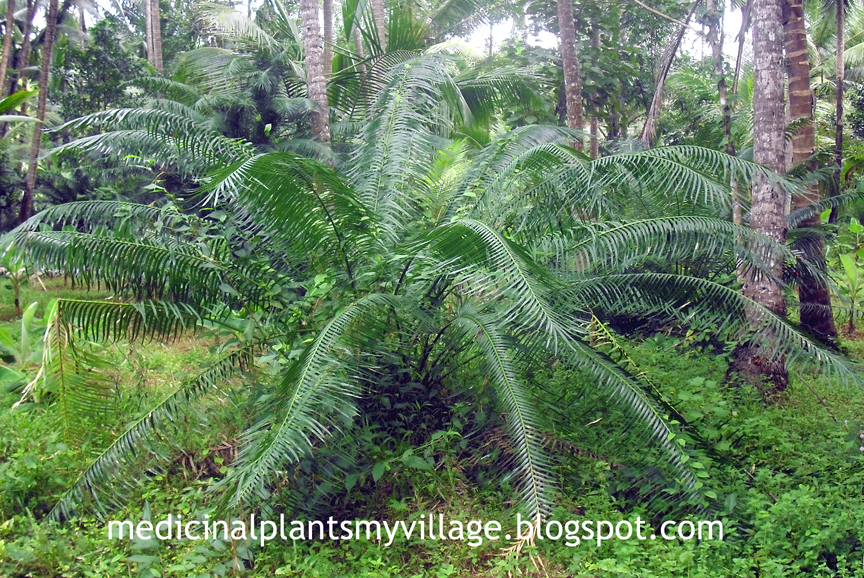
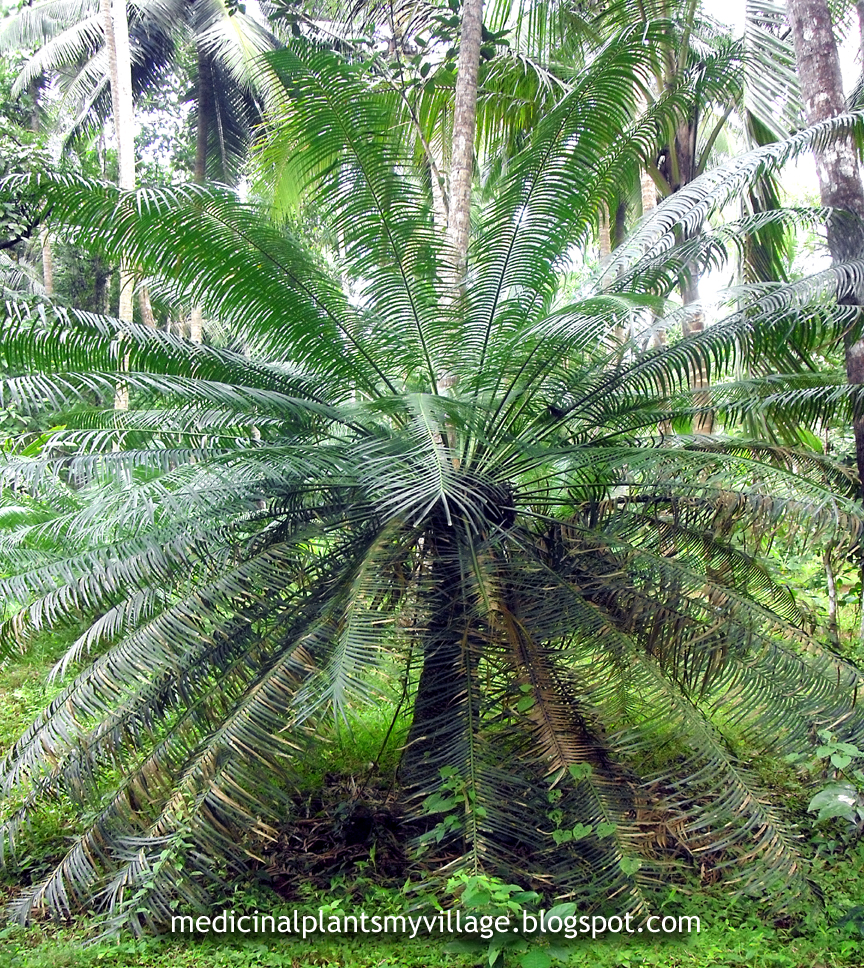
EANTH

Name in English : Queen sago
Latin Name : Cycas Circinalis
Group :
Name in Malayalam : EANTH
Name in Sanskrit :
Name in different Indian language : EANTH,


This plant is famous for its long life span-  more than 2000 years. Its origin dates back to dinosaurs.
The first generation plant & its fruits considered to be the food of dinosaurs. The fruit contains good sort of vitamins & minerals.

The old-age peoples of  Kerala used the fruit as food. The fruit contains poison. They refines the fruit &   They produced  a kind of sago from this fruits. The use of this sago helps to maintain the health.      

Reference: http://ayurvedicproducts.blogspot.com

Plant Medicine- Immune sago

Immune Sago is the First Food Supplement in the world based on Cycas kernels. It has been used in Malabar for centuries by Brahmins and Kalari warriors with beneficial effects. Immune Sago contains the kernels of Cycas Circinalis and Cycas Revoluta, the selected best variety of the species.The longevity of these plants (more than 1000 years) are miraculous and it’s origin dates back (200 million years) to dinosaurs. When all it’s counterparts, both plants and animals are extinct, cycas is still alive. Now we are presenting Immune Sago, the natural and traditional food supplement to suit modern life style and is the traditional answer for present day ailments. Immune Sago is purified form of Cycas Circinalis and Revoluta to fine tune it’s medical properties for the benefit of infants and invalids, sports persons and acutely and chronically ill Convalescents. It has been traditionally established that Immune Sago has excellent medical properties like

Maintaining steady-state control of Metabolism,Restoring normal body functions Improving immunity to resist diseases, Reducing obesity and LDL cholesterol, Curing Ulcer and Acidity, Controlling Arthritis, Controlling white discharge, Increasing sexual Power, An ideal food supplement & Rejuvenator, Helping Diabetes
Ayurveda Identifies Cycas Circinalis & Revoluta as an ideal food supplement and rejuvenatory.
It is easy to digest for any age groups, It has no artificial coloring agents or flavoring, It is 100% natural & Environment friendly

http://ayurvedicproducts.blogspot.com
_____________________________________________________________________

CHITTAMRITH

Name in English : Giloe, Hear- Leaved Moon seed
Latin Name : Tinospora cordifolia Hook.f. & Thoms.
Group : Menispermaceae

Name in Malayalam : Chittamrith, AmrUth

Name in Sanskrit : Amritha, gudooji, amritha sambhava

Name in different Indian language : Indian Koyinav ( Indian kinaine), Vayastha, Jevanthi, Bishkpriya, Gulooji, Chinnarooham, Amrithavalli, Somavalli, Madhuparni.

This plant seen everywhere in the village. It is mainly used to control Fever. It reduce the heavy fever and maintain and control the heat of the body. It is good medicine against blood cancer. It is good for the treatment of AIDS. The use of the plant develope the immune power of AIDS patient.

The plant is known as the Paracetamol of Ayurveda. The name “Amruth” means it defeat the death. It is a main content of ayurvedic medicine “Amritharishtam”.

The plant seen in two varieties. One is Small leaf variety( Tylophora cordifolia), It has Assimilatary roots, the flower is yellow and fruits are red. . Another is wild variety ( Tylophora Malabarica) and the wild one have the bigger leaf. Normally the small leaf variety is used in medicinal purpose.

It is also a good Rejuvenator & good to control Blood sugar.

Other References: –

Chittamrithu (Tinospora cordifolia)

Chittamrithu (Tinospora cordifolia) is a climber with fleshy stem, aerial roots and heart shaped leaves. The heart shaped leaves are also juicy. Chittamrith produces tiny y
ellow flowers after the leaves are shed in summer.
The plant is used in the preparation of several decoction medicines and Ayurvedic jams known as rasayana. It has different properties such as antispasmodic and anti-inflammatory. It is used in the treatment of different kinds of fevers and diseases affecting urinary track.
Tinospora cardifolia belongs to the family menispermaceae.

Reference:

Source: www.keralaforest.org
____________________________________________________________________ 

MUTHIL

Name in English : Indian PENNYwort.

Latin Name : Centella asiatica Urban
Group : Umbelliaferae.

Name in Malayalam : Kudangal, Muthil,

Name in Sanskrit : Jalolbhava, Mandookaparni, Swaraswathi

Name in different Indian language : Karinthakali, Karimuthil, Kudangal, Centella , Pindari, Chandaki, Yochanavalli, Arthaniyaieyanthi, Tholkuri, Thankuni, Brahmamandhooki, Kurivana.

This plant seen every where in the paddy Field in my village. It is the best natural tonic for boost the memory power. Take two leaf daily in empty stomach. The green leaf smell as fresh carrot. This also good for Heart health. . It help to cure Hypattatis B +ve to -Ve. It is a main content of “Mandookaparnyadi Rasayanam”- an Ayurveda medicine for developing memory power & brain power – in Ashtangahridayam.

In SiddaVaidya there is a book published especially for Indian PENNYwort. The entire book -Vallareprabhavabodhini- explains the miracle properties of this plant.

The leaf extract of this plant strengthen the nerve system of the brain.

Other Reference :

Muthil or Kudangal (centella_asiatica)
The stems are slender, creeping stolons, green to reddish green in color, interconnecting one plant to another. It has long-stalked, green, reniform leaves with rounded apices which have smooth texture with palmately netted veins. The leaves are borne on pericladial petioles, around 2 cm. The rootstock consists of rhizomes, growing vertically down. They are creamish in color and covered with root hairs.

The flowers are pinkish to red in color, born in small, rounded bunches (umbels) near the surface of the soil. Each flower is partly enclosed in two green bracts. The hermaphrodite flowers are minute in size (less than 3 mm), with 5-6 corolla lobes per flower. Each flower bears five stamens and two styles. The fruit are densely reticulate, distinguishing it from species of Hydrocotyle which have smooth, ribbed or warty fruit.
The crop matures in three months and the whole plant, including the roots, is harvested manually.

Reference:

Source: www.keralaforest.org
____________________________________________________________________ 

CHEROOLAName in English : Wool Plant

Latin Name : Aerva lanata Juss.

Group : Amaranthaceae

Name in Malayalam : CHEROOLA

Name in Sanskrit : Bhadra

Name in different Indian language : Cherupoola.

One of the main plant in “Dasapushapa” in Ayurveda.

The plant grow up to 50 cm heights. It has small leafs. Used in treatment of urinal system. It destroy the urine stone. It is used in the treatment of blood-sugar. The paste made with the entire plant diluted in curd cure blood sugar.

___________________________________________________________________
ANACHUVADI

Name in English : Elephant’s Foot

Latin Name : Elephantopus scaber Linn.
Group : Asteraceae

Name in Malayalam : Anachuvadi

Name in Sanskrit : Gojihwa

Name in different Indian language : Anayadian, Kuchirikka

As the plant leaf is likely to be the elephant foot print , the plant is called as Elephant’s Foot.
The plant is locally called as “ Anayadian”, “Kuchirikka” etc..
It has the properties of reducing human body heat. It is used in the treatment of heart diseases, and cough.

Mainly used in treatment of Tonsillitis.

The leaf used as a shampoo for removing dandruff and hair falling

____________________________________________________________________

AFRICAN MALLI

Name in English : AFRICAN MALLI

Latin Name : Eryngium foetidum Linn.
Group : Apiaceae

Name in Malayalam : African malli

Name in Sankrit : ………………………….

It is Known as African Malli, But originated from America. It smell as Cori enter leaf and the leaf is used in curry’s and soups. The use of the root is increase the digestion. The plant is used as cattle feed in Java.

It is a good garden plant.

Medicinal parts : Root & Leaf


____________________________________________________________________

KIRIYATH

Name in English :. GREAT CHIRATA,

Latin Name : Andrographis paniculata Nees
Group : Acanthaceae

Name in Malayalam : Kiriyatha, Chirayatha, Nilavep

Name in Sanskrit : KIRATAH, bHOONIMBA, MAHATHIKTHA

Name in different Indian language : Kalmegh, Boonimba, Mahathiktha, Kiratha

This plant grow very well in our village at all the season. It flowered in August- September months.

This is one of the great plant in Ayurveda. It uses mainly in the bloodsugar treatment. Eating of the raw leaf helps the digestion system.

It is a main content of famous Ayurveda Medicine- Sudershanachoornam.
___________________________________________________________________

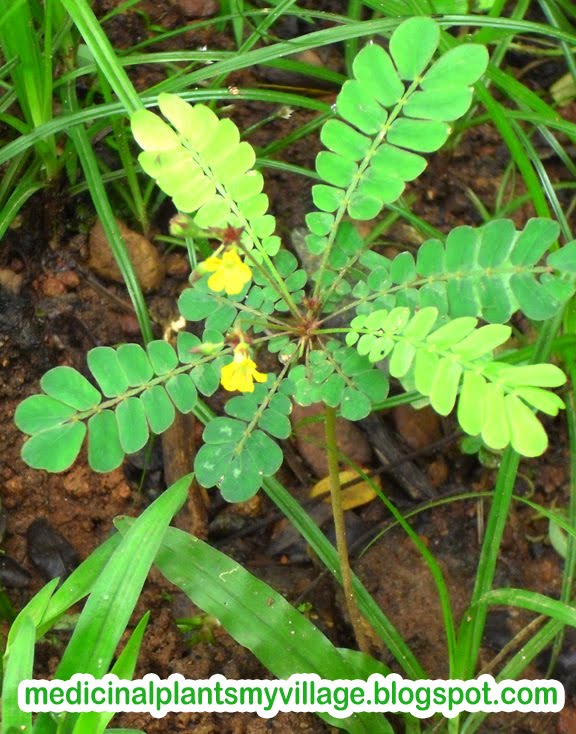
MUKKUTTI

Name in English : Sensitive plant

Latin Name : Biophytum sensitivum D.C.

Group : Oxalidaceae

Name in Malayalam : MUKKUTTI

Name in Sanskrit : Alambusha, Jalapushpa, Peethapushpa, Samanga, Krithanjali.

Name in different Indian language :
Theendanazhi, Nilaccurunki, Tintanali, lajalu, lajalu, lajjalu, lakhshana, laksmana, zarer.

A small plant with Yellow Flower. It has yearly life cycle. It grow up to 10 to 20 cm heights.

The plant is one among the ten plants of “Dashapushapa” in Ayurveda.

The paste made of the leaf can cure the fresh wounds.

Consume the paste made of the entire plant mixed with butter reduce excess menstrual bleeding of women.

White flowered plant also found in some other nations.

The flower of Mukkutti

____________________________________________________________________

METHONI

Name in English : Climbing lily, The Glorry Lily
Latin Name : Gloriosa superba Linn.
Group : Liliaceae
Name in Malayalam : METHONI, Malathamara, Menthoni
Name in Sankrit : Haripriya, Agnishiga

Name in different indian language : Bisha, Bishalankuri, Dhudiyo vachanath, Kalihari, kadari, intha, karinag, kalappe kizhank, Karthikai, Agni shikai, Ranthakari

Name in Siddha Medicine :

The flower of this plant is very attractive. As the name in English the plant climbing up to 2 meter heights. The all parts of the plant is very poisonous.

It has several uses in Ayurveda. It is mainly used against the snake poison.

Invisible Journey: In ancient India the small capsule made from this plant used to Invisibility for human-body. The capsule prepared with Honey, Gold, Silver, Copper, Saffron and some other herbs. The one who put the capsule below his tong get invisibility from others vision.


______________________________________________________
Other references:

Menthonni
aScientific Name: Gloriosa superbaCommon Name: Menthonni
Description of the Plant: Gloriosa superba, tender, tuberous rooted deciduous perennials, Belongs to the plant family Liliaceae. Leaves simple, subsessile, alternate, lanceolate, with acuminate tips, extended to tendrils. Flowers handsome, solitary, first yellow colored then changes to scarlet red. Fruits oblong capsules, with many small round seeds.
Medicinal Properties: Plant pacifies vitiated kapha, indigestion, fever, arthritis, obstructed labor, cardio-myopathy, skin diseases, in higher dose or without purification, it is highly poisonous.
Useful Part: Rhizome.
Source: www.keralaforest.org
______________________________________________________________


CHERUCHEERA

Name in English :

Latin Name : Amaranthus polygamus

Group :

Name in Malayalam : Cherucheera

Name in Sankrit : Thandulia

Name in different indian language : chulae koshak, thanjalajo, tharuuja, kamudenade, bakuleyamania, melakure, chirukkire, kappakeere

This plant is used to make “swarna basma” in Ayurveda. The extract of the plant is used to liquefy the small parts of the gold to make the Ayurveda medicine.

This plant is a good vegetable in kitchen garden and also used as a garden plant to make border for garden.

The continuous use of this plant as a vegetable removes all poison in human body.

___________________________________________________________________

Adalodakam ( Vasaka)

Name in English : Malabar Nut Tree
LaCHERUCHEERAdhatoda vasica Nees
Group : Acanthaceae

Name in Malayalam : Adalodakam ( Vasaka)
Name in Sankrit : Vasa, Ashoka, Vishnu

Name in different indian language : Aduso, Vasa, Adalodakam, Chittadalodakam etc…

Name in Siddha Medicine : Adathodai

This plant grow up to 2 meter heights. Mainly two varieties in this plant.

Adhatoda vasica :- It has full of leafs at all the season. The leaves of the plant shown as big and grow up to 3 meter heights.

Adhatoda bedomia ( Adhatoda beddomei C.S. Clarke.):- It also has full of leafs at all the season. The leaves of the plant shown as small and the plant grow up to 2 meter heights. This palnt has more medicinal values. It is known as- Chittadalodakam- in Malalayam. It is used to make various ayurvedic medicines.

The leaf of Adalodakam is used as a house medicine for Children’s cough & cold problems. The row leaf of the plant half boiled in the steam and take extract and mix with honey is a good medicine for cough and cold especially for children.

The all parts of this plant has been successfully used for the treatment of Chest diseases, phthisis, chronic bronchitis, asthma, diarrhoea, dysentery, malaria fever, fresh wounds, rheumatic joints, inflammatory swellings, scabies, neuralgic pains, nose beeding, diphtheria, gonorrhoea, an antiseptic and arthelmentic.

This plant is also a good bio-insect killer to kill bacteria & small insects.

Main parts used : Leaves, root, bark, flowers and fruits

The Medicine Vacicene prepared form the plant is good to increase the number of Blood platelets.

One of the main content in all kinds cough syrup.

The use of cigarette made from dry leaves reduse the cough of asthma patient.


______________________________________________________________________
other References:

Adalodakam 

Scientific Name: Adathoda beddomei
Common Name: Adalodakam
Description of the Plant: Adathoda beddomei belongs to the familyAcanthaceae and is a large shrub or small tree grows up to 3-4 meters in height. Leaves simple, opposite, ovate-lanceolate, acute or acuminate and shiny. Flowers arise from axillary condensed spikes, white; fruits capsules.
Medicinal Properties: The extraction of leaf is a good medicine for Asthma and cough. It is a good medicine to stop internal and external bleedings like bleeding gums, piles and peptic ulcers. According to Ayurveda, it is a good ingredient in decoctions for all types of fever due to kapha and pitta doshas. It is expectorant, antispasmodic and good blood purifier. It speeds up the child birth.
Useful Part: Whole plant.
Source: www.keralaforest.org
______________________________________________________________

Cheruchunda
Name in English :  
Latin Name :
Group :
Name in Malayalam : Chemparuthy

Name in Sankrit : 

Chemparuthy
Name in English : Red Hibiscus
Latin Name :
Group :
Name in Malayalam : Chemparuthy

Name in Sankrit : 

 The red hibiscus seems to be the color the average person thinks of a hibiscus flower color. The red blooms are so common throughout the world. Red hibiscus is believed to be first, most ancestral of all hibiscuses. That single red bloom has emerged in modern times as common garden hibiscus displaying many different shades of reds such as the Robert Fleming or Lord Baltimore hibiscus.


APPA
Name in English :
Latin Name :
Group :
Name in Malayalam : Appa
Name in Sankrit : 


KACHOLAM
Name in English : Galanga
Latin Name : Kaempferia galanga L
Group : Zingiberaceae
Name in Malayalam : Kacholam
Name in Sankrit : ………………………………………..


KURUNTHOTTI
Name in English :………………..
Latin Name : Sida rhombifolia Linn.
Group : Malvaceae
Name in Malayalam : Kurunthotti, Bala
Name in Sankrit : Bala


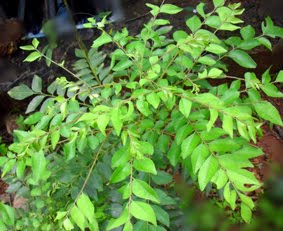
KARIVEPPU
Name in English :. CURRY LEAVES
Latin Name : Murrya kocigii
Group : Rutaceae
Name in Malayalam : Kariveppila
Name in Sankrit : Kaidoorium, Surabhi, Nimba

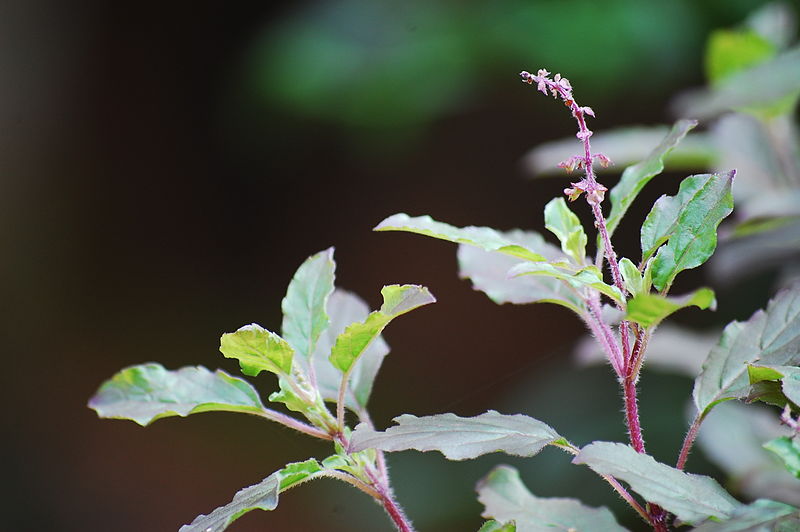
KRISHNA THULASI
Name in English :. Holy Basil, THULSI
Latin Name Ocimum sanctum Linn.
Group : Lamiaceae
Name in Malayalam : KRISHNA THULASI
Name in Sankrit : Surasa, krishna thulasi, devadundhubi

KRISHNA THULASI
Name in English :. THULSI
Latin Name : ………………………
Group : ………………..
Name in Malayalam : KRISHNA THULASI
Name in Sankrit : ……………………………….


Indian Long PepperIndian Long Pepper, or Pippali, indigenous to North-eastern and Southern India and Sri Lanka, is a powerful stimulant for both the digestive and the respiratory systems and has been shown to have a rejuvenating effect on the lungs. Pippali plays an important role in aiding the thermogenic response, i.e. the release of metabolic heat energy. This effect is the result of increased thyroid hormone level in the body and makes Pippali a typical Ayurvedic complementary component whose benefit is to increase the bioavailability and enhance absorption of the other active ingredients.

Long pepper, which tastes pungent and sweet at the same time, probably came to Europe much before the now dominant black pepper. It is believed that during the Roman Empire, it was priced about three times more than black pepper, as it was perfect for Roman cookery, which especially favored these two taste sensations. Its hot-and-sweet taste goes well with spicy cheese specialties or wine sauces. In India, the long pepper is mainly used in pickles (achar).

Long pepper is also known and popular in parts of Africa, mostly in the Islamic regions of North and East Africa. It can be found in the complex spice mixtures of Morocco. It is an important ingredient in Ethiopia cuisine, where long pepper is usually found in the traditional meat stews (wat) together with black pepper, nut meg, cloves and turmeric. Berebere, a classical Ethiopian spice mixture, which resembles Indian masalas, is used to spice mutton dishes.

A scandent perennial aromatic shrub with jointed branches, the entire plant is pungent. The leaves are many and cordate, while the flowers grow on solitary spikes. The male and female spikes are produced on different plants, and while the male spikes are slender with narrow bracts, the female ones are 1.3-2.5cm, with circular flat peltate bracts. The fruit, which is very small, is sunk inside the fleshy spike, and is blackish green and shining. Long pepper is the unripe spike of the plant. It is that part of the plant that is used in medicines. The root, which is thick and branched, is also medically important and is called modi or pippali-moolam.

Kurumthotty Bala

Common: Bala, Indian Ephedra, Mallow plant

Sida cordifolia, commonly known as bala, is a plant in the family Malvaceae. It is used in Ayurvedic medicine. It has been investigated as an anti-inflammatory, for treating cancer, and for encouraging liver re-growth. It acts as a stimulant within the central nervous system. It is also used as a fat-burning supplement. 
The whole plant contains large quantities of active alkaloids (alkaloidephedrine) and hence has been used as a rejuvenating herb, an aphrodisiac, a wonderful and efficacious in curing those diseases when they are due to inflammation of the nerves.
It grows well through the plains of India, especially, in damp climates.

We crushed it and mix with water to make paste and applied on head as herbal shampoo.

Taken at Kadavoor, Kerala, India.

Krishna Tulasi
Tulsi is considered to be highly sacred in the Hindu religion. Most of the Hindus offer daily prayers to Tulsi Devi. But, not many people are aware about the origin of Tulasi plant. Well, there are many interesting legends about Tulsi. There is a famous legend about Krishna Tulsi, which suggests that Tulsi was the incarnation of a gopi, who was deeply in love with Lord Krishna. She was cursed by Radha, the consort of the Lord. 

The Indian herbal plant Tulsi has a lot of significance in the Hindu religion. The term “Tulsi” is used in the context of one who is absolutely incomparable. Tulsi has a lot of reverence for the Hindus. Infact, people worship Tulsi everyday in the morning as well as evening time. This Indian basil basically grows in the warm and tropical regions. There are two main varieties of this aromatic plant, namely Shyama tulsi and Rama tulsi. Well, out of the two, the former one is of greater medicinal value. Rama Tulsi, on the hand, is primarily used for worship.

In this section, we will cover the following aspects related to the holy basil Tulsi:

Muthanga
Scientific Name: Cyperus rotundusCommon Name: Muthanga
Description of the Plant: Cyperus rotundus is a species of sedge belongs to the family Cyperaceae. The perennial grass grows up to 30 cm of height. Leaves crowded in the base, about 10-20 cm long, linear, acuminate, flat, one nerved; spikelets in compound umbels. Nut grayish black colored. The root system of a young plant initially forms white, fleshy rhizomes. Some rhizomes grow upward in the soil and form a bulb-like structure from which new shoots and roots grow, and from the new roots, new rhizomes grow. Other rhizomes grow horizontally or downward, and form dark reddish-brown tubers or chains of tubers.
Medicinal Properties: In modern ayurvedic medicine uses the plant for treating fevers, digestive system disorders, dysmenorrhea and other maladies.  Plant pacifies vitiated kapha, pitta, diarrhea, indigestion, anorexia, fever, and urinary retention. Increases and purifies breast milk. Recent studies recommend the plant to treat nausea, fever and inflammation; for pain reduction; for muscle relaxation and many other disorders.
Useful parts: Root tuber.
Karingali
Scientific Name : Acacia catechu 
Common Name: Karingali
Description of the Plant: Acacia catechu belongs to the family Fabaceae and are medium sized thorny deciduous tree grows up to 13 meters in height. Leaves bipinnately compound, leaflets 30-50 paired, main rachis pubescent, with large conspicuous gland near the middle of the rachis. Flowers pale yellow, sessile, found in axillary spikes. Fruits flat brown pods, with triangular beak at the apex, shiny, narrowed at base. Seeds 3-10 per pod. The gummy extract of the wood is called kath or cutch.
Medicinal Properties; The tree’s seeds are a good source of protein. The extract of the plant called catechu is used to treat sore throats and diarrhea. In Ayurveda, plant pacifies vitiated pitta, kapha, skin diseases, cough, pruritus, and obesity. Useful in tooth ache, increases the strength of teeth.
Useful Parts : Bark, Heartwood, Kath.
Vayambu
Scientific Name: Acorus calamus
Common Name: Vayambu
Description of the Plant: Acorus calamus, commonly known as Vayambu, a plant from Acoraceae family. It is a rhizomatous, perennial semi aquatic plant grows up to 40 cm in height. Leaves simple, bright green, distichous, thickened in the middle, ensiform; flowers seen in densely packed spadix inflorescence, fruits oblong berries seeds few suspended from the apex of cells. Underground rhizomes are creeping, branched about 1 cm in diameter.
Medicinal Properties: It is widely employed in modern herbal medicine as an aromatic stimulant and mild tonic. The root has been used as a rejuvenator for the brain and nervous system and as a remedy for digestive disorders. The root is anodyne, aphrodisiac, aromatic, carminative, diaphoretic, emmenagogue, expectorant, febrifuge, hypotensive, sedative, stimulant, stomachic, mildly tonic and vermifuge. It is used internally in the treatment of digestive complaints, bronchitis, sinusitis etc. In Ayurveda, plant pacifies vitiated vata, kapha, insomnia, insanity, other mental diseases, epilepsy, mania, stomatitis, hoarseness of voice, colic, flatulence, amenorrhea, dysmenorrhea, neuropathy, renal calculi, cough, inflammation, arthritis, kidney diseases, hemorrhoids, skin diseases and general debility.
Useful Parts: Underground rhizomes.

Koovalam 

Scientific Name: Aegle marmelos 
Common Name: Koovalam
Description of the Plant: Aegle marmelos is a species of tree native to India, belongs to the family Rutaceae. These are medium sized thorny deciduous tree grows up to 10 meters in height. Leaves trifoliate, aromatic, and alternate. Leaflets are ovate-lanceolate. Lateral leaflets are sub sessile and terminal long petioled. Flowers are greenish white, found in axillary panicles. Fruits are globose woody berry with yellow pulp. Seeds are numerous, oblong and embedded in pulp.
Medicinal Properties: The tree is one of the most useful medicinal plants of India. Its medicinal properties have been described in the ancient medical treatise jn Sanskrit, Charaka Samhita. All parts of this tree-stem, bark, root, leaves and fruit at all stages of maturity have medicinal virtues and have been used as medicine for a long time. The fruit’s medicinal value is very high when it just begins to ripen. The fruit is aromatic, cooling and laxative. It arrests secretion or bleeding. The unripe or half-ripe fruit is good for digestion. It is useful in preventing or curing scurvy. It also strengthens the stomach and promotes its action. In Ayurveda, plant pacifies vitiated kapha, vata, body pain, poison, diarrhea, dysentery, vomiting, and intermittent fever. Pulp of unripe fruit is constipating whereas that of ripened fruit is laxative. Leaves cure diabetes, cough, inflammation and asthma. Useful Parts: Leaves, Root, Fruits
Kolinji
Scientific Name: Alpinia galangal
Common Name: Kolinji
Description of the PlantAlpinia galangal, a plant in the family of Zingiberaceae, is an herb used in cooking. The plant grows from rhizomes in clumps of stiff stalks up to two meters in height with abundant long leaves which bears red fruit. It is native to South Asia and Indonesia. The robust rhizome has a sharp, sweet taste and smells like a blend of black pepper and pine needles.
Medicinal Properties: The rhizome has been shown to have antimalarial activity in mice. The rhizome contains the flavonol galangin. It is used against rheumatism, bronchial catarrh, bad breath and ulcers whooping colds in children, throat infections, to control incontinence and fever. Alpinia species show promise as anti-fungals, hypotensives, enhancers of sperm count and motility. Anti-tumor and anti-dementia effects have been observed in rodents. It is a stimulating aromatic and has been successfully employed to aid the digestive process, preventing fermentation and removing flatus. It is useful in case of dyspepsia, preventing vomiting or sickness of the stomach and facilitating digestion. It may be used in all cases in which a stimulating aromatic is indicated. It is used against nausea, flatulence, dyspepsia, rheumatism, catarrh and enteritis. It also possesses tonic and antibacterial qualities and is used for these properties in veterinary and homeopathic medicine.
Useful Parts: Roots
Karimthumba
Scientific Name: Anisochilus carnosus 
Common Name: Karimthumba
Description of the Plant: Anisochilus carnosus, is an armatic annual herb belongs to the family Lamiaceae, found in the Western Ghats. Stems are erect, 30-60 cm tall, robust, branched. Leaf stalks are 1.3-5 cm long, densely white velvety. Leaves are ovate-oblong to circular, 5-7 × 5-7 cm, white white-velvety, sparsely red glandular, base heart-shaped to rounded, margin crenulate, tip blunt to rounded. Flower spikes are 2.5-7.5 × 0.9-1.9 cm, long stalked, 4-angled in fruit.
Medicinal Properties: The leaves of Anisochilus carnosus are used traditionally in the treatment of gastric ulcers and stomachache.
Useful Parts: Leaves and aerial parts
Chemmaram
Scientific Name: Aphanamixis polystachyaCommon Name: Chemmaram
Description of the Plant: Aphanamixis polystachya, is a medium or large sized tree, 15 to 20 meters in height, belongs to the family Meliaceae. The leaves are large, imparipinnate. The leaflets are opposite, elliptic-oblong, acuminate, glabrous on both the surface. The male flowers are numerous in axillary panicles; female or bisexual flowers are larger than male axillary or supra-axillary solitary spikes. The fruits are globular, smooth, yellow when ripe. The seeds are with scarlet aril.
Medicinal Properties: The plant specially the bark is used as astringent and applied on swelling after a fall. It is also used in spleen, liver diseases, tumour and abdominal complaints. Seed-oil is used in rheumatism. In recent times anti carcinogenic ingredients are found from this plant.
Useful Part: Bark
Karalakam
Scientific Name: Aristolochia indica
Common Name: 
Karalakam
Description of the Plant: Aristolochia indica is a creeper plant, belongs to the family Aristolochiaceae, found in Kerala in India and also Sri Lanka. It reaches a height of several metres on trees and covers the branches with thick foliage. It flowers once a year to produce seeds. It can also be propagated by roots.
Medicinal Properties: The plant has a number of historical medicinal uses. This plant contains Aristolochic acid is a rodent carcinogen found in Aristolochia and Asarum, both in the Aristolochiaceae family of plants. In addition to its carcinogenicity, aristolochic acid is also highly nephrotoxic and may be a causative agent in Balkan nephropathy. However, despite these well-documented dangers, aristolochic acid still is present sometimes in herbal remedies (such as for weight loss), primarily because of substitution of innocuous herbs with Aristolochia species. In Ayurveda, plant pacifies vitiated kapha, vata, poison, skin diseases, intestinal worms, colic, arthritis and ulcers.
Useful Part: Whole plant.
Sathavari
Scientific Name: Asparagus racemosusCommon Name: Sathavari
Description of the Plant: Asparagus racemosus, commonly known as Satavari in India is a climbing plant from Liliaceous family. It widely grows in low forest areas throughout India. It grows one to two meters tall and prefers to take root in gravelly, rocky soils high up in piedmont plains. Satavari has small pine-needle-like leaves that are uniform and shiny green. In July, it produces minute, white flowers on short, spiky stems, and in September it fruits blackish-purple, globular berries.
Medicinal Properties: The healing qualities of Asparagus racemosus are useful to a wide array of ailments. The plant has been used in Ayurveda for various conditions. Its main use has been as a galactagogue to increase milk secretion during lactation. It is known as the Indian ‘Female Rejuvenative’, as it is helpful in cases of low milk production, low sex drive, menopause, PMS, and infertility. It helps to balance hormonal system of women and regulates menstruation and ovulation. It is also useful for decreasing morning sickness, infertility, menopause, leucorrhoea, inflammation of sexual organs, and general sexual debility. The male reproductive system will also benefit from sathavari. It can be used in cases of sexual debility, impotence, spermatorrhoea, and inflammation of sexual organs. The powdered dried root of sathavari is also used in Ayurveda for dyspepsia. The herb is also useful in gastric ulcers, hyperacidity, dysentery, bladder infections, chronic fevers, rheumatism, inflamed membranes of the lungs. It also used as a nervine tonic and is good for heart. It also strengthens and increases muscle tone and increases general body strength and used as an Aphrodisiac in India.
Useful Part:Tuberous Roots
Kanikonna
Scientific Name: Cassia fistulaCommon Name: Kanikonna
Description of the Plant: Cassia fistula, known as the ‘Golden Shower Tree’ but see below for other names, is a flowering plant in the family Fabaceae, native to Southern Asia, from Southern Pakistan east through India to Myanmar and South to Sri Lanka. It is the national tree of Thailand and its flower is Thailand’s National flower. It is the ‘Regional Flower’ of Kerala. The Golden Shower Tree is a medium-sized tree growing to 10–20 m (33–66 ft) tall with fast growth. The leaves are deciduous, long, pinnate with 3–8 pairs of leaflets. The flowers are produced in pendulous racemes 20–40 cm (8–15 in) long with five yellow petals of equal size and shape. The fruit is a legume long and broad with a pungent odor and containing several seeds.
Medicinal Properties: It is a popular ornamental plant and is an herbal medicine. In Ayurvedic medicine, it is known as aragvadha, meaning “disease killer”. Its fruit pulp is used as a mild laxative, against fevers, arthritis, vatavyadhi (nervous system diseases), all kinds of rakta-pitta (bleeding, such as hematemesis or hemorrhages), as well as cardiac conditions and stomach problems such as acid reflux. The root is considered a very strong purgative, and self-medication or any use without medical supervision is strongly advised against in Ayurvedic texts.
Useful Part: Whole Plant
Maramanjal
Scientific Name: Coscinium fenestratumCommon Name: Maramanjal
Description of the Plant: Coscinium fenestratum, a large woody climber belongs to the family Menispemaceae. It grows with cylindrical and yellowish stem. Leaves simple, oblong, deltoid, alternate, minutely tomentose beneath, smooth above, with yellowish tint. Flowers yellow, unisexual in supra axillary inflorescence. Fruits globose drupes, smooth contains one globose seed.
Medicinal Properties: Eye and skin diseases, inflammation, wounds, ulcers, abdominal disorders, jaundice, diabetes, fever, general debility, skeletal fractures. In Ayurvedic medicine, plant pacifies vitiated kapha, vata, skin diseases, diseases of the eye, inflammations, wounds, jaundice, diabetes, fever and general debility.
Useful Part: Stem.
Neermathalam
 Scientific Name: Crateva magnaCommon Name: Neermathalam
Description of the Plant: Crateva magna a deciduous tree belongs to the family  Capparaceae. This grows up to 7-9 m. height, leaves compound, 3-foliate, leaflets ovate, 5-13 cm long, flowers large, greenish white, polygamous, in dense terminal corymbs, stamens are longer than the petals, fruits fleshy, ovoid berry, seeds are embedded in pulp.
Medicinal Properties: Roots, leaves and the skin of the bark are used for edema, cervical adenitis, rheumatism and spleen enlargement. The bark acts as an appetizer, cholegogue, laxative, vermicide, tonic, anti-inflammatory and its decoction is taken internally for the same diseases above, plus tumors, liver disorders, anorexia, fever and also mixed with ghee for flatulence. In Ayurvedic medicine, plant pacifies vitiated vata, kapha, renal and vesical caliculi, asthma and bronchitis.
Useful Parts: Leaves, Bark.
Manjakoova
Scientific Name: Curcuma zedoaria
Common Name: 
Manjakoova
Description of the Plant:Curcuma zedoaria is a perennial herb and member of the family Zingiberaceae. The plant is native to India and Indonesia. A rhizomatous perennial herb grows up to 1 meter. Leaves elliptic or oblong- lanceolate, about 50 cm long with long petiole; Dark violet streak along the midrib is the classical discriminative property of the plant. Flowers pinkish yellow, seen in inflorescence with pinkish showy bracts. Fruits globose, dehiscent trilobate capsules.
Medicinal Properties: It is used in some traditional eastern medicines, where it is reputed to be an aid to digestion, a relief for colic and an agent for purifying the blood. It is also used as an antivenom for the Indian cobra. This has been used to treat coronary heart disease, liver cancer, anemia, chronic pelvic inflammation and helps prevent leukopenia due to cancer therapies. In Ayurvedic medicine, plant pacifies vitiated pitta, kapha, indigestion, flatulence, dyspepsia, skin diseases, cough, bronchitis, urinary retention, allergy, leucoderma, and as general tonic. The rhizomes are a source of Shoti Starch, used as a food for babies and convalescents, recovering from chronic stomatitis. It is cooling and demulcent.
Useful Part: Rhizome
Muthanga
Scientific Name: Cyperus rotundusCommon Name: Muthanga
Description of the Plant: Cyperus rotundus is a species of sedge belongs to the family Cyperaceae. The perennial grass grows up to 30 cm of height. Leaves crowded in the base, about 10-20 cm long, linear, acuminate, flat, one nerved; spikelets in compound umbels. Nut grayish black colored. The root system of a young plant initially forms white, fleshy rhizomes. Some rhizomes grow upward in the soil and form a bulb-like structure from which new shoots and roots grow, and from the new roots, new rhizomes grow. Other rhizomes grow horizontally or downward, and form dark reddish-brown tubers or chains of tubers.
Medicinal Properties: In modern ayurvedic medicine uses the plant for treating fevers, digestive system disorders, dysmenorrhea and other maladies.  Plant pacifies vitiated kapha, pitta, diarrhea, indigestion, anorexia, fever, and urinary retention. Increases and purifies breast milk. Recent studies recommend the plant to treat nausea, fever and inflammation; for pain reduction; for muscle relaxation and many other disorders.
Useful parts: Root tuber.
Orila
Scientific Name: Desmodim gangeticum
Common Name: Orila 
Description of the Plant: Desmodim gangeticum is a plant in the Fabaceae family. The plant is a sub-tropical perennial spreading herb that grows in dry hilly areas. It is found in all over the areas that are upto the height of 5000 feet.
Medicinal Properties: It is a general tonic and aphrodisiac, has a calming, sedative effect and also used control inflammation, fever and neurological imbalances. The plant has unique medicinal value to regulate the function of the nervous system, venous system and arterial system.
Useful Part: Whole Plant
Nelli
aScientific Name: Emblica officinalisCommon Name: Nelli
Description of the Plant: Emblica officinalis is the the Indian gooseberry, is a deciduous tree of the Phyllanthaceae family. The tree is small to medium sized, reaching 8 to 18 m in height, with a crooked trunk and spreading branches. The branchlets are glabrous or finely pubescent, 10–20 cm long, usually deciduous; the leaves simple, subsessile and closely set along branchlets, light green, resembling pinnate leaves. The flowers are greenish-yellow. The fruit is nearly spherical, light greenish yellow, quite smooth and hard on appearance, with 6 vertical stripes or furrows.
Medicinal Properties: Emblica Officinalis is aperient, carminative, diuretic, aphrodasiac, laxative, astringent and refrigerant. It is the richest known source of vitamin ‘C’. It is useful in anaemia, jaundice, dyspepcia, haemorrhage disorders, diabetes, asthma and bronchitis. It cures insomnia and is healthy for hair. It is considered as one of the most rejuvenating drugs, imparting a long healthy life and weight gain. It also acts as an antacid and antitumorganic agent. All parts of the plant are used in various herbal preparations, including the fruit, seed, leaves, root, bark and flowers. According to Ayurveda, it is specific to pitta due to its sweet taste and cooling energy.
Useful Part: Whole Plant

Kumizhu 

qScientific Name: Gmelina arboreaCommon name: Kumizhu
Description of the Plant:Gmelina arborea is a fast growing deciduous tree belongs to the family Lamiaceae. It is found scattered in deciduous forests throughout the greater parts of India and the Andamans, up to an altitude of 5,000 ft. It is also planted in gardens and avenues. It is an unarmed tree. The bark is smooth and whitish grey. The leaves are opposite, broadly ovate, cordate and glandular. The flowers are in terminal panicles and brownish yellow in color. The drupe is fleshy, ovoid with 1 or 2 seeds.
Medicinal Properties: The root and bark of Gmelina arborea are stomachic, galactagogue laxative and anthelmintic; improve appetite, useful in hallucination, piles, abdominal pains, burning sensations, fevers, ‘tridosha’ and urinary discharge. Leaf paste is applied to relieve headache and juice is used as wash for ulcers. In Ayurveda it has been observed that the fruit is acrid, sour, bitter, sweet, cooling, diuretic tonic, aphrodisiac, alternative astringent to the bowels, promote growth of hairs, useful in ‘vata’, thirst, anaemia, leprosy, ulcers and vaginal discharge.
Useful Parts: Roots, Fruits, Flowers and Leaves
Reference:

Source: www.keralaforest.org

Narendra Modi Speech Cancelled

Narendra Modi’s keynote address at Wharton India Economic Forum cancelled- Politics News- Politics-IBNLive

New Delhi: Gujarat Chief Minister Narendra Modi’s keynote address at the prestigious Wharton India Economic Forum was cancelled on Sunday under pressure from multiple stakeholders. Modi was invited to deliver the address at the forum, which would be held in Philadelphia on March 22 and 23, via videoconference.

“We do not endorse any political views and do not support any specific ideology. Our goal as a team is only to stimulate valuable dialogue on India’s growth story,” the forum said in a statement on Sunday. The forum is an annual student-run India-centric conference hosted by the Wharton School of the University of Pennsylvania.

A group of Wharton’s professors and students had written a letter to the forum saying they were outraged to learn that the forum has invited Modi as a keynote speaker. “This is the same politician who was refused a diplomatic visa by the United States State Department on March 18, 2005 on the ground that he, as Chief Minister, did nothing to prevent a series of orchestrated riots that targeted Muslims in Gujarat,” the letter noted.

In its statement, the forum said the student body was extremely impressed with Modi’s credentials, governance ideologies, and leadership, which was the primary reason for his invitation. “However, as a responsible student body within the University of Pennsylvania, we must consider the impact on multiple stakeholders in our ecosystem. Our team felt that the potential polarising reactions from sub-segments of the alumni base, student body, and our supporters, might put Modi in a compromising position, which we would like to avoid at all costs, especially in the spirit of our conference’s purpose,” it said.

The forum said even as it stood by its decision to invite Modi “we believe that this course of action (of cancelling his address) would be the most appropriate in the light of reactions of the multiple stakeholders involved”. “Therefore, we as a team, would like to apologise for being a catalyst which may have put Modi and the Wharton School administration in a difficult position,” it said. The forum said it hoped to have Modi speak at a “more appropriate forum where he can interact with students without the distraction of this kind of attention”.

It added it was in the last stages of finalising an additional keynote address that will be delivered by a very prominent Indian leader and it will be announced very soon. Since its inception in 1996, the meet has emerged as one of the largest and most prestigious India-focused business conferences that provides a platform for leaders to discuss the opportunities present in India and the challenges that need to be addressed.

Among other eminent invited guests to the conference include Milind Deora, the Union Minister of State for IT and Communications; Gautam Adani, chairman of the Adani Group; actress Shabana Azmi, poet and scriptwriter Javed Akhtar. Planning Commission Deputy Chairman Montek Singh Ahluwalia is also expected to address the forum on March 23.

Earlier keynote speakers have included former president Dr APJ Abdul Kalam, Union Finance Minister P Chidambaram, BJP leader Varun Gandhi and industrialist Anil Ambani.

(With additional information from PTI)

Why Americans Are the Weirdest People in the World

Joe Henrich and his colleagues are shaking the foundations of psychology and economics—and hoping to change the way social scientists think about human behavior and culture.

(ILLUSTRATION: MARK MCGINNIS)

IN THE SUMMER of 1995, a young graduate student in anthropology at UCLA named Joe Henrich traveled to Peru to carry out some fieldwork among the Machiguenga, an indigenous people who live north of Machu Picchu in the Amazon basin. The Machiguenga had traditionally been horticulturalists who lived in single-family, thatch-roofed houses in small hamlets composed of clusters of extended families. For sustenance, they relied on local game and produce from small-scale farming. They shared with their kin but rarely traded with outside groups.

While the setting was fairly typical for an anthropologist, Henrich’s research was not. Rather than practice traditional ethnography, he decided to run a behavioral experiment that had been developed by economists. Henrich used a “game”—along the lines of the famous prisoner’s dilemma—to see whether isolated cultures shared with the West the same basic instinct for fairness. In doing so, Henrich expected to confirm one of the foundational assumptions underlying such experiments, and indeed underpinning the entire fields of economics and psychology: that humans all share the same cognitive machinery—the same evolved rational and psychological hardwiring.

The test that Henrich introduced to the Machiguenga was called the ultimatum game. The rules are simple: in each game there are two players who remain anonymous to each other. The first player is given an amount of money, say $100, and told that he has to offer some of the cash, in an amount of his choosing, to the other subject. The second player can accept or refuse the split. But there’s a hitch: players know that if the recipient refuses the offer, both leave empty-handed. North Americans, who are the most common subjects for such experiments, usually offer a 50-50 split when on the giving end. When on the receiving end, they show an eagerness to punish the other player for uneven splits at their own expense. In short, Americans show the tendency to be equitable with strangers—and to punish those who are not.

Among the Machiguenga, word quickly spread of the young, square-jawed visitor from America giving away money. The stakes Henrich used in the game with the Machiguenga were not insubstantial—roughly equivalent to the few days’ wages they sometimes earned from episodic work with logging or oil companies. So Henrich had no problem finding volunteers. What he had great difficulty with, however, was explaining the rules, as the game struck the Machiguenga as deeply odd.

When he began to run the game it became immediately clear that Machiguengan behavior was dramatically different from that of the average North American. To begin with, the offers from the first player were much lower. In addition, when on the receiving end of the game, the Machiguenga rarely refused even the lowest possible amount. “It just seemed ridiculous to the Machiguenga that you would reject an offer of free money,” says Henrich. “They just didn’t understand why anyone would sacrifice money to punish someone who had the good luck of getting to play the other role in the game.”

Joe Henrich was a graduate student when he tested the ultimatum game on the Machiguenga of Peru.

Joe Henrich was a graduate student when he tested the ultimatum game on the Machiguenga of Peru.

The potential implications of the unexpected results were quickly apparent to Henrich. He knew that a vast amount of scholarly literature in the social sciences—particularly in economics and psychology—relied on the ultimatum game and similar experiments. At the heart of most of that research was the implicit assumption that the results revealed evolved psychological traits common to all humans, never mind that the test subjects were nearly always from the industrialized West. Henrich realized that if the Machiguenga results stood up, and if similar differences could be measured across other populations, this assumption of universality would have to be challenged.

Henrich had thought he would be adding a small branch to an established tree of knowledge. It turned out he was sawing at the very trunk. He began to wonder: What other certainties about “human nature” in social science research would need to be reconsidered when tested across diverse populations?

Henrich soon landed a grant from the MacArthur Foundation to take his fairness games on the road. With the help of a dozen other colleagues he led a study of 14 other small-scale societies, in locales from Tanzania to Indonesia. Differences abounded in the behavior of both players in the ultimatum game. In no society did he find people who were purely selfish (that is, who always offered the lowest amount, and never refused a split), but average offers from place to place varied widely and, in some societies—ones where gift-giving is heavily used to curry favor or gain allegiance—the first player would often make overly generous offers in excess of 60 percent, and the second player would often reject them, behaviors almost never observed among Americans.

The research established Henrich as an up-and-coming scholar. In 2004, he was given the U.S. Presidential Early Career Award for young scientists at the White House. But his work also made him a controversial figure. When he presented his research to the anthropology department at the University of British Columbia during a job interview a year later, he recalls a hostile reception. Anthropology is the social science most interested in cultural differences, but the young scholar’s methods of using games and statistics to test and compare cultures with the West seemed heavy-handed and invasive to some. “Professors from the anthropology department suggested it was a bad thing that I was doing,” Henrich remembers. “The word ‘unethical’ came up.”

So instead of toeing the line, he switched teams. A few well-placed people at the University of British Columbia saw great promise in Henrich’s work and created a position for him, split between the economics department and the psychology department. It was in the psychology department that he found two kindred spirits in Steven Heine and Ara Norenzayan. Together the three set about writing a paper that they hoped would fundamentally challenge the way social scientists thought about human behavior, cognition, and culture.


A MODERN LIBERAL ARTS education gives lots of lip service to the idea of cultural diversity. It’s generally agreed that all of us see the world in ways that are sometimes socially and culturally constructed, that pluralism is good, and that ethnocentrism is bad. But beyond that the ideas get muddy. That we should welcome and celebrate people of all backgrounds seems obvious, but the implied corollary—that people from different ethno-cultural origins have particular attributes that add spice to the body politic—becomes more problematic. To avoid stereotyping, it is rarely stated bluntly just exactly what those culturally derived qualities might be. Challenge liberal arts graduates on their appreciation of cultural diversity and you’ll often find them retreating to the anodyne notion that under the skin everyone is really alike.

If you take a broad look at the social science curriculum of the last few decades, it becomes a little more clear why modern graduates are so unmoored. The last generation or two of undergraduates have largely been taught by a cohort of social scientists busily doing penance for the racism and Eurocentrism of their predecessors, albeit in different ways. Many anthropologists took to the navel gazing of postmodernism and swore off attempts at rationality and science, which were disparaged as weapons of cultural imperialism.

Economists and psychologists, for their part, did an end run around the issue with the convenient assumption that their job was to study the human mind stripped of culture. The human brain is genetically comparable around the globe, it was agreed, so human hardwiring for much behavior, perception, and cognition should be similarly universal. No need, in that case, to look beyond the convenient population of undergraduates for test subjects. A 2008 survey of the top six psychology journals dramatically shows how common that assumption was: more than 96 percent of the subjects tested in psychological studies from 2003 to 2007 were Westerners—with nearly 70 percent from the United States alone. Put another way: 96 percent of human subjects in these studies came from countries that represent only 12 percent of the world’s population.

Henrich’s work with the ultimatum game was an example of a small but growing countertrend in the social sciences, one in which researchers look straight at the question of how deeply culture shapes human cognition. His new colleagues in the psychology department, Heine and Norenzayan, were also part of this trend. Heine focused on the different ways people in Western and Eastern cultures perceived the world, reasoned, and understood themselves in relationship to others. Norenzayan’s research focused on the ways religious belief influenced bonding and behavior. The three began to compile examples of cross-cultural research that, like Henrich’s work with the Machiguenga, challenged long-held assumptions of human psychological universality.

Some of that research went back a generation. It was in the 1960s, for instance, that researchers discovered that aspects of visual perception were different from place to place. One of the classics of the literature, the Müller-Lyer illusion, showed that where you grew up would determine to what degree you would fall prey to the illusion that these two lines are different in length:

mullerlyercomparison2

Researchers found that Americans perceive the line with the ends feathered outward (B) as being longer than the line with the arrow tips (A). San foragers of the Kalahari, on the other hand, were more likely to see the lines as they are: equal in length. Subjects from more than a dozen cultures were tested, and Americans were at the far end of the distribution—seeing the illusion more dramatically than all others.

More recently psychologists had challenged the universality of research done in the 1950s by pioneering social psychologist Solomon Asch. Asch had discovered that test subjects were often willing to make incorrect judgments on simple perception tests to conform with group pressure. When the test was performed across 17 societies, however, it turned out that group pressure had a range of influence. Americans were again at the far end of the scale, in this case showing the least tendency to conform to group belief.

As Heine, Norenzayan, and Henrich furthered their search, they began to find research suggesting wide cultural differences almost everywhere they looked: in spatial reasoning, the way we infer the motivations of others, categorization, moral reasoning, the boundaries between the self and others, and other arenas. These differences, they believed, were not genetic. The distinct ways Americans and Machiguengans played the ultimatum game, for instance, wasn’t because they had differently evolved brains. Rather, Americans, without fully realizing it, were manifesting a psychological tendency shared with people in other industrialized countries that had been refined and handed down through thousands of generations in ever more complex market economies. When people are constantly doing business with strangers, it helps when they have the desire to go out of their way (with a lawsuit, a call to the Better Business Bureau, or a bad Yelp review) when they feel cheated. Because Machiguengan culture had a different history, their gut feeling about what was fair was distinctly their own. In the small-scale societies with a strong culture of gift-giving, yet another conception of fairness prevailed. There, generous financial offers were turned down because people’s minds had been shaped by a cultural norm that taught them that the acceptance of generous gifts brought burdensome obligations. Our economies hadn’t been shaped by our sense of fairness; it was the other way around.

The growing body of cross-cultural research that the three researchers were compiling suggested that the mind’s capacity to mold itself to cultural and environmental settings was far greater than had been assumed. The most interesting thing about cultures may not be in the observable things they do—the rituals, eating preferences, codes of behavior, and the like—but in the way they mold our most fundamental conscious and unconscious thinking and perception.

For instance, the different ways people perceive the Müller-Lyer illusion likely reflects lifetimes spent in different physical environments. American children, for the most part, grow up in box-shaped rooms of varying dimensions. Surrounded by carpentered corners, visual perception adapts to this strange new environment (strange and new in terms of human history, that is) by learning to perceive converging lines in three dimensions.

When unconsciously translated in three dimensions, the line with the outward-feathered ends (C) appears farther away and the brain therefore judges it to be longer. The more time one spends in natural environments, where there are no carpentered corners, the less one sees the illusion.

As the three continued their work, they noticed something else that was remarkable: again and again one group of people appeared to be particularly unusual when compared to other populations—with perceptions, behaviors, and motivations that were almost always sliding down one end of the human bell curve.

In the end they titled their paper “The Weirdest People in the World?” (pdf) By “weird” they meant both unusual and Western, Educated, Industrialized, Rich, and Democratic. It is not just our Western habits and cultural preferences that are different from the rest of the world, it appears. The very way we think about ourselves and others—and even the way we perceive reality—makes us distinct from other humans on the planet, not to mention from the vast majority of our ancestors. Among Westerners, the data showed that Americans were often the most unusual, leading the researchers to conclude that “American participants are exceptional even within the unusual population of Westerners—outliers among outliers.”

Given the data, they concluded that social scientists could not possibly have picked a worse population from which to draw broad generalizations. Researchers had been doing the equivalent of studying penguins while believing that they were learning insights applicable to all birds.


NOT LONG AGO I met Henrich, Heine, and Norenzayan for dinner at a small French restaurant in Vancouver, British Columbia, to hear about the reception of their weird paper, which was published in the prestigious journal Behavioral and Brain Sciences in 2010. The trio of researchers are young—as professors go—good-humored family men. They recalled that they were nervous as the publication time approached. The paper basically suggested that much of what social scientists thought they knew about fundamental aspects of human cognition was likely only true of one small slice of humanity. They were making such a broadside challenge to whole libraries of research that they steeled themselves to the possibility of becoming outcasts in their own fields.

“We were scared,” admitted Henrich. “We were warned that a lot of people were going to be upset.”

“We were told we were going to get spit on,” interjected Norenzayan.

“Yes,” Henrich said. “That we’d go to conferences and no one was going to sit next to us at lunchtime.”

Interestingly, they seemed much less concerned that they had used the pejorative acronym WEIRD to describe a significant slice of humanity, although they did admit that they could only have done so to describe their own group. “Really,” said Henrich, “the only people we could have called weird are represented right here at this table.”

Still, I had to wonder whether describing the Western mind, and the American mind in particular, as weird suggested that our cognition is not just different but somehow malformed or twisted. In their paper the trio pointed out cross-cultural studies that suggest that the “weird” Western mind is the most self-aggrandizing and egotistical on the planet: we are more likely to promote ourselves as individuals versus advancing as a group. WEIRD minds are also more analytic, possessing the tendency to telescope in on an object of interest rather than understanding that object in the context of what is around it.

The WEIRD mind also appears to be unique in terms of how it comes to understand and interact with the natural world. Studies show that Western urban children grow up so closed off in man-made environments that their brains never form a deep or complex connection to the natural world. While studying children from the U.S., researchers have suggested a developmental timeline for what is called “folkbiological reasoning.” These studies posit that it is not until children are around 7 years old that they stop projecting human qualities onto animals and begin to understand that humans are one animal among many. Compared to Yucatec Maya communities in Mexico, however, Western urban children appear to be developmentally delayed in this regard. Children who grow up constantly interacting with the natural world are much less likely to anthropomorphize other living things into late childhood.

Given that people living in WEIRD societies don’t routinely encounter or interact with animals other than humans or pets, it’s not surprising that they end up with a rather cartoonish understanding of the natural world. “Indeed,” the report concluded, “studying the cognitive development of folkbiology in urban children would seem the equivalent of studying ‘normal’ physical growth in malnourished children.”

During our dinner, I admitted to Heine, Henrich, and Norenzayan that the idea that I can only perceive reality through a distorted cultural lens was unnerving. For me the notion raised all sorts of metaphysical questions: Is my thinking so strange that I have little hope of understanding people from other cultures? Can I mold my own psyche or the psyches of my children to be less WEIRD and more able to think like the rest of the world? If I did, would I be happier?

Henrich reacted with mild concern that I was taking this research so personally. He had not intended, he told me, for his work to be read as postmodern self-help advice. “I think we’re really interested in these questions for the questions’ sake,” he said.

The three insisted that their goal was not to say that one culturally shaped psychology was better or worse than another—only that we’ll never truly understand human behavior and cognition until we expand the sample pool beyond its current small slice of humanity. Despite these assurances, however, I found it hard not to read a message between the lines of their research. When they write, for example, that weird children develop their understanding of the natural world in a “culturally and experientially impoverished environment” and that they are in this way the equivalent of “malnourished children,” it’s difficult to see this as a good thing.


THE TURN THAT HENRICH, Heine, and Norenzayan are asking social scientists to make is not an easy one: accounting for the influence of culture on cognition will be a herculean task. Cultures are not monolithic; they can be endlessly parsed. Ethnic backgrounds, religious beliefs, economic status, parenting styles, rural upbringing versus urban or suburban—there are hundreds of cultural differences that individually and in endless combinations influence our conceptions of fairness, how we categorize things, our method of judging and decision making, and our deeply held beliefs about the nature of the self, among other aspects of our psychological makeup.

We are just at the beginning of learning how these fine-grained cultural differences affect our thinking. Recent research has shown that people in “tight” cultures, those with strong norms and low tolerance for deviant behavior (think India, Malaysia, and Pakistan), develop higher impulse control and more self-monitoring abilities than those from other places. Men raised in the honor culture of the American South have been shown to experience much larger surges of testosterone after insults than do Northerners. Research published late last year suggested psychological differences at the city level too. Compared to San Franciscans, Bostonians’ internal sense of self-worth is more dependent on community status and financial and educational achievement. “A cultural difference doesn’t have to be big to be important,” Norenzayan said. “We’re not just talking about comparing New York yuppies to the Dani tribesmen of Papua New Guinea.”

As Norenzayan sees it, the last few generations of psychologists have suffered from “physics envy,” and they need to get over it. The job, experimental psychologists often assumed, was to push past the content of people’s thoughts and see the underlying universal hardware at work. “This is a deeply flawed way of studying human nature,” Norenzayan told me, “because the content of our thoughts and their process are intertwined.” In other words, if human cognition is shaped by cultural ideas and behavior, it can’t be studied without taking into account what those ideas and behaviors are and how they are different from place to place.

This new approach suggests the possibility of reverse-engineering psychological research: look at cultural content first; cognition and behavior second. Norenzayan’s recent work on religious belief is perhaps the best example of the intellectual landscape that is now open for study. When Norenzayan became a student of psychology in 1994, four years after his family had moved from Lebanon to America, he was excited to study the effect of religion on human psychology. “I remember opening textbook after textbook and turning to the index and looking for the word ‘religion,’ ” he told me, “Again and again the very word wouldn’t be listed. This was shocking. How could psychology be the science of human behavior and have nothing to say about religion? Where I grew up you’d have to be in a coma not to notice the importance of religion on how people perceive themselves and the world around them.”

Norenzayan became interested in how certain religious beliefs, handed down through generations, may have shaped human psychology to make possible the creation of large-scale societies. He has suggested that there may be a connection between the growth of religions that believe in “morally concerned deities”—that is, a god or gods who care if people are good or bad—and the evolution of large cities and nations. To be cooperative in large groups of relative strangers, in other words, might have required the shared belief that an all-powerful being was forever watching over your shoulder.

If religion was necessary in the development of large-scale societies, can large-scale societies survive without religion? Norenzayan points to parts of Scandinavia with atheist majorities that seem to be doing just fine. They may have climbed the ladder of religion and effectively kicked it away. Or perhaps, after a thousand years of religious belief, the idea of an unseen entity always watching your behavior remains in our culturally shaped thinking even after the belief in God dissipates or disappears.

Why, I asked Norenzayan, if religion might have been so central to human psychology, have researchers not delved into the topic? “Experimental psychologists are the weirdest of the weird,” said Norenzayan. “They are almost the least religious academics, next to biologists. And because academics mostly talk amongst themselves, they could look around and say, ‘No one who is important to me is religious, so this must not be very important.’” Indeed, almost every major theorist on human behavior in the last 100 years predicted that it was just a matter of time before religion was a vestige of the past. But the world persists in being a very religious place.


HENRICH, HEINE, AND NORENZAYAN’S FEAR of being ostracized after the publication of the WEIRD paper turned out to be misplaced. Response to the paper, both published and otherwise, has been nearly universally positive, with more than a few of their colleagues suggesting that the work will spark fundamental changes. “I have no doubt that this paper is going to change the social sciences,” said Richard Nisbett, an eminent psychologist at the University of Michigan. “It just puts it all in one place and makes such a bold statement.”

More remarkable still, after reading the paper, academics from other disciplines began to come forward with their own mea culpas. Commenting on the paper, two brain researchers from Northwestern University argued (pdf) that the nascent field of neuroimaging had made the same mistake as psychologists, noting that 90 percent of neuroimaging studies were performed in Western countries. Researchers in motor development similarly suggested that their discipline’s body of research ignored how different child-rearing practices around the world can dramatically influence states of development. Two psycholinguistics professors suggested that their colleagues had also made the same mistake: blithely assuming human homogeneity while focusing their research primarily on one rather small slice of humanity.

At its heart, the challenge of the WEIRD paper is not simply to the field of experimental human research (do more cross-cultural studies!); it is a challenge to our Western conception of human nature. For some time now, the most widely accepted answer to the question of why humans, among all animals, have so successfully adapted to environments across the globe is that we have big brains with the ability to learn, improvise, and problem-solve.

Henrich has challenged this “cognitive niche” hypothesis with the “cultural niche” hypothesis. He notes that the amount of knowledge in any culture is far greater than the capacity of individuals to learn or figure it all out on their own. He suggests that individuals tap that cultural storehouse of knowledge simply by mimicking (often unconsciously) the behavior and ways of thinking of those around them. We shape a tool in a certain manner, adhere to a food taboo, or think about fairness in a particular way, not because we individually have figured out that behavior’s adaptive value, but because we instinctively trust our culture to show us the way. When Henrich asked Fijian women why they avoided certain potentially toxic fish during pregnancy and breastfeeding, he found that many didn’t know or had fanciful reasons. Regardless of their personal understanding, by mimicking this culturally adaptive behavior they were protecting their offspring. The unique trick of human psychology, these researchers suggest, might be this: our big brains are evolved to let local culture lead us in life’s dance.

The applications of this new way of looking at the human mind are still in the offing. Henrich suggests that his research about fairness might first be applied to anyone working in international relations or development. People are not “plug and play,” as he puts it, and you cannot expect to drop a Western court system or form of government into another culture and expect it to work as it does back home. Those trying to use economic incentives to encourage sustainable land use will similarly need to understand local notions of fairness to have any chance of influencing behavior in predictable ways.

Because of our peculiarly Western way of thinking of ourselves as independent of others, this idea of the culturally shaped mind doesn’t go down very easily. Perhaps the richest and most established vein of cultural psychology—that which compares Western and Eastern concepts of the self—goes to the heart of this problem. Heine has spent much of his career following the lead of a seminal paper published in 1991 by Hazel Rose Markus, of Stanford University, and Shinobu Kitayama, who is now at the University of Michigan. Markus and Kitayama suggested that different cultures foster strikingly different views of the self, particularly along one axis: some cultures regard the self as independent from others; others see the self as interdependent. The interdependent self—which is more the norm in East Asian countries, including Japan and China—connects itself with others in a social group and favors social harmony over self-expression. The independent self—which is most prominent in America—focuses on individual attributes and preferences and thinks of the self as existing apart from the group.

The classic "rod and frame" task: Is the line in the center vertical?

The classic “rod and frame” task: Is the line in the center vertical?

That we in the West develop brains that are wired to see ourselves as separate from others may also be connected to differences in how we reason, Heine argues. Unlike the vast majority of the world, Westerners (and Americans in particular) tend to reason analytically as opposed to holistically. That is, the American mind strives to figure out the world by taking it apart and examining its pieces. Show a Japanese and an American the same cartoon of an aquarium, and the American will remember details mostly about the moving fish while the Japanese observer will likely later be able to describe the seaweed, the bubbles, and other objects in the background. Shown another way, in a different test analytic Americans will do better on something called the “rod and frame” task, where one has to judge whether a line is vertical even though the frame around it is skewed. Americans see the line as apart from the frame, just as they see themselves as apart from the group.

Heine and others suggest that such differences may be the echoes of cultural activities and trends going back thousands of years. Whether you think of yourself as interdependent or independent may depend on whether your distant ancestors farmed rice (which required a great deal of shared labor and group cooperation) or herded animals (which rewarded individualism and aggression). Heine points to Nisbett at Michigan, who has argued (pdf) that the analytic/holistic dichotomy in reasoning styles can be clearly seen, respectively, in Greek and Chinese philosophical writing dating back 2,500 years. These psychological trends and tendencies may echo down generations, hundreds of years after the activity or situation that brought them into existence has disappeared or fundamentally changed.

And here is the rub: the culturally shaped analytic/individualistic mind-sets may partly explain why Western researchers have so dramatically failed to take into account the interplay between culture and cognition. In the end, the goal of boiling down human psychology to hardwiring is not surprising given the type of mind that has been designing the studies. Taking an object (in this case the human mind) out of its context is, after all, what distinguishes the analytic reasoning style prevalent in the West. Similarly, we may have underestimated the impact of culture because the very ideas of being subject to the will of larger historical currents and of unconsciously mimicking the cognition of those around us challenges our Western conception of the self as independent and self-determined. The historical missteps of Western researchers, in other words, have been the predictable consequences of the WEIRD mind doing the thinking.

About Ethan Watters

Ethan Watters, a contributor to This American LifeMother Jones, and Wired, is the author of Crazy Like Us:The Globalization of the American Psyche.

Short skirts and high heels risk rape

‘Short skirts and high heels risk rape’ warning lands male MP in sexism storm

By AMANDA PERTHEN


Richard Graham, MP for Gloucester, pictured, has sparked outrage for saying that women put themselves at risk of rape by dressing provocatively

Richard Graham, MP for Gloucester, pictured, has sparked outrage for saying that women put themselves at risk of rape by dressing provocatively

A Tory MP has come under fire  for saying that women are putting themselves at risk of rape by wearing short skirts and high heels.

Richard Graham’s comments sparked outrage among women’s groups, who insist that if a woman becomes a victim of rape it is not because of her dress style.

Mr Graham, who in the past likened a night out in his constituency city of Gloucester to ‘decadent Rome’, said: ‘A night out is about having fun without putting yourself at risk.

‘If you are a young woman on her own trying to walk back home through a park early in the morning in a tight, short skirt and high shoes, and there’s a predator  .  .  .  if you are blind drunk wearing those clothes how able are you to get away?

‘Although we have a pretty heavy police presence, life doesn’t give you full protection from a predator all the time. You have got to help look after yourself as well.

‘It’s not about the impact of your clothes on a potential predator in my view – it’s about whether the clothes you’re wearing make it harder to get away from a predator.’

Mr Graham’s comments come just days after actress Joanna Lumley said women should dress demurely to avoid being ‘raped or robbed’. 

Speaking at a Marks & Spencer campaign launch last week, Ms Lumley said: ‘Don’t look like trash, don’t get drunk, don’t be sick down your front, don’t break your heels and stagger about in the wrong clothes at midnight. This is bad.


‘I promise it is better to look after yourself properly  .  .  .  don’t be sick in the gutter at midnight in a silly dress with no money to get a taxi home because somebody will take advantage of you – either rape you, or they’ll knock you on the head or they’ll rob you.’

But the MP’s comments provoked anger from charities.

The MP's comments have provoked anger among women's groups, who insist that if a woman becomes a victim of rape, if is not because of her dress style

The MP’s comments have provoked anger among women’s groups, who insist that if a woman becomes a victim of rape, if is not because of her dress style

A spokeswoman for Gloucestershire Rape Crisis Centre said rape was the crime, not drunkenness, and that the offence was ‘stimulated by desire for power and to humiliate and degrade’.

 The spokeswoman added: ‘It’s got nothing to do with how you are dressed or whether you are drunk.’

The actress Joanna Lumley, pictured, came under fire recently for saying that women should dress demurely to avoid 'being raped or robbed'

The actress Joanna Lumley, pictured, came under fire recently for saying that women should dress demurely to avoid ‘being raped or robbed’

Jo Wood, a trustee of Rape Crisis England and Wales, said: ‘These comments have set us back about 100 years.

‘It doesn’t matter if you are off your face and lying naked  on a bench – that man takes it upon himself to rape you.

‘This should be about putting the blame back on perpetrators.’

Vivienne Hayes, of the Women’s Resource Centre, added: ‘Such comments frighteningly normalise victim-blaming.

‘They reallocate blame from the perpetrator to the victim.

‘The problem is not female vulnerability but  a macho culture which produces the notion of male entitlement – a culture which consistently fails women through disbelief, victim-blaming and failure to investigate.’

Chief Inspector Richard Burge, of Gloucestershire Police, agreed being drunk could put people at risk. 

He said: ‘We would appeal to everyone not to drink so much that you don’t know what’s happening.

‘Excessive alcohol can make you vulnerable so stay with friends and if you are with a friend, try to look out for them too.’


The Liberal Democrat MP who sparked outrage for saying ‘the Jews’ had not learned from the murder of six million in the Holocaust apologised last night. 

Bradford MP David Ward said he was sorry for any ‘unintended offence’.

Read more: http://www.dailymail.co.uk/news/article-2268916/Richard-Graham-Short-skirts-high-heels-risk-rape-warning-lands-male-MP-sexism-storm.html#ixzz2KsRLpO7Z 
Follow us: @MailOnline on Twitter | DailyMail on Facebook

An afternoon nap markedly boosts the brain’s learning capacity


An afternoon nap markedly boosts the brain’s learning capacity

BERKELEY —

If you see a student dozing in the library or a co-worker catching 40 winks in her cubicle, don’t roll your eyes. New research from the University of California, Berkeley, shows that an hour’s nap can dramatically boost and restore your brain power. Indeed, the findings suggest that a biphasic sleep schedule not only refreshes the mind, but can make you smarter.

Diagram about students who napped.

Students who napped (green column) did markedly better in memorizing tests than their no-nap counterparts. (Courtesy of Matthew Walker)

Conversely, the more hours we spend awake, the more sluggish our minds become, according to the findings. The results support previous data from the same research team that pulling an all-nighter — a common practice at college during midterms and finals — decreases the ability to cram in new facts by nearly 40 percent, due to a shutdown of brain regions during sleep deprivation.

“Sleep not only rights the wrong of prolonged wakefulness but, at a neurocognitive level, it moves you beyond where you were before you took a nap,” said Matthew Walker, an assistant professor of psychology at UC Berkeley and the lead investigator of these studies.

In the recent UC Berkeley sleep study, 39 healthy young adults were divided into two groups — nap and no-nap. At noon, all the participants were subjected to a rigorous learning task intended to tax the hippocampus, a region of the brain that helps store fact-based memories. Both groups performed at comparable levels.

At 2 p.m., the nap group took a 90-minute siesta while the no-nap group stayed awake. Later that day, at 6 p.m., participants performed a new round of learning exercises. Those who remained awake throughout the day became worse at learning. In contrast, those who napped did markedly better and actually improved in their capacity to learn.

Matthew Walker

Matthew Walker, assistant psychology professor, has found that a nap clears the brain to absorb new information.

These findings reinforce the researchers’ hypothesis that sleep is needed to clear the brain’s short-term memory storage and make room for new information, said Walker, who presented his preliminary findings on Sunday, Feb. 21, at the annual meeting of the American Association of the Advancement of Science (AAAS) in San Diego, Calif.

Since 2007, Walker and other sleep researchers have established that fact-based memories are temporarily stored in the hippocampus before being sent to the brain’s prefrontal cortex, which may have more storage space.

“It’s as though the e-mail inbox in your hippocampus is full and, until you sleep and clear out those fact e-mails, you’re not going to receive any more mail. It’s just going to bounce until you sleep and move it into another folder,” Walker said.

In the latest study, Walker and his team have broken new ground in discovering that this memory-refreshing process occurs when nappers are engaged in a specific stage of sleep. Electroencephalogram tests, which measure electrical activity in the brain, indicated that this refreshing of memory capacity is relate
d to Stage 2 non-REM sleep, which takes place between deep sleep (non-REM) and the dream state known as Rapid Eye Movement (REM). Previously, the purpose of this stage was unclear, but the new results offer evidence as to why humans spend at least half their sleeping hours in Stage 2, non-REM, Walker said.

“I can’t imagine Mother Nature would have us spend 50 percent of the night going from one sleep stage to another for no reason,” Walker said. “Sleep is sophisticated. It acts locally to give us what we need.”

Walker and his team will go on to investigate whether the reduction of sleep experienced by people as they get older is related to the documented decrease in our ability to learn as we age. Finding that link may be helpful in understanding such neurodegenerative conditions as Alzheimer’s disease, Walker said.

In addition to Walker, co-investigators of these new findings are UC Berkeley post-doctoral fellow Bryce A. Mander and psychology undergraduate Sangeetha Santhanam.

An afternoon nap is recommended in Hadiths as sunnah.