
Hindu Terror is a fact of Life In India
Abhinav Bharat: Hindu terrorist group
When blasts took place first at the Ajmer Dargah near Jaipur and then at the Mecca Masjid in Hyderabad, the police and the government immediately blamed Pakistani-based terror groups like the Lashkar-e-Toiba (LeT) and Harkat-ul-Jihad-al-Islami (HuJi).
The attacks in Ajmer and Hyderabad took place nearly five months apart in 2007. Three people were killed in the Ajmer attack; another nine died in the Hyderabad explosion. Immediately after them, young Muslims were arrested in Hyderabad for Mecca Masjid blasts.
Three years later, new evidence suggests that the investigating agencies and the government got it all wrong. The Central Bureau of Investigation (CBI) says it believes that radical Hindu groups planned those blasts.
What’s led to this new theory is the arrests last week of three men by the Rajasthan Anti-Terror Squad. They were tracked down because they were using SIM cards found in the debris after the attack at Ajmer.
The men arrested are all Hindus, and are believed to be associated to Abhinav Bharat, a Hindu radical group that India confronted for the first time in 2006.
In September 2006, a series of blasts in Malegaon in Maharashtra left 37 people dead and another 25 injured. Almost two years later, Mumbai Police Anti-Terrorism Squad arrested Sadhvi Pragya Thakur on October 10, 2008 and then serving army officer, Lieutenant Colonel S P Purohit, believed to be the leaders of Abhinav Bharat. Their alleged agenda: to target Muslim crowds.
Purohit, in recent interrogation, has allegedly said that a man named Sunil Joshi was behind the Ajmer blast. That’s what the Rajasthan police also suspects. Sunil Joshi, who was an RSS pracharak in Madhya Pradesh’s Mhow area, had links with Devendra Gupta, the first suspect arrested in the Ajmer Dargah case. Joshi, a resident of Indore, was killed in Dewas in December 2007. The call details of Gupta indicate that both were in touch.
“Colonel Purohit, arrested for Malgaon blast, has confessed that Sunil Joshi had organised the Dargah operation with the help of Devendra Gupta,” Rajasthan Home Minister Shanti Dhariwal told the Hindu newspaper on May 2.
The CBI says that in both the Ajmer and Hyderabad blasts, identical explosives were used. Cellphones triggered both bombs.
So in two different cities, Pakistani groups were held responsible, and young Muslims paid the price. Muslims like Ibrahim Junaid, who, along with 25 others, was picked up from the Old City of Hyderabad and accused of terror links. They were reportedly tortured in illegal custody. There was no chargesheet accusing them of links to the Mecca Masjid attack. Instead they were accused of conspiring to wage war against the state, of preparing and playing out CDs of the Gujarat communal riots of 2002 to create communal tension.
Junaid was at that time was a Unani doctor; he was finally acquitted after 2 years.
“Without proof, they arrested our children. They didn’t even inform us. We didn’t know their whereabouts for 7-8 days,” said Arifunnisa, Junaid’s mother.
All 26 men were later acquitted but they say the stigma never goes away. Junaid says, “When there is a blast, youth of a particular community are targeted. They are playing with our lives. That happened to me. I lost a year in college. I was not able to do my MD because of this.”
Junaid and some of the other Muslims who were arrested have gone to court seeking compensation.
“We are demanding compensation from the police officers who tortured us. That they should be made to pay compensation from their salary, says Rayeesuddin.
CBI chief Ashwani Kumar on Monday said that there was a link between the three alleged hardline Hindutva activists arrested for 2007 blast in Ajmer and the Mecca Masjid, pointing to a network of saffron terror larger than so far believed.
“There is a link between the Ajmer blast and Mecca Masjid blast,” Kumar said on the sidelines of the annual D P Kohli Memorial Lecture on Monday.
The CBI chief said the Rajasthan police along with their Andhra Pradesh counterparts and the CBI have been working on the links for the last six months. “We are coordinating our efforts. For the time being, we can only say that there is a link. We are hopeful of cracking the case,” Kumar added.
Radical Hindutva formations have already been identified as allegedly responsible for the second terror attack on Malegaon. With investigations suggesting that the Hindutva radicals had the motivation, reach and access to resources that they has so far not been suspected of, police will be looking closely at any sign of their involvement in other unsolved cases of attacks on Muslim targets — like the attack on Jama Masjid in the capital.
The Maharashtra police have chargesheeted alleged jehadis in the first attack on a Malegaon mosque, but a demand to re-examine the case is very much likely.
With the CBI breaking its silence over the alleged links between the two cases, Hyderabad-based Muslim groups called upon CBI to not just revisit the Mecca case but also probe the involvement of alleged Hindu terrorists Col P S Purohit and Sadhvi Pragya Singh Thakur who are accused in the 2008 Malegaon bombing.
According to the agency, links have also been found with the Malegaon blast. Sources said that the links had been established due to the use of the similar modus operandi and explosives. The Rajasthan police informed CBI, which is probing the Mecca case, about the arrest last week of three accused — Devender Gupta, Vishnu Patidar and Chandrashekhar Patidar — in the Ajmer shrine blast case. The accused have links with the group, Abhinav Bharat.
Unfinished stories, goes an old idiom in Ajmer, find their denouement in Khwaja Moinuddin Chishti’s shrine. Perhaps, unfinished investigations do too. Two-and-a-half years after low-intensity blasts ripped apart the courtyard of the centuries-old shrine, the Rajasthan police arrested three men—Devendra Gupta, Vishnu Prasad and Chandrashekhar Patidar. Gupta, an RSS worker, was suspected to have bought the mobile phone and SIM card that triggered off the October 2007 blast in which three were killed. Till their arrest on April 30 this year, the story narrated by the investigators, lapped up by the establishment and reiterated in large sections of the media was that the Ajmer blast was the handiwork of jehadi terrorists.
The SIM-mobile phone-detonated bombs are similar in Ajmer and Mecca Masjid blasts, with RDX-TNT mix in proportion used by the Indian army.
The one troubling question—would jehadis target Muslim devout at a dargah?—can have complicated answers, as the body count at Lahore’s Data Ganj Baksh would testify. But in India, the question wasn’t even deemed worthy of being asked as a reasonable line of inquiry. The needle of suspicion remained firmly and automatically fixed on Islamic terrorists—young men from the community were detained at various stages of the investigation and interrogated at length—until the trail finally led to Gupta and pointed to radical Hindu nationalist groups instead. Says Rajasthan Anti-Terrorist Squad chief Kapil Garg: “We have arrested some people of that religion (Hinduism) and we’re dead sure we’re on the right track.”
In Hyderabad too, the CBI team believes it is on the right track, finally, in the Mecca Masjid bomb blasts case. Four men belonging to radical Hindu groups were arrested this May for triggering a high-intensity bomb that went off in the masjid complex in May 2007, killing 14 and injuring some 50. At that time, the Hyderabad police had said it was most likely the work of the Harkat-ul-Jehad-e-Islami (HuJI), backed by local logistical support; some 26 Muslim men were picked up, interrogated, forced to confess and detained for up to six months.
The terror trail in India changed after the Maharashtra ATS’s investigations into the 2008 Malegaon blasts, which alerted them to Abhinav Bharat.
The story followed this script till the CBI found evidence to the contrary: the SIM card-and-mobile phone-detonated explosives packed in metal tubes were strikingly similar to the Ajmer blasts contraption. Tellingly, both bombs are believed to have contained a deadly mix of RDX and TNT, in proportions often used by the Indian army. CBI director Ashwani Kumar told the media that an activist named Sunil Joshi “played a key role in orchestrating the Ajmer blast… and a set of mobile SIM cards that had been used in activation of the bomb-triggers in the Mecca Masjid blast was used again in the Ajmer blast”.
Around the same time, officers of the National Investigating Agency (NIA) filed a chargesheet in a Panjim court accusing 11 people, all Hindus and members of the ultra-right-wing Sanathan Sanstha, of masterminding and executing the October 2009 Margao blasts that killed the two people ferrying the explosives to a local festival. Investigation in Pune’s German Bakery blast this February has run aground after the initial suspicion, detaining and interrogation of suspected Muslim men, some believed to be members of “sleeper cells of jehadi groups” or the Indian Mujahideen (IM). When Abdul Samad was arrested last month, the Maharashtra ATS actively encouraged the understanding that he was the man caught on CCTV cameras in the bakery that night. However, Samad was never charged with the blast and subsequently let off in other cases too.
Malegaon Blasts-I
September 8, 2006
37 dead
* Initial arrests: Arrested include Salman Farsi, Farooq Iqbal Makhdoomi, Raees Ahmed, Noorul Huda Samsudoha and Shabbir Batterywala.
* Later revelation: Suspicion now rests on Hindu terrorists because of the 2008 blasts.
Samjhauta Express Blasts
February 18, 2007
68 dead, mostly Pakistanis
* Initial suspicion: LeT and JeM were blamed. Those arrested included Pakistani national Azmat Ali.
* Later revelation: Police have seen the evidence trail lead to right-wing Hindu activists. Investigators claim the triggering mechanism for the Mecca masjid blast three months later was similar to the one used here. Police are looking for RSS pracharaks Sandeep Dange and Ramji.
Mecca Masjid Blast
May 18, 2007
14 dead
* Initial arrests: Around 80 Muslims detained for questioning and 25 arrested. Several have now been acquitted, including Ibrahim Junaid, Shoaib Jagirdar, Imran Khan and Mohammed Adul Kaleem.
* Later revelation: In June 2010 the CBI announced a cash reward of Rs 10 lakh for information on the two accused, Sandeep Dange and Ramchandra Kalsangra. Lokesh Sharma arrested.
Ajmer Sharif Blast
October 11, 2007
3 dead
* Initial arrests: HuJI, LeT blamed. Those arrested include Abdul Hafiz Shamim, Khushibur Rahman, Imran Ali.
* Later revelation: In 2010, Rajasthan ATS arrests Devendra Gupta, Chandrashekhar and Vishnu Prasad Patidar. Accused Sunil Joshi, who was killed weeks before the blast, is believed to have been a key planner.
Thane Cinema Blast
June 4, 2008
* Affiliated to Hindu Janjagruti Samiti and Sanathan Sanstha, Ramesh Hanumant Gadkari and Mangesh Dinkar Nikam arrested. Blast planned to oppose the screening of Jodhaa Akbar.
Kanpur And Nanded Bomb Mishaps
August 2008
* Two members of Bajrang Dal—Rajiv Mishra and Bhupinder Singh—were killed while assembling bombs in Kanpur. In April 2006, N. Rajkondwar and H. Panse from the same outfit died under similar circumstances in a bomb-making workshop in Nanded.
Malegaon Blasts II
September 29, 2008
7 dead
* Initial suspicion: Groups like Indian Mujahideen involved
* Later revelation: Abhinav Bharat and Rashtriya Jagaran Manch accused of involvement. Arrested include Pragya Singh Thakur, Lt Col Srikant Purohit and Swami Amritanand Dev Tirth, also known as Dayanand Pandey.
Goa Blasts
October 16, 2009
* 2 dead Both accused are members of the Sanathan Sanstha. Malgonda Patil and Yogesh Naik were riding a scooter laden with explosives, which accidentally went off.
Terror trails in India dramatically changed with the Malegaon blasts investigation in September-October 2008. Led by then Maharashtra ATS chief Hemant Karkare, who was subsequently killed on the night of 26/11, the investigation pointed to Abhinav Bharat (AB), an ultra-right-wing Pune-based organisation established in 2005-06, and its members or affiliates. What Karkare’s teams managed to uncover is part of recent history and should have become the basis of examining and monitoring the new phenomenon of Hindutva terror but didn’t.
The Hindutva links to Mecca Masjid, Ajmer and other low-intensity blasts have been in the public domain for close to two years; the signs were visible since 2002-03 when an ied found at the Bhopal railway station was traced back to local Hindutva activists Ramnarayan Kalsangra and Sunil Joshi. They were questioned, but no evidence was found. Yet, it prompted Congress leader Digvijay Singh to declare a Bajrang Dal hand. Later in 2006, there were explosions in the houses of Hindutva activists in Nanded and Kanpur, where ieds were being prepared. Through that year, mosques in several towns in Maharashtra—Purna, Parbhani, Jalna—were rocked by low-intensity blasts; the Nanded one was meant for a mosque in Aurangabad. Recovered with a map of Aurangabad were false beards and Muslim male outfits. That should have been warning enough.
However, till May-June this year, the establishment did not either see these warning signals or chose to ignore them—except for a brief two-month period in 2008 when Karkare led the Malegaon probe. Now, it may be difficult to sustain the denial. “For the last 10 years, stories about Hindu right-wing violence have been trickling out. Instead of a systematic investigation, there has been an event-to-event investigation. The larger story has remained underinvestigated and under-reported,” says Mumbai advocate and human rights campaigner Mihir Desai. The CBI is only now seeking directions from the Union home ministry to see the Ajmer, Mecca Masjid, Malegaon and other blasts in conjunction after there has been no conclusive evidence of the involvement of Islamic groups.
Malegaon 2008 provided the much-needed aperture to review the role of Hindutva groups. In September that year, eight people were killed and many injured in a low-intensity blast. The ATS investigation led to Sadhvi Pragya Singh Thakur, whose motorcycle was used to explode the bomb, and then to 13 others, including self-styled guru Dayanand Pandey and Lt Col Prasad Shrikant Purohit, the first-ever serving officer to be charged. During interrogation, he had disclosed to ATS investigators that he had provided the RDX in the Mecca Masjid blasts too but the ATS was reportedly asked not to make it public as the Hyderabad police had detained HuJI suspects. The similarity with the Ajmer Sharif blasts was evident too.
The 4,528-page chargesheet filed in the Malegaon case offers insight into the grand design of the Abhinav Bharat and its affiliates. Purohit, the Sadhvi and others had spoken to one another “to avenge bomb attacks on Hindu shrines” and had engineered a series of blasts with the larger ambition to establish a “separate Hindu rashtra”. Abhinav Bharat—whose original avatar was started by Veer Savarkar, later disbanded, and restarted by Himani Savarkar—was set up to achieve this ambition. “This organised crime syndicate,” states the chargesheet, “wanted to adopt a national flag, that is, a solo-themed saffron flag with a golden border…with an ancient golden torch.”
Malegaon honoured Karkare by naming a chowk after him—the tribute of a relieved town to a man they believed would have led them to the truth about the September 2006 blasts too. Three bombs had gone off that Friday afternoon near a mosque and cemetery, killing 37 and injuring 100. Typically, Muslim men alleged to be members of the proscribed SIMI were picked up, interrogated and forced to confess. But the chargesheet had several loopholes—main accused Mohammed Zahid, though a SIMI activist, was leading prayers in a village 700 km from Malegaon that day; conspirator Shabbir Masiuallah had been in police custody a month before the blasts, police sketches made on the basis of eyewitness accounts showed clean-shaven men while all accused had kept beards for years.
The Rajasthan ATS now believes that Devendra Gupta, linked to the Ajmer blasts, was in touch with AB members through RSS pracharak Sunil Joshi. Providing the other end of the link, the Maharashtra ATS says the Sadhvi, enraged when Joshi was killed by suspected SIMI activists in September 2007, ordered the 2008 Malegaon blast. Joshi has also been linked to the Samjhauta Express blasts which killed 68 people, all Pakistanis. The evidence has come from Purohit’s reported phone conversation as narrated by an unnamed witness.
Yet, the story has several loose ends, most critical among them being fugitives Ramnarayan Kalsangra, Swami Aseemanand and others. Kalsangra, investigators in Maharashtra and Rajasthan say, was introduced to Devendra Gupta by the Sadhvi and is believed to be an expert at assembling bombs. Finding Kalsangra is crucial since all accused in custody have named him as “the man”. Ajmer, Mecca Masjid, Malegaon, Samjhauta Express and several other blasts are clearly part of a larger story. Only when the CBI puts all the pieces together will the entire Hindutva terror picture emerge, if at all.

Two days after stoking a controversy by accusing BJP and RSS of conducting terror training camps and promoting ” Hindu terrorism“, the Union home ministerSushilkumar Shinde on Tuesday got an official backing of his remarks from home secretary R K Singh. The senior bureaucrat emphasized that the government has names of at least 10 people involved in several blasts, who were associated with the RSS.
Though Singh did not mention anything about BJP or existence of any training camp that might be promoting terrorism as claimed by Shinde, he disclosed the names of 10 people against whom investigating agencies have evidence.
“During investigation of Samjhauta Express, Mecca Masjid and (Ajmer) Dargah Sharif blasts, we have found at least 10 names who have been associated with the RSS at some point or the other,” Singh said.
Responding to a question whether government has any evidence linking RSS with any person involved in any terrorist strike anywhere in the country as claimed by Shinde, the home secretary said, “We have evidence against them. There are statements of witnesses”.
Names disclosed by Singh are of those who were either arrested by the National Investigation Agency (NIA) or are absconders for their alleged roles in Samjhauta Express, Ajmer Sharif Dargah, Mecca Masjid and Malegaon blasts at different points of time.
Incidentally, Singh did not take name of the RSS senior leader Indresh Kumar whose name is there in the NIA’s chargesheet as one of the “suspect” in the Samjhauta Express blast case – an indication that the investigating agency hasn’t any corroborative evidence against him so far.
The names that were made public by the home secretary had links with the RSS in one or the other way.
These names — part of the report sent by the NIA to the home ministry — include slain RSS activist Sunil Joshi who was allegedly involved in Samjhauta Express and Ajmer Sharif Dargah blasts. Joshi was an “activist of RSS” in Dewas and Mhow from 1990s to 2003.
The other nine include two absconders — Sandeep Dange and Ramji Kalsangra — and seven arrested accused like Lokesh Sharma, Swami Aseemanand alias Naba Kumar Sarkar, Rajender alias Samunder, Mukesh Vasani, Devender Gupta, Chandrasekhar Leve and Kamal Chauhan.
The NIA’s report claimed that Dange, who was allegedly involved in Samjhauta Express, Mecca Masjid and Ajmer Sharif Dargah blasts, was “RSS pracharak” in Mhow, Indore, Uttarkashi and Sajhapur from 1990s to 2006 while Lokesh Sharma – accused in Samjhauta Express and Mecca Masjid blasts — was the RSS “nagar karyavahak” in Deogarh.
Similarly, Aseemanand – chargesheeted in Samjhauta Express blast case — was “associated with RSS wing Vanavashi Kalyan Parishad” in Dang, Gujarat, in 1990s to 2007, while Rajender (Samjhauta and Mecca Masjid blasts accused) was “RSS varg vistarak”.
Ajmer Sharif Dargah accused Mukesh Vasani was an “activist of RSS” in Godhra. The report also claimed that Devender Gupta, involved in Mecca Masjid blast, was a “RSS pracharak” in Mhow and Indore. Chandrasekhar – a Mecca Masjid accused — was a “RSS pracharak” in Shajhanpur in 2007, while Kamal Chouhan (Samjhauta and Mecca Masjid blasts accused) was a “RSS activist”.
The NIA also claimed that the absconder Ramji Kalsangra was a “RSS associate”. He was involved in Samjhauta Express and Mecca Masjid blasts.
Names of five of them – Aseemanand, Joshi, Sharma, Dange and Kalsangra — had figured in the Samjhauta Express charge-sheet, filed by the NIA in June 2011. Though the RSS leader Indresh Kumar was not an accused in the case, the agency referred to him thrice in the chargesheet stating that his involvement in the conspiracy is “highly suspected”.
Kumar’s name is figured as “suspect” on the basis of his meeting with the perpetrators twice during 2005-06 when they “discussed about jihadi attacks on Hindu places of worships and the need to give befitting replies”.
These meetings were followed by similar secret gatherings of select people which finally culminated into terror attacks not only on Samjhauta Express train, but also blasts in dargah Ajmer Sharief, Mecca Masjid (Hyderabad) and twice in Malegaon under the radicals’ “bomb ka badla bomb” plan. The NIA had earlier referred to Kumar as “suspect” in the Ajmer blast case as well.
The NIA, in its 24-page chargesheet, had claimed that “investigation has brought out strong suspicion about the role of some more persons in the conspiracy as well” and therefore further probe in the case would be continued.
Investigations and allegations
Hindu extremist organisations have been accused of involvement in terrorist attacks including 2006 Malegaon blasts, Mecca Masjid bombing (Hyderabad), Samjhauta Express bombings and the Ajmer Sharif Dargah Blast.[7][8][9][10][11][12]
[edit]Investigation of Ajmer Dargah blast
A blast shook the sufi shrine of Khwaja Moinuddin Chishti at Ajmer on 11 October 2007 at 6:20 pm, leaving two dead and eleven injured. The blast was initially blamed on the Pakistani terrorist group LeT.[13] However, in 2010, The ATS arrested five individuals for the blast, four of whom were members of the Hindu Nationalist group RSS.[14][15] Swami Aseemanand, in his confession, also admitted the involvement of former RSS members and the Inter-Services Intelligence in the blast.[16][17][18] Aseemanand later retracted his “confession” and his lawyer said the confession was not voluntary and made under extreme pressure.[19]
[edit]Investigation of Samjhauta Express bombing
Initially the primary suspects of the bombing were considered to be Pakistan-based terror groups like the LeT and the JeM.[20] In November 2008, it was reported that Indian officials also suspected the attacks were linked to Prasad Shrikant Purohit, an Indian army officer and member of Hindu nationalist group Abhinav Bharat.[21] Wikileaks reports name David Headley as behind the Samjhauta attacks.[22] On January 8, 2011, Swami Aseemanand allegedly confessed that Saffron terror outfits were behind the bombing of Samjhauta express,[23] a statement later alleged to be obtained under duress.[19][24][25] His confessions included allegations that Pakistan’s Inter-Services Intelligence (ISI) was supporting the activities logistically.[18][26] On March 31, 2011 Aseemanand redacted his confession, citing government pressure. Security analyst B. Raman has termed this investigation as a “partisan political game.”.[27] On July 18, 2011 Swami Aseemanand further unveiled that NIA had fabricated evidence against him and his arrest was illegal. He further alleged that he was tortured to give wrong statements.[28][29] On November 29, 2011 the Punjab and Haryana High Court issued notice to the NIA on a petition filed by Swami Aseemanand.[30] Kamal Chauhan a former RSS member confessed that he planted a bomb on the Delhi-Lahore Samjhauta Express that killed 68 people. This was under the leadership of Joshi a former RSS zila pracharak in Madhya Pradesh, who quit RSS for its diversion from the core idealogies.[31][32]
[edit]Investigation of 2008 Malegaon blasts
Police filed a chargesheet that named Indian Army officer Lt Col Prasad Purohit as the alleged main conspirator who provided the explosives, and Sadhvi Pragya Singh Thakur as the alleged prime accused who arranged for the men who planted the explosives.[33]
A 4,000-page chargesheet, filed by Maharashtra Anti-Terrorism Squad (ATS) before the Special MCOCA court here, stated that Purohit joined the right-wing Hindu group Abhinav Bharat in 2007 with an alleged intention to ‘propagate a separate Hindu Rashtra with its own Constitution’. According to the document, the Army officer allegedly collected ‘huge amounts’ to the tune of Rs 21 lakh for himself and Abhinav Bharat to promote his “fundamentalist ideology.”[33]
It was in the aftermath of the September 29 bomb blast in the predominantly Muslim town[34] of Malegaon in Maharashtra that the alleged terms Saffron Terror and Hindutva Terror came to be used widely in various medias. [35] However, the accused parties confessed to police on narco-analysis that a group of Muslim individuals was used to obtain the RDX used in the blast.[36] However, Purohit allegedly admitted that a splinter group with tenuous ties to him had executed two blasts in India, which prompted investigators to look into the blasts in Ajmer and Hyderabad.[37]
Three men accused of the 2006 Malegaon bombings, including Lt Col Shrikant Purohit of the India army and Pragya Singh Thakur, have been described as representing Saffron terror. [38][39] Purohit was also accused of being involved in the 2007 Samjhauta Express bombings }</ref>
[edit]Investigation of Mecca Masjid bombing
While the United Progressive Alliance-led central government has claimed that Abhinav Bharat was behind the Mecca Masjid bombing,[40] the South Asia Terrorism Portal, the Institute for Defence Studies and Analyses, the United States and the United Nations have asserted that the Islamicoutfit Harkat-ul-Jihad al-Islami was behind the attacks.[41][42][43][44] Noting this, security analyst B. Raman has questioned “the two different versions that have emerged from Indian and American investigators.”[45] On September 22, 2010 a report submitted by the United States National Counterterrorism Center (NCTC) to the United States Department of Homeland Security, named HuJi responsible for the blasts. The CBI claimed in their response that the NCTC “do not seem to be updated with developments in the case”[46]
Swami Aseemanand allegedly confessed in January 2011[47] that he and other Hindu activists were involved in bombings at Muslim religious places(including the mecca masjid). Hyderabad was chosen because the Nizam of Hyderabad wanted to opt for Pakistan at the time of partition.[47]However his lawyer claimed that confession was obtained under pressure.[19][24]
[edit]Other allegations
Members of Abhinav Bharat have recently been alleged to have been involved in a plot to kill Rashtriya Swayamsevak Sangh President Mohan Bhagwat.[48] allegedly with the help of Pakistan‘s Inter-Services Intelligence.[49] Headlines Today released a recorded video tested by the Central Forensic Science Laboratory which indicated the uncovering of an alleged plot to assassinate the Vice President of India Hamid Ansari.[50] Tehelka also released alleged audio tapes transcripts of main conspirators of Abhinav Bharat which indicated involvement of Military intelligence officers with the Abhinav Bharat group in their January 2011 edition.[51]
In January 2013, Indian Home Minister Sushilkumar Shinde accused Rashtriya Swayamsevak Sangh and Bharatiya Janata Party for setting up camps to train Hindu Terrorism including planting bombs in 2007 Samjhauta Express bombings, Mecca Masjid bombing and 2006 Malegaon blasts.Shinde said “Reports have come during investigation that BJP and RSS conduct terror training camps to spread terrorism … Bombs were planted in Samjhauta express, Mecca Masjid and also a blast was carried out in Malegaon,” .He also added, “This is saffron terrorism that I have talked about. It is the same thing and nothing new.”[52]. A few days later, Indian Home Secretary Raj Kumar Singh released the names of 10 people, who were involved in the blasts, also alleged to have been involved with the RSS at some point or the other.[53]
According to some released documents by WikiLeaks, Congress(I) party’s general secretary Rahul Gandhi remarked to US Ambassador Timothy Roemer, at a luncheon hosted by Prime Minister of India at his residence in July 2009, that R.S.S. was a “bigger threat” to India than theLashkar-e-Tayiba. RSS spokesman Panchjanya responded that the statement showed that Gandhi “is totally unaware of the history of Hindutva as well as the concept of nationalism.”[54]
At The Annual Conference of Director General of Police held in New Delhi on 16 September 2011, a special director of the Intelligence Bureau (IB) reportedly informed the state police chiefs that the Hindutva activists have either been suspected or are under investigation in 16 incidents of bomb blasts in the country.[55][56]
[edit]Organizations and alleged people
The following organizations are alleged to be involved in acts of terrorism attributable to Hindu nationalism:
- Abhinav Bharat – Notable members: Sadhvi Pragya Singh Thakur, Lt. Col Prasad Shrikant Purohit, Swami Aseemanand
Two persons with alleged links to the Hindutva organization Sanatan Sanstha were sentenced to 10 years in jail for planting explosives and causing an explosion in various theatres in Thane and Vasai.[57]
[edit]Usage
The first known use of the term “Saffron Terror” is from an 2002 article in Frontline in reference to 2002 Gujarat Riots.[58] However it was in the aftermath of the September 29, 2008 bomb blast in the predominantly Muslim town of Malegaon in Maharashtra that these terms came to be used widely.[59] In late 2008, Indian police arrested members of a Hindu radical cell allegedly involved in an attack Malegaon which killed 7 Muslims.[60] For incidents like these, Saffron terror has been used synonymously with “Anti-Muslim terrorism” or “Anti-Muslim reprisals”[61] and also as Hindu terrorism.[62]
The current Home Minister of India, P. Chidambaram urged Indians to beware of “Saffron terror” on August 25, 2010 at a meeting of state police chiefs in New Delhi.[5] This was the first time the word was “officially” used by the Government of India.[1] Since making the remark, a Hindu Swamiin the Patan district has filed a defamation lawsuit against Chidambaram, on the grounds that the saffron color is a conventional Hindu symbol and worn regularly by Hindu religious clergy, and that Chidambaram has hurt the sentiments of Hindus by linking the symbol to terrorism.[63]Chidambaram responded by stating “I cannot claim patent on the phrase.”[64] On September 6, 2010 a Gujarat court ordered a probe into the use of the term by Chidambaram.[65] Chidambaram was also criticized by members of his own party (the Indian National Congress) for the use of the term, with Congress spokesman Janardhan Dwivedi claiming “terrorism does not have any colour other than black”.[66]
India is in something of a state of shock after learning from official sources that its first Hindu terror cell may have carried out a series of deadly bombings that were initially blamed on militant Muslims. The revelation is forcing the country to consider some difficult questions.
At least 10 people have been arrested in connection with several bomb blasts in the Muslim-dominated town of Malegaon in the western state of Maharashtra in September, which left six people dead. But reports suggest that police believe the cell may also have carried out a number of previous attacks, including last year’s notorious bombing of a cross-border train en route to Pakistan, which killed 68 people. Among the alleged members of the cell are a serving army officer and a Hindu monk.
Bomb attacks are not uncommon in India – there has been a flurry in recent months – but police usually blame them on Muslim extremists, often said to have links to militant groups based in either Pakistan or Bangladesh. As a result, the recent cracking of the alleged Hindu cell has forced India to face some difficult issues. A country that prides itself on purported religious and cultural toleration – an ambition that in reality often falls short – has been made to ask itself how this cell could operate for so long. India’s military, which prides itself on i
ts professionalism, has been forced to order an embarrassing inquiry.
The near-daily drip of revelations from police has also caused red faces for India’s main political opposition, the Hindu nationalist Bharatiya Janata Party (BJP), ahead of state polls and a general election scheduled for early next year. The BJP and its prime ministerial candidate, Lal Krishna Advani, have long accused the Congress Party-led government of being soft on terrorism that involved Muslims. However, the BJP has refused to call for a clampdown on Hindu groups, and last week Mr Advani even criticised the police over the way they questioned one of the alleged cell members, a woman called Sadhvi Pragya Singh Thakur.
The Prime Minister, Manmohan Singh, phoned his rival to ask him not to politicise the issue or the investigation. “There is a strong case so let the police do their job,” he told Mr Advani. While some commentators have expressed surprise about the discovery of the alleged cell, others have pointed out that there has been growing concern about the possible threat from Hindu extremists. In the summer, two members of a right-wing Hindu group were killed while putting together a bomb, and two other suspected members of the same group died in similar circumstances in 2006.
Meanwhile, senior right-wing leaders have made no secret of their wish that Hindus should form suicide squads to protect themselves against Muslim extremists. Bal Thackeray, leader of a group called the Shiv Sena, which has been responsible for communal and regional violence in Mumbai, wrote recently in the party’s magazine: “The threat of Islamic terror in India is rising. It is time to counter the same with Hindu terror. Hindu suicide squads should be readied to ensure the existence of Hindu society and to protect the nation.”
Observers say the fact that the police have arrested the alleged cell members amid considerable political pressure suggests the growing professionalism of its security forces. “It’s the first Hindu cell and it’s the first time Hindus have been shackled and taken to jail,” said Professor Dipankar Gupta, a sociologist at Delhi’s Jawarlahal Nehru University. “I’m quite pleased with the way the police have done their jobs.”
Is it ironical when United States terms India’s indigenous terror as Hindu terrorism as its President Barack Obama preaches a noble concept of ‘Terrorism has no religion’. Amidst heated arguments on the controversial topic of ‘saffron terrorism’ in the country, the latest U.S. Congressional report on India says militant Hindu nationalist groups are planning on launching domestic terrorist attacks. The report, however, acknowledge that ‘Hindu Terrorism’ has became a new and highly controversial phrase in India’s national language.
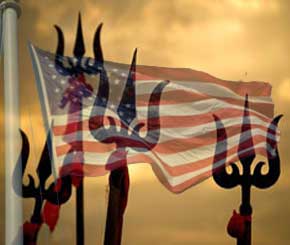
The independent and bipartisan wing of the U.S. Congress, CRS prepares periodic reports on various issues of interest to the lawmakers and the India report was made public by the Federation of American Scientists (FAS). “Even more recent are overt signs that India is home to militant Hindu nationalist groups intent on launching domestic terrorist attacks. In September 2008, seven people were killed by two bomb blasts in Maharashtra’s Malegaon, a hotbed of Hindu-Muslim communal strife,” the report said. “Many Indian observers warned of the danger of a ‘militant majoritarianism’ among Hindu nationalists that threatens to rend the secular fabric of the nation,” reports PTI quoting the CSR study.
Hindu Terror is a fact of Life In India
Abhinav Bharat: Hindu terrorist group
When blasts took place first at the Ajmer Dargah near Jaipur and then at the Mecca Masjid in Hyderabad, the police and the government immediately blamed Pakistani-based terror groups like the Lashkar-e-Toiba (LeT) and Harkat-ul-Jihad-al-Islami (HuJi).
The attacks in Ajmer and Hyderabad took place nearly five months apart in 2007. Three people were killed in the Ajmer attack; another nine died in the Hyderabad explosion. Immediately after them, young Muslims were arrested in Hyderabad for Mecca Masjid blasts.
Three years later, new evidence suggests that the investigating agencies and the government got it all wrong. The Central Bureau of Investigation (CBI) says it believes that radical Hindu groups planned those blasts.
What’s led to this new theory is the arrests last week of three men by the Rajasthan Anti-Terror Squad. They were tracked down because they were using SIM cards found in the debris after the attack at Ajmer.
The men arrested are all Hindus, and are believed to be associated to Abhinav Bharat, a Hindu radical group that India confronted for the first time in 2006.
In September 2006, a series of blasts in Malegaon in Maharashtra left 37 people dead and another 25 injured. Almost two years later, Mumbai Police Anti-Terrorism Squad arrested Sadhvi Pragya Thakur on October 10, 2008 and then serving army officer, Lieutenant Colonel S P Purohit, believed to be the leaders of Abhinav Bharat. Their alleged agenda: to target Muslim crowds.
Purohit, in recent interrogation, has allegedly said that a man named Sunil Joshi was behind the Ajmer blast. That’s what the Rajasthan police also suspects. Sunil Joshi, who was an RSS pracharak in Madhya Pradesh’s Mhow area, had links with Devendra Gupta, the first suspect arrested in the Ajmer Dargah case. Joshi, a resident of Indore, was killed in Dewas in December 2007. The call details of Gupta indicate that both were in touch.
“Colonel Purohit, arrested for Malgaon blast, has confessed that Sunil Joshi had organised the Dargah operation with the help of Devendra Gupta,” Rajasthan Home Minister Shanti Dhariwal told the Hindu newspaper on May 2.
The CBI says that in both the Ajmer and Hyderabad blasts, identical explosives were used. Cellphones triggered both bombs.
So in two different cities, Pakistani groups were held responsible, and young Muslims paid the price. Muslims like Ibrahim Junaid, who, along with 25 others, was picked up from the Old City of Hyderabad and accused of terror links. They were reportedly tortured in illegal custody. There was no chargesheet accusing them of links to the Mecca Masjid attack. Instead they were accused of conspiring to wage war against the state, of preparing and playing out CDs of the Gujarat communal riots of 2002 to create communal tension.
Junaid was at that time was a Unani doctor; he was finally acquitted after 2 years.
“Without proof, they arrested our children. They didn’t even inform us. We didn’t know their whereabouts for 7-8 days,” said Arifunnisa, Junaid’s mother.
All 26 men were later acquitted but they say the stigma never goes away. Junaid says, “When there is a blast, youth of a particular community are targeted. They are playing with our lives. That happened to me. I lost a year in college. I was not able to do my MD because of this.”
Junaid and some of the other Muslims who were arrested have gone to court seeking compensation.
“We are demanding compensation from the police officers who tortured us. That they should be made to pay compensation from their salary, says Rayeesuddin.
CBI chief Ashwani Kumar on Monday said that there was a link between the three alleged hardline Hindutva activists arrested for 2007 blast in Ajmer and the Mecca Masjid, pointing to a network of saffron terror larger than so far believed.
“There is a link between the Ajmer blast and Mecca Masjid blast,” Kumar said on the sidelines of the annual D P Kohli Memorial Lecture on Monday.
The CBI chief said the Rajasthan police along with their Andhra Pradesh counterparts and the CBI have been working on the links for the last six months. “We are coordinating our efforts. For the time being, we can only say that there is a link. We are hopeful of cracking the case,” Kumar added.
Radical Hindutva formations have already been identified as allegedly responsible for the second terror attack on Malegaon. With investigations suggesting that the Hindutva radicals had the motivation, reach and access to resources that they has so far not been suspected of, police will be looking closely at any sign of their involvement in other unsolved cases of attacks on Muslim targets — like the attack on Jama Masjid in the capital.
The Maharashtra police have chargesheeted alleged jehadis in the first attack on a Malegaon mosque, but a demand to re-examine the case is very much likely.
With the CBI breaking its silence over the alleged links between the two cases, Hyderabad-based Muslim groups called upon CBI to not just revisit the Mecca case but also probe the involvement of alleged Hindu terrorists Col P S Purohit and Sadhvi Pragya Singh Thakur who are accused in the 2008 Malegaon bombing.
According to the agency, links have also been found with the Malegaon blast. Sources said that the links had been established due to the use of the similar modus operandi and explosives. The Rajasthan police informed CBI, which is probing the Mecca case, about the arrest last week of three accused — Devender Gupta, Vishnu Patidar and Chandrashekhar Patidar — in the Ajmer shrine blast case. The accused have links with the group, Abhinav Bharat.
Unfinished stories, goes an old idiom in Ajmer, find their denouement in Khwaja Moinuddin Chishti’s shrine. Perhaps, unfinished investigations do too. Two-and-a-half years after low-intensity blasts ripped apart the courtyard of the centuries-old shrine, the Rajasthan police arrested three men—Devendra Gupta, Vishnu Prasad and Chandrashekhar Patidar. Gupta, an RSS worker, was suspected to have bought the mobile phone and SIM card that triggered off the October 2007 blast in which three were killed. Till their arrest on April 30 this year, the story narrated by the investigators, lapped up by the establishment and reiterated in large sections of the media was that the Ajmer blast was the handiwork of jehadi terrorists.
The SIM-mobile phone-detonated bombs are similar in Ajmer and Mecca Masjid blasts, with RDX-TNT mix in proportion used by the Indian army.
The one troubling question—would jehadis target Muslim devout at a dargah?—can have complicated answers, as the body count at Lahore’s Data Ganj Baksh would testify. But in India, the question wasn’t even deemed worthy of being asked as a reasonable line of inquiry. The needle of suspicion remained firmly and automatically fixed on Islamic terrorists—young men from the community were detained at various stages of the investigation and interrogated at length—until the trail finally led to Gupta and pointed to radical Hindu nationalist groups instead. Says Rajasthan Anti-Terrorist Squad chief Kapil Garg: “We have arrested some people of that religion (Hinduism) and we’re dead sure we’re on the right track.”
In Hyderabad too, the CBI team believes it is on the right track, finally, in the Mecca Masjid bomb blasts case. Four men belonging to radical Hindu groups were arrested this May for triggering a high-intensity bomb that went off in the masjid complex in May 2007, killing 14 and injuring some 50. At that time, the Hyderabad police had said it was most likely the work of the Harkat-ul-Jehad-e-Islami (HuJI), backed by local logistical support; some 26 Muslim men were picked up, interrogated, forced to confess and detained for up to six months.
The terror trail in India changed after the Maharashtra ATS’s investigations into the 2008 Malegaon blasts, which alerted them to Abhinav Bharat.
The story followed this script till the CBI found evidence to the contrary: the SIM card-and-mobile phone-detonated explosives packed in metal tubes were strikingly similar to the Ajmer blasts contraption. Tellingly, both bombs are believed to have contained a deadly mix of RDX and TNT, in proportions often used by the Indian army. CBI director Ashwani Kumar told the media that an activist named Sunil Joshi “played a key role in orchestrating the Ajmer blast… and a set of mobile SIM cards that had been used in activation of the bomb-triggers in the Mecca Masjid blast was used again in the Ajmer blast”.
Around the same time, officers of the National Investigating Agency (NIA) filed a chargesheet in a Panjim court accusing 11 people, all Hindus and members of the ultra-right-wing Sanathan Sanstha, of masterminding and executing the October 2009 Margao blasts that killed the two people ferrying the explosives to a local festival. Investigation in Pune’s German Bakery blast this February has run aground after the initial suspicion, detaining and interrogation of suspected Muslim men, some believed to be members of “sleeper cells of jehadi groups” or the Indian Mujahideen (IM). When Abdul Samad was arrested last month, the Maharashtra ATS actively encouraged the understanding that he was the man caught on CCTV cameras in the bakery that night. However, Samad was never charged with the blast and subsequently let off in other cases too.
Malegaon Blasts-I
September 8, 2006
37 dead
* Initial arrests: Arrested include Salman Farsi, Farooq Iqbal Makhdoomi, Raees Ahmed, Noorul Huda Samsudoha and Shabbir Batterywala.
* Later revelation: Suspicion now rests on Hindu terrorists because of the 2008 blasts.
Samjhauta Express Blasts
February 18, 2007
68 dead, mostly Pakistanis
* Initial suspicion: LeT and JeM were blamed. Those arrested included Pakistani national Azmat Ali.
* Later revelation: Police have seen the evidence trail lead to right-wing Hindu activists. Investigators claim the triggering mechanism for the Mecca masjid blast three months later was similar to the one used here. Police are looking for RSS pracharaks Sandeep Dange and Ramji.
Mecca Masjid Blast
May 18, 2007
14 dead
* Initial arrests: Around 80 Muslims detained for questioning and 25 arrested. Several have now been acquitted, including Ibrahim Junaid, Shoaib Jagirdar, Imran Khan and Mohammed Adul Kaleem.
* Later revelation: In June 2010 the CBI announced a cash reward of Rs 10 lakh for information on the two accused, Sandeep Dange and Ramchandra Kalsangra. Lokesh Sharma arrested.
Ajmer Sharif Blast
October 11, 2007
3 dead
* Initial arrests: HuJI, LeT blamed. Those arrested include Abdul Hafiz Shamim, Khushibur Rahman, Imran Ali.
* Later revelation: In 2010, Rajasthan ATS arrests Devendra Gupta, Chandrashekhar and Vishnu Prasad Patidar. Accused Sunil Joshi, who was killed weeks before the blast, is believed to have been a key planner.
Thane Cinema Blast
June 4, 2008
* Affiliated to Hindu Janjagruti Samiti and Sanathan Sanstha, Ramesh Hanumant Gadkari and Mangesh Dinkar Nikam arrested. Blast planned to oppose the screening of Jodhaa Akbar.
Kanpur And Nanded Bomb Mishaps
August 2008
* Two members of Bajrang Dal—Rajiv Mishra and Bhupinder Singh—were killed while assembling bombs in Kanpur. In April 2006, N. Rajkondwar and H. Panse from the same outfit died under similar circumstances in a bomb-making workshop in Nanded.
Malegaon Blasts II
September 29, 2008
7 dead
* Initial suspicion: Groups like Indian Mujahideen involved
* Later revelation: Abhinav Bharat and Rashtriya Jagaran Manch accused of involvement. Arrested include Pragya Singh Thakur, Lt Col Srikant Purohit and Swami Amritanand Dev Tirth, also known as Dayanand Pandey.
Goa Blasts
October 16, 2009
* 2 dead Both accused are members of the Sanathan Sanstha. Malgonda Patil and Yogesh Naik were riding a scooter laden with explosives, which accidentally went off.
Terror trails in India dramatically changed with the Malegaon blasts investigation in September-October 2008. Led by then Maharashtra ATS chief Hemant Karkare, who was subsequently killed on the night of 26/11, the investigation pointed to Abhinav Bharat (AB), an ultra-right-wing Pune-based organisation established in 2005-06, and its members or affiliates. What Karkare’s teams managed to uncover is part of recent history and should have become the basis of examining and monitoring the new phenomenon of Hindutva terror but didn’t.
The Hindutva links to Mecca Masjid, Ajmer and other low-intensity blasts have been in the public domain for close to two years; the signs were visible since 2002-03 when an ied found at the Bhopal railway station was traced back to local Hindutva activists Ramnarayan Kalsangra and Sunil Joshi. They were questioned, but no evidence was found. Yet, it prompted Congress leader Digvijay Singh to declare a Bajrang Dal hand. Later in 2006, there were explosions in the houses of Hindutva activists in Nanded and Kanpur, where ieds were being prepared. Through that year, mosques in several towns in Maharashtra—Purna, Parbhani, Jalna—were rocked by low-intensity blasts; the Nanded one was meant for a mosque in Aurangabad. Recovered with a map of Aurangabad were false beards and Muslim male outfits. That should have been warning enough.
However, till May-June this year, the establishment did not either see these warning signals or chose to ignore them—except for a brief two-month period in 2008 when Karkare led the Malegaon probe. Now, it may be difficult to sustain the denial. “For the last 10 years, stories about Hindu right-wing violence have been trickling out. Instead of a systematic investigation, there has been an event-to-event investigation. The larger story has remained underinvestigated and under-reported,” says Mumbai advocate and human rights campaigner Mihir Desai. The CBI is only now seeking directions from the Union home ministry to see the Ajmer, Mecca Masjid, Malegaon and other blasts in conjunction after there has been no conclusive evidence of the involvement of Islamic groups.
Malegaon 2008 provided the much-needed aperture to review the role of Hindutva groups. In September that year, eight people were killed and many injured in a low-intensity blast. The ATS investigation led to Sadhvi Pragya Singh Thakur, whose motorcycle was used to explode the bomb, and then to 13 others, including self-styled guru Dayanand Pandey and Lt Col Prasad Shrikant Purohit, the first-ever serving officer to be charged. During interrogation, he had disclosed to ATS investigators that he had provided the RDX in the Mecca Masjid blasts too but the ATS was reportedly asked not to make it public as the Hyderabad police had detained HuJI suspects. The similarity with the Ajmer Sharif blasts was evident too.
The 4,528-page chargesheet filed in the Malegaon case offers insight into the grand design of the Abhinav Bharat and its affiliates. Purohit, the Sadhvi and others had spoken to one another “to avenge bomb attacks on Hindu shrines” and had engineered a series of blasts with the larger ambition to establish a “separate Hindu rashtra”. Abhinav Bharat—whose original avatar was started by Veer Savarkar, later disbanded, and restarted by Himani Savarkar—was set up to achieve this ambition. “This organised crime syndicate,” states the chargesheet, “wanted to adopt a national flag, that is, a solo-themed saffron flag with a golden border…with an ancient golden torch.”
Malegaon honoured Karkare by naming a chowk after him—the tribute of a relieved town to a man they believed would have led them to the truth about the September 2006 blasts too. Three bombs had gone off that Friday afternoon near a mosque and cemetery, killing 37 and injuring 100. Typically, Muslim men alleged to be members of the proscribed SIMI were picked up, interrogated and forced to confess. But the chargesheet had several loopholes—main accused Mohammed Zahid, though a SIMI activist, was leading prayers in a village 700 km from Malegaon that day; conspirator Shabbir Masiuallah had been in police custody a month before the blasts, police sketches made on the basis of eyewitness accounts showed clean-shaven men while all accused had kept beards for years.
The Rajasthan ATS now believes that Devendra Gupta, linked to the Ajmer blasts, was in touch with AB members through RSS pracharak Sunil Joshi. Providing the other end of the link, the Maharashtra ATS says the Sadhvi, enraged when Joshi was killed by suspected SIMI activists in September 2007, ordered the 2008 Malegaon blast. Joshi has also been linked to the Samjhauta Express blasts which killed 68 people, all Pakistanis. The evidence has come from Purohit’s reported phone conversation as narrated by an unnamed witness.
Yet, the story has several loose ends, most critical among them being fugitives Ramnarayan Kalsangra, Swami Aseemanand and others. Kalsangra, investigators in Maharashtra and Rajasthan say, was introduced to Devendra Gupta by the Sadhvi and is believed to be an expert at assembling bombs. Finding Kalsangra is crucial since all accused in custody have named him as “the man”. Ajmer, Mecca Masjid, Malegaon, Samjhauta Express and several other blasts are clearly part of a larger story. Only when the CBI puts all the pieces together will the entire Hindutva terror picture emerge, if at all.
Two days after stoking a controversy by accusing BJP and RSS of conducting terror training camps and promoting ” Hindu terrorism“, the Union home ministerSushilkumar Shinde on Tuesday got an official backing of his remarks from home secretary R K Singh. The senior bureaucrat emphasized that the government has names of at least 10 people involved in several blasts, who were associated with the RSS.
Though Singh did not mention anything about BJP or existence of any training camp that might be promoting terrorism as claimed by Shinde, he disclosed the names of 10 people against whom investigating agencies have evidence.
“During investigation of Samjhauta Express, Mecca Masjid and (Ajmer) Dargah Sharif blasts, we have found at least 10 names who have been associated with the RSS at some point or the other,” Singh said.
Responding to a question whether government has any evidence linking RSS with any person involved in any terrorist strike anywhere in the country as claimed by Shinde, the home secretary said, “We have evidence against them. There are statements of witnesses”.
Names disclosed by Singh are of those who were either arrested by the National Investigation Agency (NIA) or are absconders for their alleged roles in Samjhauta Express, Ajmer Sharif Dargah, Mecca Masjid and Malegaon blasts at different points of time.
Incidentally, Singh did not take name of the RSS senior leader Indresh Kumar whose name is there in the NIA’s chargesheet as one of the “suspect” in the Samjhauta Express blast case – an indication that the investigating agency hasn’t any corroborative evidence against him so far.
The names that were made public by the home secretary had links with the RSS in one or the other way.
These names — part of the report sent by the NIA to the home ministry — include slain RSS activist Sunil Joshi who was allegedly involved in Samjhauta Express and Ajmer Sharif Dargah blasts. Joshi was an “activist of RSS” in Dewas and Mhow from 1990s to 2003.
The other nine include two absconders — Sandeep Dange and Ramji Kalsangra — and seven arrested accused like Lokesh Sharma, Swami Aseemanand alias Naba Kumar Sarkar, Rajender alias Samunder, Mukesh Vasani, Devender Gupta, Chandrasekhar Leve and Kamal Chauhan.
The NIA’s report claimed that Dange, who was allegedly involved in Samjhauta Express, Mecca Masjid and Ajmer Sharif Dargah blasts, was “RSS pracharak” in Mhow, Indore, Uttarkashi and Sajhapur from 1990s to 2006 while Lokesh Sharma – accused in Samjhauta Express and Mecca Masjid blasts — was the RSS “nagar karyavahak” in Deogarh.
Similarly, Aseemanand – chargesheeted in Samjhauta Express blast case — was “associated with RSS wing Vanavashi Kalyan Parishad” in Dang, Gujarat, in 1990s to 2007, while Rajender (Samjhauta and Mecca Masjid blasts accused) was “RSS varg vistarak”.
Ajmer Sharif Dargah accused Mukesh Vasani was an “activist of RSS” in Godhra. The report also claimed that Devender Gupta, involved in Mecca Masjid blast, was a “RSS pracharak” in Mhow and Indore. Chandrasekhar – a Mecca Masjid accused — was a “RSS pracharak” in Shajhanpur in 2007, while Kamal Chouhan (Samjhauta and Mecca Masjid blasts accused) was a “RSS activist”.
The NIA also claimed that the absconder Ramji Kalsangra was a “RSS associate”. He was involved in Samjhauta Express and Mecca Masjid blasts.
Names of five of them – Aseemanand, Joshi, Sharma, Dange and Kalsangra — had figured in the Samjhauta Express charge-sheet, filed by the NIA in June 2011. Though the RSS leader Indresh Kumar was not an accused in the case, the agency referred to him thrice in the chargesheet stating that his involvement in the conspiracy is “highly suspected”.
Kumar’s name is figured as “suspect” on the basis of his meeting with the perpetrators twice during 2005-06 when they “discussed about jihadi attacks on Hindu places of worships and the need to give befitting replies”.
These meetings were followed by similar secret gatherings of select people which finally culminated into terror attacks not only on Samjhauta Express train, but also blasts in dargah Ajmer Sharief, Mecca Masjid (Hyderabad) and twice in Malegaon under the radicals’ “bomb ka badla bomb” plan. The NIA had earlier referred to Kumar as “suspect” in the Ajmer blast case as well.
The NIA, in its 24-page chargesheet, had claimed that “investigation has brought out strong suspicion about the role of some more persons in the conspiracy as well” and therefore further probe in the case would be continued.
Investigations and allegations
Hindu extremist organisations have been accused of involvement in terrorist attacks including 2006 Malegaon blasts, Mecca Masjid bombing (Hyderabad), Samjhauta Express bombings and the Ajmer Sharif Dargah Blast.[7][8][9][10][11][12]
[edit]Investigation of Ajmer Dargah blast
A blast shook the sufi shrine of Khwaja Moinuddin Chishti at Ajmer on 11 October 2007 at 6:20 pm, leaving two dead and eleven injured. The blast was initially blamed on the Pakistani terrorist group LeT.[13] However, in 2010, The ATS arrested five individuals for the blast, four of whom were members of the Hindu Nationalist group RSS.[14][15] Swami Aseemanand, in his confession, also admitted the involvement of former RSS members and the Inter-Services Intelligence in the blast.[16][17][18] Aseemanand later retracted his “confession” and his lawyer said the confession was not voluntary and made under extreme pressure.[19]
[edit]Investigation of Samjhauta Express bombing
Initially the primary suspects of the bombing were considered to be Pakistan-based terror groups like the LeT and the JeM.[20] In November 2008, it was reported that Indian officials also suspected the attacks were linked to Prasad Shrikant Purohit, an Indian army officer and member of Hindu nationalist group Abhinav Bharat.[21] Wikileaks reports name David Headley as behind the Samjhauta attacks.[22] On January 8, 2011, Swami Aseemanand allegedly confessed that Saffron terror outfits were behind the bombing of Samjhauta express,[23] a statement later alleged to be obtained under duress.[19][24][25] His confessions included allegations that Pakistan’s Inter-Services Intelligence (ISI) was supporting the activities logistically.[18][26] On March 31, 2011 Aseemanand redacted his confession, citing government pressure. Security analyst B. Raman has termed this investigation as a “partisan political game.”.[27] On July 18, 2011 Swami Aseemanand further unveiled that NIA had fabricated evidence against him and his arrest was illegal. He further alleged that he was tortured to give wrong statements.[28][29] On November 29, 2011 the Punjab and Haryana High Court issued notice to the NIA on a petition filed by Swami Aseemanand.[30] Kamal Chauhan a former RSS member confessed that he planted a bomb on the Delhi-Lahore Samjhauta Express that killed 68 people. This was under the leadership of Joshi a former RSS zila pracharak in Madhya Pradesh, who quit RSS for its diversion from the core idealogies.[31][32]
[edit]Investigation of 2008 Malegaon blasts
Police filed a chargesheet that named Indian Army officer Lt Col Prasad Purohit as the alleged main conspirator who provided the explosives, and Sadhvi Pragya Singh Thakur as the alleged prime accused who arranged for the men who planted the explosives.[33]
A 4,000-page chargesheet, filed by Maharashtra Anti-Terrorism Squad (ATS) before the Special MCOCA court here, stated that Purohit joined the right-wing Hindu group Abhinav Bharat in 2007 with an alleged intention to ‘propagate a separate Hindu Rashtra with its own Constitution’. According to the document, the Army officer allegedly collected ‘huge amounts’ to the tune of Rs 21 lakh for himself and Abhinav Bharat to promote his “fundamentalist ideology.”[33]
It was in the aftermath of the September 29 bomb blast in the predominantly Muslim town[34] of Malegaon in Maharashtra that the alleged terms Saffron Terror and Hindutva Terror came to be used widely in various medias. [35] However, the accused parties confessed to police on narco-analysis that a group of Muslim individuals was used to obtain the RDX used in the blast.[36] However, Purohit allegedly admitted that a splinter group with tenuous ties to him had executed two blasts in India, which prompted investigators to look into the blasts in Ajmer and Hyderabad.[37]
Three men accused of the 2006 Malegaon bombings, including Lt Col Shrikant Purohit of the India army and Pragya Singh Thakur, have been described as representing Saffron terror. [38][39] Purohit was also accused of being involved in the 2007 Samjhauta Express bombings }</ref>
[edit]Investigation of Mecca Masjid bombing
While the United Progressive Alliance-led central government has claimed that Abhinav Bharat was behind the Mecca Masjid bombing,[40] the South Asia Terrorism Portal, the Institute for Defence Studies and Analyses, the United States and the United Nations have asserted that the Islamicoutfit Harkat-ul-Jihad al-Islami was behind the attacks.[41][42][43][44] Noting this, security analyst B. Raman has questioned “the two different versions that have emerged from Indian and American investigators.”[45] On September 22, 2010 a report submitted by the United States National Counterterrorism Center (NCTC) to the United States Department of Homeland Security, named HuJi responsible for the blasts. The CBI claimed in their response that the NCTC “do not seem to be updated with developments in the case”[46]
Swami Aseemanand allegedly confessed in January 2011[47] that he and other Hindu activists were involved in bombings at Muslim religious places(including the mecca masjid). Hyderabad was chosen because the Nizam of Hyderabad wanted to opt for Pakistan at the time of partition.[47]However his lawyer claimed that confession was obtained under pressure.[19][24]
[edit]Other allegations
Members of Abhinav Bharat have recently been alleged to have been involved in a plot to kill Rashtriya Swayamsevak Sangh President Mohan Bhagwat.[48] allegedly with the help of Pakistan‘s Inter-Services Intelligence.[49] Headlines Today released a recorded video tested by the Central Forensic Science Laboratory which indicated the uncovering of an alleged plot to assassinate the Vice President of India Hamid Ansari.[50] Tehelka also released alleged audio tapes transcripts of main conspirators of Abhinav Bharat which indicated involvement of Military intelligence officers with the Abhinav Bharat group in their January 2011 edition.[51]
In January 2013, Indian Home Minister Sushilkumar Shinde accused Rashtriya Swayamsevak Sangh and Bharatiya Janata Party for setting up camps to train Hindu Terrorism including planting bombs in 2007 Samjhauta Express bombings, Mecca Masjid bombing and 2006 Malegaon blasts.Shinde said “Reports have come during investigation that BJP and RSS conduct terror training camps to spread terrorism … Bombs were planted in Samjhauta express, Mecca Masjid and also a blast was carried out in Malegaon,” .He also added, “This is saffron terrorism that I have talked about. It is the same thing and nothing new.”[52]. A few days later, Indian Home Secretary Raj Kumar Singh released the names of 10 people, who were involved in the blasts, also alleged to have been involved with the RSS at some point or the other.[53]
According to some released documents by WikiLeaks, Congress(I) party’s general secretary Rahul Gandhi remarked to US Ambassador Timothy Roemer, at a luncheon hosted by Prime Minister of India at his residence in July 2009, that R.S.S. was a “bigger threat” to India than theLashkar-e-Tayiba. RSS spokesman Panchjanya responded that the statement showed that Gandhi “is totally unaware of the history of Hindutva as well as the concept of nationalism.”[54]
At The Annual Conference of Director General of Police held in New Delhi on 16 September 2011, a special director of the Intelligence Bureau (IB) reportedly informed the state police chiefs that the Hindutva activists have either been suspected or are under investigation in 16 incidents of bomb blasts in the country.[55][56]
[edit]Organizations and alleged people
The following organizations are alleged to be involved in acts of terrorism attributable to Hindu nationalism:
- Abhinav Bharat – Notable members: Sadhvi Pragya Singh Thakur, Lt. Col Prasad Shrikant Purohit, Swami Aseemanand
Two persons with alleged links to the Hindutva organization Sanatan Sanstha were sentenced to 10 years in jail for planting explosives and causing an explosion in various theatres in Thane and Vasai.[57]
[edit]Usage
The first known use of the term “Saffron Terror” is from an 2002 article in Frontline in reference to 2002 Gujarat Riots.[58] However it was in the aftermath of the September 29, 2008 bomb blast in the predominantly Muslim town of Malegaon in Maharashtra that these terms came to be used widely.[59] In late 2008, Indian police arrested members of a Hindu radical cell allegedly involved in an attack Malegaon which killed 7 Muslims.[60] For incidents like these, Saffron terror has been used synonymously with “Anti-Muslim terrorism” or “Anti-Muslim reprisals”[61] and also as Hindu terrorism.[62]
The current Home Minister of India, P. Chidambaram urged Indians to beware of “Saffron terror” on August 25, 2010 at a meeting of state police chiefs in New Delhi.[5] This was the first time the word was “officially” used by the Government of India.[1] Since making the remark, a Hindu Swamiin the Patan district has filed a defamation lawsuit against Chidambaram, on the grounds that the saffron color is a conventional Hindu symbol and worn regularly by Hindu religious clergy, and that Chidambaram has hurt the sentiments of Hindus by linking the symbol to terrorism.[63]Chidambaram responded by stating “I cannot claim patent on the phrase.”[64] On September 6, 2010 a Gujarat court ordered a probe into the use of the term by Chidambaram.[65] Chidambaram was also criticized by members of his own party (the Indian National Congress) for the use of the term, with Congress spokesman Janardhan Dwivedi claiming “terrorism does not have any colour other than black”.[66]
India is in something of a state of shock after learning from official sources that its first Hindu terror cell may have carried out a series of deadly bombings that were initially blamed on militant Muslims. The revelation is forcing the country to consider some difficult questions.
At least 10 people have been arrested in connection with several bomb blasts in the Muslim-dominated town of Malegaon in the western state of Maharashtra in September, which left six people dead. But reports suggest that police believe the cell may also have carried out a number of previous attacks, including last year’s notorious bombing of a cross-border train en route to Pakistan, which killed 68 people. Among the alleged members of the cell are a serving army officer and a Hindu monk.
Bomb attacks are not uncommon in India – there has been a flurry in recent months – but police usually blame them on Muslim extremists, often said to have links to militant groups based in either Pakistan or Bangladesh. As a result, the recent cracking of the alleged Hindu cell has forced India to face some difficult issues. A country that prides itself on purported religious and cultural toleration – an ambition that in reality often falls short – has been made to ask itself how this cell could operate for so long. India’s military, which prides itself on i
ts professionalism, has been forced to order an embarrassing inquiry.
The near-daily drip of revelations from police has also caused red faces for India’s main political opposition, the Hindu nationalist Bharatiya Janata Party (BJP), ahead of state polls and a general election scheduled for early next year. The BJP and its prime ministerial candidate, Lal Krishna Advani, have long accused the Congress Party-led government of being soft on terrorism that involved Muslims. However, the BJP has refused to call for a clampdown on Hindu groups, and last week Mr Advani even criticised the police over the way they questioned one of the alleged cell members, a woman called Sadhvi Pragya Singh Thakur.
The Prime Minister, Manmohan Singh, phoned his rival to ask him not to politicise the issue or the investigation. “There is a strong case so let the police do their job,” he told Mr Advani. While some commentators have expressed surprise about the discovery of the alleged cell, others have pointed out that there has been growing concern about the possible threat from Hindu extremists. In the summer, two members of a right-wing Hindu group were killed while putting together a bomb, and two other suspected members of the same group died in similar circumstances in 2006.
Meanwhile, senior right-wing leaders have made no secret of their wish that Hindus should form suicide squads to protect themselves against Muslim extremists. Bal Thackeray, leader of a group called the Shiv Sena, which has been responsible for communal and regional violence in Mumbai, wrote recently in the party’s magazine: “The threat of Islamic terror in India is rising. It is time to counter the same with Hindu terror. Hindu suicide squads should be readied to ensure the existence of Hindu society and to protect the nation.”
Observers say the fact that the police have arrested the alleged cell members amid considerable political pressure suggests the growing professionalism of its security forces. “It’s the first Hindu cell and it’s the first time Hindus have been shackled and taken to jail,” said Professor Dipankar Gupta, a sociologist at Delhi’s Jawarlahal Nehru University. “I’m quite pleased with the way the police have done their jobs.”
Egypt Says Egyptian Jews in Israel are Welcome to Live in Egypt
MB official: Egyptian Jews should return to Egypt
PHOTO: REUTERS
A high-ranking Muslim Brotherhood official called on Jews who immigrated to the Jewish state from Egypt to return to their native country and leave Israel to the Palestinians, Egyptian daily Al-Masry Al-Youm reported on Friday.
Senior Egyptian Muslim Brotherhood official Essam el-Erian said in an interview to television station Dream TV that every Egyptian has the right to live in Egypt, and Egyptian Jews living in Israel were contributing to the occupation of Arab lands, according to the newspaper.
“Egyptian Jews should refuse to live under a brutal, bloody and racist occupation stained with war crimes against humanity,” Erian said.
“Why did [former Egyptian president Gamal Abdel] Nasser expel them from Egypt?” Erian asked in the interview.
Several online newspapers reported in October that approximately 1.7 million documents that purportedly contained details about the assets of Egyptian Jews in the 1940s, ’50s and ’60s – were seized by Egyptian security services just before they were exported to Israel.
A report in the Egyptian government-owned Al-Ahram daily newspaper said that the “Jewish documents,” packed in 13 cartons, were confiscated by Egyptian authorities ahead of them being “smuggled” out of Jordan.
The issue regarding Jews who lived in what are long-gone or moribund communities in the Arab world recently made headlines as Deputy Foreign Minister Danny Ayalon launched a campaign to have them recognized as refugees.
He said any property owned by Jews from Arab countries – some of whom left in 1948, while others immigrated to Israel throughout the 1950s and just after the Six Day War – must be included in discussions for compensation of refugees.
Ultimately, Ayalon argued, they should be considered refugees, just as Palestinians who fled during those years are – a controversial position that even some immigrants to Israel and their descendants dispute.
The deputy foreign minister said in October that he had no knowledge of the supposed documents that had been confiscated by Egyptian authorities, adding that Israel already has all the documentation it needs.
Ilene Prusher contributed to this report.
Muslims Have Least Sex Outside Marriage, Study Suggests
Of all the world’s major religious groups, Muslims are the least likely to have sex outside of marriage, new research found. And as a country’s Muslim population grows, the rate of premarital sex declines for all residents, even non-Muslims, according to the study.
Researchers analyzed the responses of over 620,000 people (ages 15-59) who were interviewed as part of the Demographic and Health Surveys in 31 mostly developing nations from 2000 to 2008. Most countries included in the sample had either a Muslim or Christian majority, except India and Nepal, which have Hindu majorities, and Cambodia which has a Buddhist majority. (The United States was not included in the study.)
They found that, overall, the odds of married Muslims reporting premarital sex are 53 percent lower than for Christians. Hindus are 40 percent less likely to report premarital sex, compared with Christians. Meanwhile, Jews and Buddhists have greater chances of having sex before getting hitched than Christians do, according to the study.
The researchers believe these results could be linked to Muslims’ greater adherence tostrict religious tenets that only allow sex within marriage. As many Muslim leaders place heavy importance on fidelity in marriage, it might be no surprise that Muslims also are less likely than Hindus, Christians and Jews to report extramarital sex, as the study found.
What’s more, the religious values of a Muslim majority in a country seem to exert a big influence on the wider population’s sexual norms. A 1 percent increase in the percentage of Muslims in a nation caused a 2 percent decrease in the likelihood of premarital sex for all citizens, regardless of their religious identity, the study found. (The researchers note that an increase in the Muslim population in a country did not further reduce the odds of premarital sex among just Muslims.)
“All major world religions discourage sex outside of marriage, but they are not all equally effective in shaping behavior,” wrote the researchers, led by Amy Adamczyk, an associate professor of sociology at John Jay College of Criminal Justice in New York. Their study was published in the October issue of the American Sociological Review.
The team speculated that in Muslim-majority countries, strict laws on women’s mobility and interaction between the sexes might cut down the opportunities for sex outside marriage. But the researchers found no significant relationship between a country’s restrictions on women and the odds of premarital and extramarital sex, suggesting religion plays a greater role than those laws in policing sexual behavior.
The same was true for age. Muslims and Hindus are more likely to have an arranged marriage and to marry younger than Christians and Jews. Though the likelihood of premarital sex increased with age, the study found that age was not a significant factor in driving down rates of premarital sex for these religious groups.
“One of the most surprising findings was that religious affiliations have a real influence on people’s sexual behaviors,” Adamczyk said in a statement. “While a lot of research attention has been given to understanding differences between the major world religions in adherents’ attitudes, much less attention has been given to understanding differences based on behaviors.”
The researchers considered that social pressure could have caused some respondents being interviewed in the Demographic and Health Surveys (funded by USAID) to lie. But the survey mandates that interviewers be the same gender as the respondent and try to conduct the questionnaire in private. The latter is not always possible and interviewers are instructed to note the presence of others. They are also told to flag inconsistent responses (For example, if a respondent says she was a virgin at the time of marriage, but her reported age at first intercourse is younger than her age at marriage, that would get flagged.)
Follow LiveScience on Twitter @livescience. We’re also on Facebook & Google+.
Muslims Have Least Sex Outside Marriage, Study Suggests
Of all the world’s major religious groups, Muslims are the least likely to have sex outside of marriage, new research found. And as a country’s Muslim population grows, the rate of premarital sex declines for all residents, even non-Muslims, according to the study.
Researchers analyzed the responses of over 620,000 people (ages 15-59) who were interviewed as part of the Demographic and Health Surveys in 31 mostly developing nations from 2000 to 2008. Most countries included in the sample had either a Muslim or Christian majority, except India and Nepal, which have Hindu majorities, and Cambodia which has a Buddhist majority. (The United States was not included in the study.)
They found that, overall, the odds of married Muslims reporting premarital sex are 53 percent lower than for Christians. Hindus are 40 percent less likely to report premarital sex, compared with Christians. Meanwhile, Jews and Buddhists have greater chances of having sex before getting hitched than Christians do, according to the study.
The researchers believe these results could be linked to Muslims’ greater adherence tostrict religious tenets that only allow sex within marriage. As many Muslim leaders place heavy importance on fidelity in marriage, it might be no surprise that Muslims also are less likely than Hindus, Christians and Jews to report extramarital sex, as the study found.
What’s more, the religious values of a Muslim majority in a country seem to exert a big influence on the wider population’s sexual norms. A 1 percent increase in the percentage of Muslims in a nation caused a 2 percent decrease in the likelihood of premarital sex for all citizens, regardless of their religious identity, the study found. (The researchers note that an increase in the Muslim population in a country did not further reduce the odds of premarital sex among just Muslims.)
“All major world religions discourage sex outside of marriage, but they are not all equally effective in shaping behavior,” wrote the researchers, led by Amy Adamczyk, an associate professor of sociology at John Jay College of Criminal Justice in New York. Their study was published in the October issue of the American Sociological Review.
The team speculated that in Muslim-majority countries, strict laws on women’s mobility and interaction between the sexes might cut down the opportunities for sex outside marriage. But the researchers found no significant relationship between a country’s restrictions on women and the odds of premarital and extramarital sex, suggesting religion plays a greater role than those laws in policing sexual behavior.
The same was true for age. Muslims and Hindus are more likely to have an arranged marriage and to marry younger than Christians and Jews. Though the likelihood of premarital sex increased with age, the study found that age was not a significant factor in driving down rates of premarital sex for these religious groups.
“One of the most surprising findings was that religious affiliations have a real influence on people’s sexual behaviors,” Adamczyk said in a statement. “While a lot of research attention has been given to understanding differences between the major world religions in adherents’ attitudes, much less attention has been given to understanding differences based on behaviors.”
The researchers considered that social pressure could have caused some respondents being interviewed in the Demographic and Health Surveys (funded by USAID) to lie. But the survey mandates that interviewers be the same gender as the respondent and try to conduct the questionnaire in private. The latter is not always possible and interviewers are instructed to note the presence of others. They are also told to flag inconsistent responses (For example, if a respondent says she was a virgin at the time of marriage, but her reported age at first intercourse is younger than her age at marriage, that would get flagged.)
Follow LiveScience on Twitter @livescience. We’re also on Facebook & Google+.
Obesity Causing Pathogen Discovered by Chinese Scientists
An opportunistic pathogen isolated from the gut of an obese human causes obesity in germfree mice
Open
- 1State Key Laboratory of Microbial Metabolism and School of Life Sciences and Biotechnology, Shanghai Jiao Tong University, Shanghai, China
- 2Shanghai Centre for Systems Biomedicine, Shanghai Jiao Tong University, Shanghai, China
Correspondence: L Zhao, State Key Laboratory of Systems Biomedicine, Shanghai Centre for Systems Biomedicine, Shanghai Jiao Tong University, Room 3-517, Biology Building, 800 Dongchuan Road, Minhang Campus, Shanghai 200240, China. E-mail: lpzhao3517@gmail.com orlpzhao@sjtu.edu.cn
Received 1 August 2012; Revised 24 October 2012; Accepted 28 October 2012
Advance online publication 13 December 2012
Abstract
Lipopolysaccharide endotoxin is the only known bacterial product which, when subcutaneously infused into mice in its purified form, can induce obesity and insulin resistance via an inflammation-mediated pathway. Here we show that one endotoxin-producing bacterium isolated from a morbidly obese human’s gut induced obesity and insulin resistance in germfree mice. The endotoxin-producing Enterobacter decreased in relative abundance from 35% of the volunteer’s gut bacteria to non-detectable, during which time the volunteer lost 51.4 kg of 174.8 kg initial weight and recovered from hyperglycemia and hypertension after 23 weeks on a diet of whole grains, traditional Chinese medicinal foods and prebiotics. A decreased abundance of endotoxin biosynthetic genes in the gut of the volunteer was correlated with a decreased circulating endotoxin load and alleviated inflammation. Mono-association of germfree C57BL/6J mice with strain Enterobacter cloacae B29 isolated from the volunteer’s gut induced fully developed obesity and insulin resistance on a high-fat diet but not on normal chow diet, whereas the germfree control mice on a high-fat diet did not exhibit the same disease phenotypes. The Enterobacter-induced obese mice showed increased serum endotoxin load and aggravated inflammatory conditions. The obesity-inducing capacity of this human-derived endotoxin producer in gnotobiotic mice suggests that it may causatively contribute to the development of obesity in its human host.
Keywords:
gut microbiota; germfree mice; endotoxin-producing bacterium; obesity; insulin resistance; high-fat diet
The role of the gut microbiota in the pathogenesis of obesity has emerged into an important research area (Backhed et al., 2004). Gram-negative opportunistic pathogens in the gut may be pivotal in obesity (Schumann et al., 1990; Zhang et al., 2010, 2012). Lipopolysaccharide (LPS) endotoxin purified from Escherichia coliinduced obese and insulin-resistant phenotypes when subcutaneously infused into mice at a concentration comparable to what can be found in a mouse model of high-fat diet (HFD)-induced obesity (Cani et al., 2007). Endotoxin-induced inflammation seems to be essential for the development of obese and insulin-resistant phenotypes in the mouse model involving LPS infusion, as CD14-knockout mice did not develop these phenotypes after endotoxin infusion (Cani et al., 2007). Epidemiological studies show increased population of endotoxin producers and elevated endotoxin load in various obese cohorts (Lepper et al., 2007; Ruiz et al., 2007; Moreno-Navarrete et al., 2011), but experimental evidence of endotoxin producers having a causative role in human obesity is lacking.
During our clinical studies, we found that Enterobacter, a genus of opportunistic, endotoxin-producing pathogens (Sanders and Sanders, 1997), made up 35% of the gut bacteria in a morbidly obese volunteer (weight 174.8 kg, body mass index 58.8 kg m−2) suffering from diabetes, hypertension and other serious metabolic deteriorations (Table 1). The volunteer lost 30.1 kg after 9 weeks, and 51.4 kg after 23 weeks, on a diet composed of whole grains, traditional Chinese medicinal foods and prebiotics (WTP diet, Supplementary Information; Supplementary Figure 1), with continued amelioration of hyperinsulinemia, hyperglycemia and hypertension until most metabolic parameters improved to normal ranges (Table 1). After 9 weeks on the WTP diet, this Enterobacter population in the volunteer’s gut reduced to 1.8%, and became undetectable by the end of the 23-week trial, as shown in the clone library analysis (Table 1; Supplementary Figures 2 and 3). The serum–endotoxin load, measured as LPS-binding protein (Schumann et al., 1990), dropped markedly during weight loss, along with substantial improvement of inflammation, decreased level of interleukin-6 and increased adiponectin (Table 1). Metagenomic sequencing of the volunteer’s fecal samples at 0, 9 and 23 weeks on the WTP diet confirmed that during weight loss, the Enterobacteriaceae family was the most significantly reduced population (Supplementary Figure 4). The abundance of 25 KEGG Orthologies involved in the LPS biosynthetic pathway diminished considerably, together indicating a significant reduction of the endotoxin-producing capacity of the volunteer’s gut microbiota after the intervention (Supplementary Figures 5–7). In light of previous reports of the pivotal role that endotoxins have in metabolic diseases in mice (Cani et al., 2007), we hypothesized that this endotoxin-producing Enterobacter population may have a causative role in the metabolic deteriorations of its human host. To confirm the causative role it may have in obesity development, we confirm Koch’s postulate in an experimental host with an isolated strain of this Enterobacter population (Evans, 1976). We then obtained one clinical isolate (B29) from the volunteer’s fecal sample via a ‘sequence-guided isolation’ scheme (Rappé et al., 2002; Supplementary Figure 8), and identified it as Enterobacter cloacae through biochemical tests and 16S ribosomal RNA gene sequencing (Supplementary Table 1). We performed whole-genome sequencing on B29, and phylogenetic analysis using CVTree (Qi et al., 2004) and identified its nearest neighbor as E. cloacaesubsp. cloacae ATCC 13047 (Supplementary Information). A limulus amebocyte lysate test showed that B29 LPS has strong endotoxin activity (Supplementary Figure 9), and the draft genome sequence revealed LPS biosynthesis genes similar to those in the metagenome from the day 0 fecal sample (Supplementary Figure 10).

Previous studies show that germfree mice are resistant to HFD-induced obesity (Backhed et al., 2007; Ding et al., 2010; Rabot et al., 2010). To test whether B29 can overcome this resistance to obesity by colonizing the gut of germfree mice (Supplementary Figure 11), we inoculated 1010 cells of B29 every day for the first week into 6- to 10-week-old germfree C57BL/6J mice (n=7 per group) under either normal chow diet (NCD) or HFD. We observed a slight body weight reduction among the mice during the inoculation period (Supplementary Figures 11–14). One mouse in each group died during inoculation because of the translocation of B29 into various organs (Sanders and Sanders, 1997; Supplementary Table 2). After the first week, the HFD-fed gnotobiotic mice inoculated with B29 (HFD+B29) showed a steady weight gain until eventually reaching an obese state comparable to that of the HFD-fed conventional mice (n=8 per group; Figures1a–c; Supplementary Figures 14–17). The excessive fat accumulation in the HFD+B29 gnotobiotic mice was associated with an altered lipometabolism including a leptin-resistant phenotype, reduced expression of fasting-induced adipose factor in the ileum, and increased expression of acetyl-CoA carboxylase 1, fatty acid synthase and peroxisome proliferator-activated receptor-gamma genes in the liver (Supplementary Figures 18–19; Backhed et al., 2004, 2007). The HFD+B29 gnotobiotic mice developed the most significant insulin-resistant phenotype as shown in the oral glucose tolerance test and 2 h post load insulin levels at the end of the trial (Figures 1d and e). This group also had the greatest increases in liver and spleen weights and the greatest decrease in cecum weight (Supplementary Table 3). The NCD-fed mice inoculated with either B29 (NCD+B29) or Luria–Bertani (LB) medium (NCD+LB) both remained lean throughout the trial (Figures 1a–c). The HFD-fed germfree mice inoculated with LB (HFD+LB) experienced significant weight gain over the first 9 weeks but eventually became no different, based on the obesity parameters tested, from the NCD-fed groups by the end of the 16-week trial, except for a moderately increased epididymal fat pad and a low level of insulin resistance (Supplementary Figure 14; Figures 1b and d). Our repeat of the animal test with HFD-fed gnotobiotic mice mono-associated with B29 confirmed that a single endotoxin producer such as B29 can function in the capacity of the whole microbiota for inducing obese and insulin-resistant phenotypes (Supplementary Figure 20). Inoculating 6- to 10-week-old germfree mice (n=4–6 per group) with a strain of Bifidobacterium animals via alternation of NCD and HFD feeding did not induce the same obese phenotype (Supplementary Figure 21), suggesting that obesity cannot be induced by introducing any bacteria in the germfree mice under HFD feeding.
Figure 1.

Gnotobiotic mice mono-associated with E. cloacae B29 become obese and insulin resistant with increased endotoxin load and provoked systemic inflammation under HFD feeding (data collected at the end of 16 weeks after inoculation). (a) Body weight; (b) mass of epididymal, mesenteric, subcutaneous inguinal and retroperitoneal fat pad; (c) abdominal photographs; (d) oral glucose tolerance test (OGTT) and the areas under the curve (AUC) for the plasma glucose; (
A slightly increased endotoxin load can induce a low-grade, chronic inflammation as a driving force for insulin resistance and altered lipometabolism in mice (Hotamisligil et al., 1996; Cani et al., 2007). The serum LPS-binding protein was significantly higher in the HFD+B29 gnotobiotic mice than in the NCD+B29 gnotobiotic mice (Figure 1f), despite the fact that B29 reached a significantly greater population size in the gut of the NCD-fed gnotobiotic mice (Supplementary Figure 13). As B29 was the only LPS producer in the gnotobiotic-mouse gut (Supplementary Figure 22), the increased serum–endotoxin load in the HFD+B29 gnotobiotic mice could only come from B29. As the gene expression levels of the two tight junction proteins occludin and ZO-1 (Cani et al., 2008) in the ileum were not significantly different among the groups (Supplementary Figure 23), the high amount of endotoxin translocation from the gut to the serum in the HFD+B29 gnotobiotic mice may be facilitated by chylomicrons induced by long-chain fatty acids in the HFD (Cani et al., 2007; Ghoshal et al., 2009), rather than by impaired gut barrier function (Cani et al., 2007; Zhang et al., 2010, 2012). In accordance with the increased endotoxin load, the HFD+B29 gnotobiotic mice had the greatest increase in serum amyloid A protein levels and the greatest decrease in adiponectin secretion, suggesting that these mice had the greatest increase in systemic inflammation (Figures 1g and h). The expression of the tumor necrosis factor-alpha, interleukin-1β, interleukin-6, I kappa B kinase epsilon and Toll-like receptor 4 pro-inflammatory genes increased significantly in the liver and epididymal fat pad but not in the ileum of the HFD+B29 gnotobiotic mice (Supplementary Figure 24), indicating local inflammation induced in the former two tissues but not in the gut, in contrast to a previous report (Ding et al., 2010). The HFD+LB germfree mice had moderately higher levels of serum serum amyloid A and liver tumor necrosis factor-alpha expression than the NCD-fed groups, suggesting that the HFD induced some host inflammation (Tripathy et al., 2003), which is, however, much lower than that induced by B29. Taken together, our results suggest that endotoxin-induced inflammation may have a pivotal role in obesity induced by E. cloacae B29, supporting the existence of a putative chain of causation from endotoxin producers in the gut to the obesity end points.
Germfree mice have been extensively used for obesity studies. For example, Gordon et al. showed that co-inoculation of germfree mice with the plant polysaccharide-fermenting Bacteroides thetaiotaomicron and the methane-producing Methanobrevibacter smithii significantly increased the epididymal fat pad but not the total bodyweight (Samuel and Gordon, 2006). As a step forward, our study has followed a procedure modified from Koch’s Postulates (Evans, 1976) and, for the first time, established a gnotobiotic-mouse obesity model combining HFD with a human-originated endotoxin producer. This work suggests that the overgrowth of an endotoxin-producing gut bacterium is a contributing factor to, rather than a consequence of, the metabolic deteriorations in its human host. In fact, this strain B29 is probably not the only contributor to human obesity in vivo, and its relative contribution needs to be assessed. Nevertheless, by following the protocol established in this study, we hope to identify more such obesity-inducing bacteria from various human populations, gain a better understanding of the molecular mechanisms of their interactions with other members of the gut microbiota, diet and host for obesity, and develop new strategies for reducing the devastating epidemic of metabolic diseases.
References
- Backhed F, Ding H, Wang T, Hooper LV, Koh GY, Nagy A et al. (2004). The gut microbiota as an environmental factor that regulates fat storage. Proc Natl Acad Sci USA 101: 15718–15723. | Article | PubMed | CAS |
- Backhed F, Manchester JK, Semenkovich CF, Gordon JI. (2007). Mechanisms underlying the resistance to diet-induced obesity in germ-free mice. Proc Natl Acad Sci USA 104: 979–984. | Article | PubMed | CAS |
- Cani PD, Amar J, Iglesias MA, Poggi M, Knauf C, Bastelica D et al. (2007). Metabolic endotoxemia initiates obesity and insulin resistance. Diabetes 56: 1761–1772. | Article | PubMed | ISI | CAS |
- Cani PD, Bibiloni R, Knauf C, Waget A, Neyrinck AM, Delzenne NM et al. (2008). Changes in gut microbiota control metabolic endotoxemia-induced inflammation in high-fat diet-induced obesity and diabetes in mice. Diabetes57: 1470–1481. | Article | PubMed | ISI | CAS |
- Ding S, Chi MM, Scull BP, Rigby R, Schwerbrock NM, Magness S et al. (2010). High-fat diet: bacteria interactions promote intestinal inflammation which precedes and correlates with obesity and insulin resistance in mouse.PLoS One 5: e12191. | Article | PubMed | CAS |
- Evans AS. (1976). Causation and disease: the Henle-Koch postulates revisited. Yale J Biol Med 49: 175–195. | PubMed | ISI | CAS |
- Ghoshal SJ, Witta J, Zhong J, de Villiers W, Eckhardt E. (2009). Chylomicrons promote intestinal absorption of lipopolysaccharides. J Lipid Res 50: 90–97. | Article | PubMed | ISI | CAS |
- Hotamisligil GS, Peraldi P, Budavari A, Ellis R, White MF, Spiegelman BM et al. (1996). IRS-1-mediated inhibition of insulin receptor tyrosine kinase activity in TNF-alpha- and obesity-induced insulin resistance. Science 271: 665–668. | Article | PubMed | ISI | CAS |
- Lepper PM, Schumann C, Triantafilou K, Rasche FM, Schuster T, Frank H et al. (2007). Association of lipopolysaccharide-binding protein and coronary artery disease in men. J Am Coll Cardiol 50: 25–31. | Article | PubMed | ISI |
- Moreno-Navarrete JM, Ortega F, Serino M, Luche E, Waget A, Pardo G et al. (2011). Circulating lipopolysaccharide-binding protein (LBP) as a marker of obesity-related insulin resistance. Int J Obes (Lond) 36: 1442–1449. | Article | PubMed |
- Qi J, Luo H, Hao B. (2004). CVTree: a phylogenetic tree reconstruction tool based on whole genomes. Nucleic Acids Res 32: 45–47. | Article | PubMed |
- Rabot S, Membrez M, Bruneau A, Gerard P, Harach T, Moser M et al. (2010). Germ-free C57BL/6J mice are resistant to high-fat-diet-induced insulin resistance and have altered cholesterol metabolism. FASEB J 24: 4948–4959. | Article | PubMed | ISI | CAS |
- Rappé MS, Connon SA, Vergin KL, Giovannoni SJ. (2002). Cultivation of the ubiquitous SAR 11 marine bacterioplankton clade. Nature 418: 630–633. | Article | PubMed | ISI | CAS |
- Ruiz AG, Casafont F, Crespo J, Cayon A, Mayorga M, Estebanez A et al. (2007). Lipopolysaccharide-binding protein plasma levels and liver TNF-alpha gene expression in obese patients: evidence for the potential role of endotoxin in the pathogenesis of non-alcoholic steatohepatitis. Obes Surg17: 1374–1380. | Article | PubMed |
- Samuel BS, Gordon JI. (2006). A humanized gnotobiotic mouse model of host-archaeal-bacterial mutualism. Proc Natl Acad Sci USA 103: 10011–10016. | Article | PubMed | CAS |
- Sanders J. WE, Sanders CC. (1997). Enterobacter spp.: pathogens poised to flourish at the turn of the century. Clin Microbiol Rev 10: 220–241. | PubMed |
- Schumann RR, Leong SR, Flaggs GW, Gray PW, Wright SD, Mathison JC et al. (1990). Structure and function of lipopolysaccharide binding protein.Science 249: 1429–1431. | Article | PubMed | ISI | CAS |
- Tripathy D, Mohanty P, Dhindsa S, Syed T, Ghanim H, Aljada A et al. (2003). Elevation of free fatty acids induces inflammation and impairs vascular reactivity in healthy subjects. Diabetes 52: 2882–2887. | Article | PubMed | ISI | CAS |
- Zhang C, Zhao Y, Zhang M, Pang X, Wang L, Zhao L. (2012). Structural resilience of the gut microbiota in adult mice under high-fat dietary perturbations. ISME J 6: 1848–1857. | Article | PubMed |
- Zhang C, Zhang M, Wang S, Han R, Cao Y, Hua W et al. (2010). Interactions between gut microbiota, host genetics and diet relevant to development of metabolic syndromes in mice. ISME J 4: 232–241. | Article | PubMed | ISI | CAS |
Acknowledgements
We appreciate Professor R. Losick, L Neuhauser, M Obin and M Pop for critical reading of the manuscript and kind suggestions. We are also grateful to the following individuals for their kind assistance during the study: S Xiao, J Shen, X Pang, M Zhang, XJ Zhang, Y Zhao, L Wang, J Wang, Y Zhang, G Wu, G Wang, H Ou, J Qi, JJ Wang, X Zhang, R Wang, M Song, J Xu, H Tang, T Liu, Q Zhang, N Zhao, C Zhang, Y Fan, S Liu, YZ Fan, T Wang, Z Hu, R Xi, XY Zhang, C Liu, H Wu, X Guo, X Li, G Ning, S Yang and G Zhao.
This work was supported by Project 30730005 of the National Nature Science Foundation of China (NSFC), 863 Projects 2008AA02Z315 and 2009AA02Z310, Key Projects 2007DFC30450 and 075407001 of International Cooperation Program Grants and Project in the National Science and Technology Pillar Program 2006BAI11B08.
Supplementary Information accompanies the paper on The ISME Journal website

This work is licensed under the Creative Commons Attribution-NonCommercial-No Derivative Works 3.0 Unported License. To view a copy of this license, visithttp://creativecommons.org/licenses/by-nc-nd/3.0/.
Microsoft Blocks Linux from running on Windows 8 PCs
Microsoft to stop Linux, older Windows, from running on Windows 8 PCs | ZDNet
Summary: It doesn’t take much reading between the lines to see that Microsoft is going to try to keep Linux, older versions of Windows, and other operating systems off Windows 8 PCs.
Steven J. Vaughan-NicholsBy Steven J. Vaughan-Nichols for Linux and Open Source | September 23, 2011 — 07:55 GMT (00:55 PDT)
[The Microsoft Death Star is back in orbit and firing.] Thanks to Mary Jo Foley, we now know that in the name of “security,” Microsoft will be trying to use UEFI (Unified Extensible Firmware Interface) to block Linux, older versions of Windows, and other alternative operating systems from booting on Windows 8 PCs. Thanks Microsoft we appreciate it.
In a new Microsoft blog, Building Windows 8, by Steven Sinofsky, Microsoft’s president of the Windows division, Linux isn’t mentioned, and he tries to place the blame on the UEFI security protocol. Behind all his dodging, the facts are that Microsoft UEFI secure boot is requirement for Windows 8 certification and that, while “OEMs [original equipment manufacturers) are free to choose how to enable this support,” they still have to have it. In turn, that will make it harder for OEMs to support alternative operating systems and, if the OEM does bow down to Microsoft’s demands, it will make it almost impossible for end-users to run Linux, older versions of Windows, or other alternative operating systems on Windows 8 certified PCs.
In short, if Microsoft has its way, all Windows 8 PCs will be even more locked into their pre-installed operating systems than Macs are into Mac OS X. Indeed, a better comparison would be how phone companies lock you into their smartphone operating systems. Just like them the Windows 8 PC you buy in 2013 will be permanently locked into Windows 8. And, like smartphones, only expert firmware hackers will be able to switch out operating systems or even enable dual-booting operating systems.
This isn’t the first time Microsoft has tried to lock out competitors from Windows PCs. In the early 2000s, Microsoft tried to combine Windows and the BIOS with a Digital Right Management (DRM) scheme called Next Generation Secure Computing Base (NGSCB), AKA Palladium. At the time, the point wasn’t so much as to block operating systems as it was to build DRM into PCs so you couldn’t play any music or video content unless you had a license for it. That effort failed.
That isn’t stopping Microsoft from once more trying to stop you from using your computer the way you want to use it though.
Matthew Garrett, the Red Hat engineer who first spotted Microsoft’s new sneak attack on alternative operating systems, has taken a new look at Microsoft’s latest announcements and Garrett and Red Hat after “discussing the problem with other Linux vendors, hardware vendors and BIOS vendors [to make] sure that we understood the ramifications of the policy in order to avoid saying anything that wasn’t backed up by facts. These are the facts:”
Windows 8 certification requires that hardware ship with UEFI secure boot enabled.
Windows 8 certification does not require that the user be able to disable UEFI secure boot, and we’ve already been informed by hardware vendors that some hardware will not have this option.
Windows 8 certification does not require that the system ship with any keys other than Microsoft’s.
A system that ships with UEFI secure boot enabled and only includes Microsoft’s signing keys will only securely boot Microsoft operating systems.Garrett explains that this is a problem “Because there’s no central certification authority for UEFI signing keys. Microsoft can require that hardware vendors include their keys. Their competition can’t. A system that ships with Microsoft’s signing keys and no others will be unable to perform secure boot of any operating system other than Microsoft’s. No other vendor has the same position of power over the hardware vendors. Red Hat is unable to ensure that every OEM carries their signing key. Nor is Canonical. Nor is Nvidia, or AMD or any other PC component manufacturer. Microsoft’s influence here is greater than even Intel’s.”
Indeed Microsoft still owns the desktop market. Macs still have less than 5% of the world desktop market according to Gartner and the Linux desktop has proven to be a non-starter, PC vendors will have little choice but to kowtow to Microsoft’s Windows 8 demands.
“What does this mean for the end user?” continued Garrett. “Microsoft claims that the customer is in control of their PC. That’s true, if by ‘customer’ they mean ‘hardware manufacturer.’ The end user is not guaranteed the ability to install extra signing keys in order to securely boot the operating system of their choice. The end user is not guaranteed the ability to disable this functionality. The end user is not guaranteed that their system will include the signing keys that would be required for them to swap their graphics card for one from another vendor, or replace their network card and still be able to netboot, or install a newer SATA controller and have it recognize their hard drive in the firmware. The end user is no longer in control of their PC.”
Garrett concluded, “So, the truth is that Microsoft’s move removes control from the end user and places it in the hands of Microsoft and the hardware vendors. The truth is that it makes it more difficult to run anything other than Windows. The truth is that UEFI secure boot is a valuable and worthwhile feature that Microsoft [is] misusing to gain tighter control over the market. And the truth is that Microsoft [hasn’t] even attempted to argue otherwise.”
Garrett is, understandably, most concerned about how this will effect desktop Linux. I wonder though if what Microsoft really wants is to avoid a repeat of the Vista fiasco by making sure OEMs and end-users can’t go back to Windows 7 or XP. As Windows 7’s slow adoption and Vista’s flop has shown, users really haven’t been that interested in moving off Windows XP. Since Windows 8’s Metro interface adds an entirely new level of complications for both independent software vendors (ISV)s and end-users, I can see why Sinofsky would want to force Windows 8 down the throats of Windows users “for their own good.”
So what does it all boil down to? As it stands now Microsoft is saying OEMs don’t have to do it. They just have to do it if they want to sell PCs with Windows on them. Paging the anti-trust lawyers, I think Microsoft’s latest attempt to abuse their PC monopoly power bears investigation. Welcome back Evil Empire, I knew you couldn’t really be that far away.
AutoCAD with .NET 2
Lesson 2: Getting to Know your Development Environment
|
In .NET (or You will now look more closely at what happened when you built and executed the code in the previous lesson. |
Provide Feedback: Please provide feedback about this AutoCADTraining or this lesson via email: myfirstplugin@autodesk.com
|
What does it mean to “build” code?
The code you typed into Visual Basic Express in Lesson 1 was a set of human-readable instructions (source
code) that needed to be converted into code that could be understood
and executed by the computer. The “build” you performed did just that:
it packaged up the resulting executable code into a DLL (Dynamic-Link Library) that can be loaded into AutoCAD.
The
following screenshot shows the output in DLL form along with the
associated program debug database (which provides additional information
when troubleshooting the DLL) that you built using Visual Basic Express
in Lesson 1. The path to where the DLL gets compiled is specified in
the Visual Basic Express project settings and is set, by default, to the
binRelease or binDebug sub-folder of the Visual Basic Express project
folder (depending if you’re building a Release or Debug version of your
DLL – we’ll talk about that later).

Choosing a Programming Language and Development Tool
Just
as humans use different languages to communicate, you have various
language options available to you when creating an AutoCAD plug-in: for
the purposes of this guide we have chosen Visual Basic .NET, a strong
general-purpose programming language. Visual Basic .NET is particularly
popular with people learning to program, because the language syntax is
more easily readable than many other languages (such as C# or C++).
There
are a number of tools available for developing Visual Basic .NET code.
They range from open source tools such as SharpDevelop and MonoDevelop
to Microsoft’s flagship, professional development environment, Visual
Studio. This tutorial assumes you’re using Visual Basic Express, a free
version of Visual Studio for building Visual Basic .NET applications.
Visual Basic Express is an Integrated Development Environment (IDE) because it is composed of various tools, menus and toolbars which ease the creation and management of your code.
The project system in Visual Basic Express comprises Solution and Project files as well as Project Items,
the individual files belonging to projects. A solution is a container
for one or more projects. Each project can in turn be considered a
container for project items – such as source files, icons, etc. – most
of which get compiled into the resultant executable file (EXE or DLL).
Visual Basic Express provides a Solution Explorer that organizes and
displays the contents of the loaded solution in a tree-view format:

The
Visual Basic Express interface also contains a text editor and
interface designer. These are displayed in the main window depending on
the type of file being edited. The text editor is where you will enter
the Visual Basic .NET code for your AutoCAD plug-in. This editor
provides advanced features such as IntelliSense and collapsible code
sections along with the more classic text-editing features such as
bookmarks and the display of line numbers.
IntelliSense
is an extremely valuable feature of the Visual Studio family that
greatly improves programmer productivity: it automatically provides
suggestions for the code being written based on the objects available
and the letters that are being typed. You will have already seen IntelliSense at work if you typed in the code in Lesson 1. That is one reason we suggested you didn’t copy and paste.
Clearly
one of the key features of Visual Basic Express is its ability to build
Visual Basic .NET code into an executable file. During the build
process, the language compiler performs various checks and analyses on
the code. One such check is to ensure the code conforms to the
syntactical rules of the Visual Basic .NET language. The compiler also
performs various other checks, such as whether a variable has been
appropriately defined or not. Detected errors are reported via the Error
List window, typically found at the bottom of the main window. If you
made a mistake typing in the code in lesson 1, you may already have seen
this when you tried to build your plug-in.
Reviewing your use of Visual Basic Express
In
this section, you will review the steps performed using Visual Basic
Express from the previous lesson. However, we will put them in the
context of what you have just learned about programming in general and
building your code.
- In the first step, you simply launched Visual Basic Express.
- You then created a new Visual Basic .NET project of type AutoCAD plug-in. This project template was added when you installed the AutoCAD .NET Wizards.
Since
the development language used for this guide is Visual Basic .NET, you
are working with Visual Basic Express, and therefore you see Visual Basic under the Installed Templates portion of the New Project dialog. The AutoCAD plug-in template is essentially a Class Library template, but with some additional settings.In
the middle section of this dialog, you saw various types of
applications that can be created; you select the template according to
the type of application you wish to create.The nam
e you entered at the bottom of the dialog is used to identify the project within the solution. - Your
blank project was created, containing a few standard project references
to core .NET components along with references to the two files that
define the AutoCAD API (AcMgd.dll and AcDbMgd.dll). The project also
includes two Visual Basic .NET class files (MyCommands.vb and MyPlugin.vb – you may have optionally deleted the MyPlugin.vb
file from the project because it’s not needed for this tutorial). These
files contained some simple boilerplate code. Clicking on one of those
files in Solution Explorer displays the code it contains in the text
editor window. - You looked at the References section of the ‘My Project’ project settings and checked that AcDbMgd.dll and AcMgd.dll were correctly referenced (and AcCoreMdg.dll for AutoCAD 2013 and higher).
- Saving
the solution created physical files representing the contents of your
project on the computer’s hard drive, allowing you to open and edit it
at another time in the future. You closed and reopened the project to
ensure Visual Basic Express had correctly parsed the project files. - AcMgd.dll and AcDbMgd.dll
contain definitions of the AutoCAD APIs you will most commonly use in
your plug-ins. You will always reference these two files in your AutoCAD
plug-in projects. You will sometimes reference others too.- AcMgd.dll contains the APIs for controlling the AutoCAD application itself – defining custom commands
opening and closing documents, plotting, etc. - AcDbMgd.dll contains the APIs for creating, editing or querying the contents of a DWG file.
- From
AutoCAD 2013, the APIs in AcMdg.dll were split between AcMgd.dll and
AcCoreMgd.dll. AcCoreMgd.dll contains APIs related to the AutoCAD
application login (such as selections set, comamnds and keywords), and
AcMgd.dll contains ‘User Interface’ related APIs (such as dialogs).
When
you created your AutoCAD plug-in project, the AutoCAD .NET Wizard
Configurator dialog had these selected by default (you can’t unselect
them). There were options to include other API definition files that we
ignored. - AcMgd.dll contains the APIs for controlling the AutoCAD application itself – defining custom commands
- Next you added Visual Basic .NET code using the
AutoCAD API into your project. In other words providing AutoCAD with
instructions on how to modify how a block attribute behaves when it is
rotated.
While developing code, it’s a good idea to build
the solution from time to time, to check whether errors have been
introduced in the code. The code does not necessarily have to be
complete or functional when building the solution. This approach can
help avoid potentially lengthy troubleshooting once the code is
complete, and has the side benefit of automatically saving any edited
source files before the build starts.
To build a solution inside Visual Basic Express, select Build Solution from the Debug pull-down menu.
If the build process was successful, you would see a Build Succeeded
status in the bottom left corner of the Visual Basic Express
application frame. If there was an error in your code, Visual Basic
Express will display an error list explaining the errors it has found.
It will also underline the error in your code in blue. Here’s an
example where we deliberately added a mistake to the code you typed in
lesson one:
In
this lesson you took a brief look at what happens when you build a
project, as well as some background information on Visual Basic .NET and
Visual Basic Express. You reviewed the steps you had taken in the
previous lesson to build your basic AutoCAD plug-in, putting it in the
context of what you have learned about programming.
Visual Basic Express vs. Visual Studio Professional
In
this guide, you are using Visual Basic Express. This is a free version
of Visual Studio and so it’s a great tool to start learning with.
Microsoft has targeted the Express editions of Visual Studio at
students, hobbyists and other part-time programmers. While it provides
most of the features of Visual Studio Professional, such as
IntelliSense, it does have certain limitations. For instance, it
contains fewer project templates and has limited options for debugging
and troubleshooting your code. If you are serious about plug-in
development beyond this introductory guide – and particularly if you
want to start developing commercial plug-ins – we recommend investing in
one of the more fully-featured members of the Visual Studio product
family.
*There are several ‘professional’ versions of Visual Studio. Visit the Microsoft Visual Studio website for more information.
What is .NET?
The
remainder of this lesson includes quite a bit of technical jargon.
Don’t worry if you don’t completely understand it all when you first
read it. It will make more sense once you’ve become more familiar with
.NET after writing a few of your own plug-ins.
The
.NET Framework is a software framework that sits on top of the
Microsoft® Windows® operating system* and provides the underlying
platform, libraries and services for all .NET applications. The services
include memory management, garbage collection, common type system,
class libraries, etc.
* Subsets of .NET are also available on
other operating systems, whether via the open source Mono project or via
Microsoft® Silverlight®, but these are not topics for this guide. You
will focus solely on using.NET on Microsoft Windows.
What does the .NET Framework Contain?
The framework contains two main components:
- Common Language Runtime (CLR) – This
is the agent (or execution engine) in the .NET Framework responsible
for managing the execution of code. Which is why code written to target
this runtime is also known as managed code. All managed code runs under
the supervision of the CLR, but what does this mean? The CLR manages
code by providing core services such as memory management (which
includes automatically releasing the computer’s memory for reuse on
other tasks when it is no longer needed), error (or exception) handling,
managing the use of multiple threads of execution and ensuring rules
around the use of different types of object are adhered to. The CLR is
really the foundation of the .NET Framework. - .NET Framework Class Library – As
the name suggests, this is a library or collection of object types that
can be used from your own code when developing .NET applications. These
.NET applications are targeted fo
r Windows (whether command-prompt
based or with a graphical user interface), the web or mobile devices.
This library is available to all languages using the .NET Framework.
As
mentioned above, the CLR improves code robustness by making sure the
executing code conforms to a common type system (CTS). The CTS ensures
that all .NET (or managed) code – irrespective of the language – uses a
similar set of object types and can work together in the same
environment. It is this feature that makes it possible for you to write
applications in the development language of your choice and yet make use
of components/code written by programmers using other .NET languages.
Building Executables
When
you built your code into an EXE, it was compiled into Common
Intermediate Language (CIL – also known as MSIL) code using the
language-specific compiler. CIL is a CPU-independent set of instruction
that can be executed by the CLR on Windows operating systems. CIL is
typically portable across 32- and 64-bit systems and even – to some
extent – to non-Windows operating systems. The CIL code generated from
your VB source code was then packaged into a .NET assembly. Such an
assembly is a library of CIL code stored in Portable Executable (PE)
format (which contains both the CIL and its associated metadata).
Assemblies can either be process assemblies (EXEs) or library assemblies
(DLLs).
During the course of this
guide, you will focus on developing a particular type of AutoCAD
plug-in: a process assembly (EXE) which communicates with AutoCAD.
Because of the overhead associated with developing them, you will not
spend time looking at AutoCAD AddIns, which are usually library
assemblies (DLLs) that get loaded into and executed within the memory
space of AutoCAD. One reason that implementing an EXE to work with
AutoCAD is simpler than developing an AddIn is related to its user
interface: Executables do not need to integrate seamlessly with the
AutoCAD user interface by adding ribbon buttons (for instance).
Running Executables
 |
During In the last step of this process, the native code gets executed by the computer’s processor. If you would like more details on the process of building .NET applications, please refer to the MSDN Library |
Boycott Israel Campaign 2012
|
|














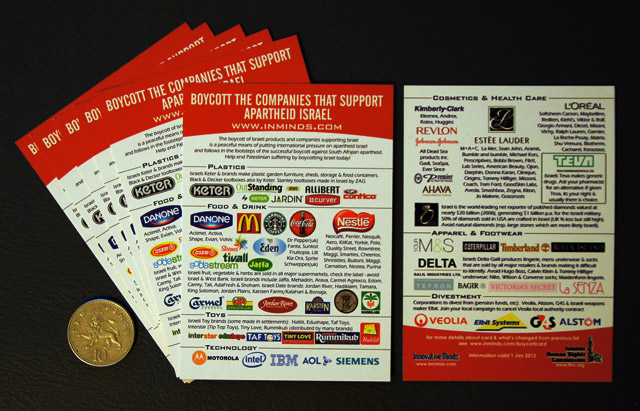
 —>
—>












Tesla
2013 Automobile of the Year: Tesla Model S

Last summer, Automobile Magazine editors had the opportunity to interview Elon Musk, CEO of Tesla, as the company launched its all-new electric sedan. A well-known industry insider warned us not to fall for Musk’s smooth talk. “Don’t bring any cash,” he said. “Because you’ll be offering to give it to him twenty minutes into the interview.”
To say there’s healthy skepticism regarding Tesla and its new wundercar is an understatement: in many industry circles, it borders on outright hostility. We understand why. Building a car — any car — is really hard. Musk, the PayPal billionaire whose automotiv
e accomplishments were limited to converting 2350 Lotus Elises to run on batteries, was not only proposing a class-leading sport sedan, but he promised it would have a more advanced electric powertrain than anything global automakers could muster.


He was doing this with our money — your money — courtesy of a $465 million loan from the Department of Energy, and he claimed to be doing it for our own good: “Since we are not appropriately pricing the CO2 capacity of the oceans and atmosphere, then the only way I could think to address that was with innovation.”
We believe the proper business term to describe such a gambit is chutzpah.
We left the interview with our wallets no lighter, eager to see how the Model S would perform in the real world, removed from Musk’s spin and Tesla’s chaperones. As it happened, that opportunity arrived at our Automobile of the Year exercise. That’s a rather intimidating environment to make a first impression, especially given that this year’s field was the strongest in recent memory. We weren’t expecting much from the Tesla other than some interesting dinner conversation as we considered “real” candidates like the Subaru BRZ and the Porsche Boxster. In fact, the Tesla blew them, and us, away.
Actually, the Model S can blow away almost anything. “It’s the performance that won us over,” admits editor-in-chief Jean Jennings. “The crazy speed builds silently and then pulls back the edges of your face. It had all of us endangering our licenses.” Our Model S was of Signature Performance spec, which means its AC induction motor puts out 416 hp and that it blasts to 60 mph in 4.3 seconds. Even those numbers — positively absurd for a large sedan that uses not a lick of gasoline — fail to communicate how crazy it actually feels. “It’s alarming to jam the accelerator of such a big car and have it surge forward so quickly and so quietly,” says copy editor Rusty Blackwell. Like most electric cars, the Model S generates its torque almost instantly. Unlike most electric cars, Tesla’s torque amounts to a prodigious 443 lb-ft, all of which goes to the rear wheels. The only indicators of your stunning momentum are the rush of scenery around you, a faint whine, and the digital speedometer’s difficulty keeping pace. “Driving the Model S is decidedly not like piloting a Nissan Leaf or an electric Smart,” notes road test editor Christopher Nelson. Contributor Ezra Dyer, meanwhile, was so impressed that he arranged an informal drag race to 100 mph with a 560-hp BMW M5. The Model S won. “It bears repeating: this thing is silly quick,” he concluded.
Of course, straight-line speed is hardly our only qualification for Automobile of the Year. Tesla’s first car, the two-seat Roadster, was even quicker but never made a serious bid for our award. That car was something of a one-trick pony — everything else about the $100,000 Roadster felt like the $50,000 Lotus Elise on which it was based. The Model S, developed by Tesla from the ground up and assembled at its factory in Fremont, California, is a holistic and incredibly novel experience.
The Model S looks conventional enough — somewhat disappointingly so. But that impression fades as soon as you walk up to it and the flush door handle powers out to meet your touch. Climb into the Tesla for the first time, and you’re liable to spend a few minutes searching for the ignition button. You won’t find it — the car turned on when you sat down, and it’s now waiting for you to shift into drive and glide away. The cabin is airy, modern, spacious, and impeccably trimmed in leather and wood. A flat battery pack and a rear-mounted motor yield a completely flat floor and a large, useful center-console storage area (the Model S uses a column-mounted shift lever supplied by Mercedes-Benz). Additional storage areas, such as map pockets in the door panels, might be nice but would spoil the interior’s appealing, Bauhaus simplicity.
An absolutely enormous, seventeen-inch touchscreen dominates the dashboard and features the controls for everything from the radio to the steering effort. That sounds like a recipe for disaster, but here it works wonderfully. Oh, yeah, and you can surf the Web on it, as well. “We turned a lot of preconceived notions on their head and said, ‘Why does it have to be that way?'” says Tesla lead designer Franz von Holzhausen. Of course, practically e
very new car claims to be revolutionary. But this one actually feels like it is, to the point that many of us were reaching outside the automotive lexicon to describe it. “It reminds me of the first time I used an iPhone,” gasped associate web editor Ben Timmins.


There’s much about the Model S, which Musk himself refers to as “Tesla’s Macintosh,” that has an innovative, Apple flavor. As with the tech giant’s slickest products, there’s a sense that even the smallest details here have been lavished with attention in order to be as distinctive and elegant as possible. To open the panoramic sunroof, for instance, one brings up an overhead image of the car on the touchscreen and literally drags the roof as far back as desired. Why didn’t anyone think of that before? Then there’s Tesla’s controversial but intriguing strategy of distributing its products through company-owned boutiques rather than conventional dealers. It’s being run by George Blankenship, who set up those posh Apple stores. Finally, it’s hard to ignore that Tesla has in Musk a Steve Jobs-like figure, a relentless leader who guides the company’s direction. “They’re both brilliant, both thinking about things that other people won’t be thinking about for twenty years,” Blankenship says.
For all its high-tech novelty, the Model S does an exceptional job at the things we expect any high-priced sport sedan to do well. The electric power steering is nuanced and well-weighted, with natural buildup just off-center. Through corners, the Model S exhibits impressive body control and vacuumlike grip despite weighing more than 4500 pounds. Editors also raved about the suspension’s ability to soak up bumps that tortured other test cars. It was just as impressive on the racetrack — yes, we took it on the track. “All that speed, along with powerful braking, superflat handling, and sharp steering, gives you the sense that you’re invincible,” marvels Jennings. And although the exterior may be lacking in gotta-have-it character, it deserves credit for achieving a claimed 0.24 coefficient of drag — better than a Toyota Prius or a Chevrolet Volt — without those cars’ gawky styling. The only concession to weirdness and egotism are the optional rear-facing third-row seats, which Musk wanted so he could ferry around his many children.
The car’s professionalism owes to the fact that, despite its Silicon Valley sheen, Tesla employs plenty of people who know a lot about building cars. That begins with von Holzhausen, who penned the Pontiac Solstice, our 2006 Design of the Year, before moving on to Mazda. He joined Tesla’s design team four years ago — when Tesla basically didn’t have a design team. “There was nothing here,” he says. Huibert Mees of the Ford GT program led development of the Model S’s chassis components, and the steering was likewise developed by Ford and Lotus veterans. Despite Musk’s domineering reputation, the employees we’ve spoken to say he has a relatively hands-off management style. Continuing the comparison with the famously involved Jobs, Blankenship notes, “Steve hired incredibly bright people to get done what he wanted to get done. I think Elon hires incredible people and expects them to do what they were hi
red to do.”
You’ll note that we haven’t even discussed Tesla’s raison d’etre, which is, in Musk’s words, “To accelerate the advent of electric cars.” That’s another credit to the Model S’s overall execution and seductive powers. “The electric motor does not define this car,” says Nelson. But it is, at the end of the day, what makes this very good sport sedan an absolute game changer. The Model S’s range, rated by the EPA at 265 miles with the largest battery, finally fits the American conception of driving. Want to take the family from Washington, D.C., to New York? No problem. Stop for an hour at one of Tesla’s Supercharger stations being installed throughout the country, and you can travel on to Boston. The even bigger psychological advantage, though, is the freedom to go about your daily life, with all its spontaneity and last-minute shopping trips, without the fear of running low. Electric cars that participated in past Automobile of the Year competitions have required special testing procedures — shorter drive routes, strict guidelines against aggressive driving, industrial charging trucks. The Model S wore no such kid gloves. We plugged it in at night and then drove it all day — and drove it hard.
Granted, this freedom doesn’t come cheap. A Model S with an 85-kilowatt-hour battery, like the one we tested, starts at $78,750 (before a $7500 tax break). Less expensive versions have smaller batteries and shorter ranges, starting with $58,570 for 160 miles (again, before deductions). Put another way, though, the cheapest 85-kWh Model S offers more than three times the range of a Nissan Leaf for little more than twice the price. The battery pack should also be rather durable thanks to liquid cooling. But the most important factor here is that, more than any electric car that has come before it, the Model S feels and drives like a gasoline car of the same price. “There’s still a lot of novelty in driving an EV,” says senior editor Eric Tingwall, “but with the Model S, that’s no longer the only reason to drive one.” Design editor Robert Cumberford is more succinct: “I would happily own one.”
But you might not be able to get one. Only 250 sedans have been delivered to customers as of this writing — a rounding error for any mainstream automaker (some 13,000 customers have put down at least $5000 as a reservation). Musk himself admits that Tesla’s path to viability is far from complete. “There have been car company start-ups before. The real challenge is to ramp up production. Then we’re a real car company.”
We can’t say for certain whether Tesla will be able to make that happen. The auto industry is tough enough for a giant like General Motors. What we can say with this award is that Tesla deserves to succeed. It has managed to blend the innovation of a Silicon Valley start-up, the execution of a world-class automaker, and, yes, the chutzpah of its visionary leader. The result is the Model S. It’s not vaporware. It’s our Automobile of the Year.


An 85-kWh battery puts the Model S’s range on par with conventional cars, but recharging still can’t match the speed and convenience of pumping gasoline. Despite that, Tesla intends to make long-distance, multi-charge road trips possible with a network of high-speed chargers that can inject 150 miles of range into the battery in thirty minutes. These Superchargers bypass the car’s onboard equipment and feed 400 volts of direct-current electricity straight to the battery through a thick, vinelike cord. Interestingly, the hardware that transforms the electricity from alternating current to direct current is the same as what’s carried in the car for 120- and 240-volt charging. The difference is that a Model S has one or two 10-kW chargers onboard, while the stationary Supercharger system uses a stack of twelve units that can produce a total of 120 kW.


Supercharger hardware comes standard on the 85-kWh Model S, and it’s a $2000 option on 60-kWh models. Either way, owners are entitled to free electricity from the Superchargers for the life of their car.
Some Supercharger stations will be paired with solar-panel-clad carports supplied by SolarCity, another Musk outfit. This arrangement gives owners a clear conscience when it comes to the environmental impact of their electricity sources, as Tesla claims the photovoltaic panels will feed more electricity into the grid than the Superchargers will to cars. Today, there are just six Superchargers scattered throughout California, but Tesla claims that owners will be able to drive from San Diego to Vancouver, Miami to Montreal, and Los Angeles to New York, stopping at Superchargers along the way, by next year.
Electric cars
The long, (mostly) slow struggle.
//1830s The first rudimentary electric vehicles emerge, powered by one-use power-storage units. The four-stroke gasoline engine is still four decades away.
//1859 Rechargeable lead-acid storage batteries are invented in France.
//circa 1890 William Morrison of Des Moines, Iowa, produces the first American electric car. Powered by 24 batteries, it has 4 hp and can go 20 mph — double the top speed of Karl Benz’s gas-powered Patent-Motorwagen. Maximum range is 40 to 50 miles.
//1899 Belgian Camille Jenatzy hits 65.8 mph in La Jamais Contente, his missile-shaped electric car.
//1900 Electric cars account for more than a third of all sales in the fledgling U.S. auto market and prove especially popular in cities.
//1909 Thomas Edison perfects his nickel-iron battery and markets it to automakers.
//1912 Electric cars lose their most compelling advantage — convenience — when Cadillac introduces “the car that has no crank.”
//1913 A Detroit Electric travels 211 miles on a single charge, setting a new record. Range of 80 miles is more typical. Prices start at about $2650, equivalent to $61,300 in today’s dollars.
//by 1920 High cost, limited range, and cheap oil contribute to a sharp decline in electric-car sales.
//1940 Detroit Electric, which had shifted to commercial vehicles and outlasted all of its competitors, finally goes out of business.
//1974 The Florida-built CitiCar debuts and offers about 30 miles of range. It’s relatively popular, finding more than 2000 buyers in its first two years. But the homely, plastic-bodied two-seater does nothing to improve the greater perception of electric cars.
//1996 General Motors begins leasing the EV1, the first modern electric car. Range starts at 70 to 100 miles. An upgraded version with nickel-metal-hydride batteries goes on sale three years later with 100 to 140 miles of range.
//2003 The California Air Resources Board ends its initiative to require zero-emissions vehicles. GM, along with Toyota and others, ceases production of electric vehicles soon thereafter. Meanwhile, in Silicon Valley, Tesla is born.
//2008 Despite several fits and starts, the Lotus Elise-based, lithium-ion-battery-powered Tesla Roadster goes on sale. Then-chairman Elon Musk promises a scratchbuilt BMW 5-series competitor within three years.
//2009 Tesla, along with several other firms, receives millions of dollars in funding from the U.S. Department of Energy. It uses the loan to develop the “Whitestar” (the Model S) and to acquire Toyota’s shuttered plant in Fremont, California.
//2010 The Nissan Leaf brings the electric car to the mainstream. We name the plug-in hybrid Chevrolet Volt the 2011 Automobile of the Year.
//2011 The Fisker Karma wins our 2012 Design of the Year.
//2012 The introductions of an electrified Honda Fit and Ford Focus, a Tesla-powered Toyota RAV4, and, of course, the Model S, make for the busiest year in electric cars since the early twentieth century.
Fifty years at Fremont
From Chevys to Toyotas to Teslas
by Ronald Ahrens
The factory in Fremont, California, where the Tesla Model S is built, has always been cutting-edge, with operations continually tinged by government involvement. Constructed near San Francisco Bay’s backwaters in 1962, the “four-in-one” Fremont Assembly Plant represented General Motors’ greatest effort to avoid monopoly prosecution. If GM made Chevrolets alongside Buicks, Oldsmobiles, and Pontiacs, how could the Justice Department carry out its threat to spin off Chevy as a separate company?
Two years after job one, GM head Frederic Donner came to Fremont, announcing a $2 billion worldwide manufacturing expansion. Governor Pat Brown also attended and delivered “quite a political talk and tossed out figures that were a great deal bigger,” Chevy chief Semon “Bunkie” Knudsen wrote.
But GM proved a vulnerable monopoly. Fremont closed in 1982. Thanks to a GM/Toyota joint venture, it reopened in 1984 as New United Motor Manufacturing, Inc. Toyota used NUMMI to evade import restrictions threatened by Congress. Meanwhile, GM learned lean manufacturing practices. The Toyota Corolla (rebadged as the Chevy Nova and the Geo Prizm), the Toyota Matrix, and the Pontiac Vibe were among roughly eight million vehicles produced before the partnership ended in 2009. Toyota subsequently struck a deal with Tesla that included factory space, California offered tax incentives, and Tesla landed a $465 million federal loan.
Tesla paid $42 million for the factory in May of 2010 and an additional $17 million for machine tools and spare parts.
“We had this megafactory, and we wanted to take full advantage of the infrastructure in order to manufacture at very low cost,” said Gilbert Passin, Tesla’s vice president of manufacturing. He noted that Tesla also salvaged tooling at bargain prices elsewhere in the distressed auto industry. While a new plant at a greenfield site typically represents an investment of at least $1 billion, Tesla probably has less than one-third that amount tied up in Fremont. Passin said 95 percent of all Model S parts are made in-house, an uncommonly high amount in an industry that relies heavily on outside suppliers.
Visiting last summer, we saw that only a portion of the five million square feet of floor space was in use. In an upstairs clean room, about 350 employees — some of whom formerly worked for NUMMI — put together battery packs and electric-drive components on two shifts, while another 450 workers sporadically assembled bodies and chassis on ground level. (Corporate headquarters lies across the Bay, in Palo Alto, and the design center is in Southern California.) The Tesla factory’s innovative modular assembly process relies on so-called “smart carts” to carry the bodies through assembly, automatically raising or lowering as needed and periodically recharging while traversing the line. This method turns away from the traditional use of overhead conveyors, saving millions of dollars. Meanwhile, each newly purchased robot typically performs five different tasks, and advanced artificial intelligence allows one to install the Model S’s panoramic roof by analyzing a digital image.
Tesla hoped to ramp up to eighty cars per shift by the end of 2012, but during our walk-through, it was quiet enough to hear a silver dollar drop.